
Cursed objects often originate from ancient beliefs that certain artifacts carry spiritual or supernatural energy tied to tragedy, betrayal, or divine punishment. Stories develop around these items as people attribute misfortune or death to their presence, reinforcing legends over generations. Society’s fears, combined with psychological factors, help grow these tales into powerful symbols of danger and morality. If you want to uncover the true origins behind these mysterious objects, there’s much more to explore beyond the surface.
Open a free Amazon Business account
Business pricing, bulk buying and tax-exempt orders.
As an affiliate, we earn on qualifying purchases.
Key Takeaways
- Legends of cursed objects originate from ancient beliefs that artifacts carry spiritual or supernatural power, often linked to tragedy or betrayal.
- Cultural stories and societal fears reinforce curses, transforming ordinary objects into symbols of misfortune through storytelling over generations.
- Psychological factors, like attributing bad luck to contact with certain objects, help solidify the belief in curses.
- Many curses serve moral lessons about disrespect, greed, or hubris, embedding cultural values within the legend.
- The mythic status of cursed objects persists because stories evoke collective fears and provide explanations for unexplained misfortunes.
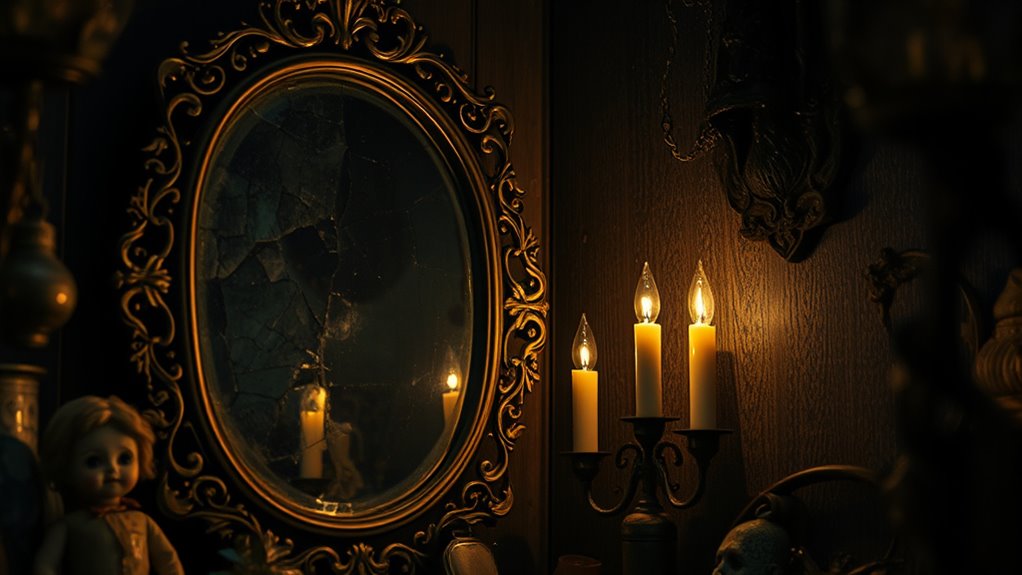
Throughout history, stories of cursed objects have fascinated and terrify people alike. These haunted artifacts, often shrouded in mystery and dread, have become central to countless legends around the world. You might wonder how such powerful curses originate, but understanding their folklore origins helps shed light on why these objects continue to captivate our imaginations. Many cursed objects are rooted in stories passed down through generations, blending history, superstition, and cultural beliefs. These tales often serve as cautionary lessons or explanations for inexplicable tragedies, giving them an almost mythic quality that persists through time.
The folklore origins of cursed objects often trace back to ancient civilizations, where objects were believed to carry spiritual significance or divine power. In some cultures, certain artifacts were thought to house spirits or serve as vessels for supernatural energy. When misused or mishandled, these objects became associated with misfortune or malevolent forces, transforming into haunted artifacts. For example, in European folklore, items like cursed jewelry or relics gained notoriety for their supposed ability to bring about death or ruin to their owners. The stories often involve a backstory of betrayal, violence, or tragedy, which imbues the object with a dark history that fuels its cursed reputation. Additionally, some legends are reinforced by psychological factors and societal fears, which help sustain the myth of the curse over generations.
You should know that many of these legends are reinforced by psychological factors and societal fears. When people experience bad luck or misfortune after acquiring or coming into contact with a certain object, it’s easy to attribute those events to some supernatural curse. Over time, these stories are exaggerated, creating a legend that grows larger and more terrifying with each retelling. Sometimes, the curse is believed to be a form of divine punishment, a way to explain the unexplainable, or a method to discourage theft or disrespect for sacred or valuable items.
Furthermore, the idea of cursed objects serves as a reflection of human fears and cultural values. Objects associated with tragedy or betrayal often carry a moral lesson, warning against greed, disrespect, or hubris. When these items are uncovered or displayed, they become symbols of the unknown and the uncontrollable forces at play in our lives. The folklore origins of haunted artifacts remind us that these stories are as much about human psychology and societal morality as they are about the objects themselves. Whether rooted in truth or myth, cursed objects continue to haunt our collective consciousness, echoing ancient fears and cultural stories that endure to this day.
As an affiliate, we earn on qualifying purchases.
Frequently Asked Questions
Are There Any Real Cursed Objects Confirmed by Experts?
There are no scientifically confirmed cursed objects, but superstitions origins often link certain items to psychological effects that influence perceptions. You might feel unnerved or anxious around these objects, which can reinforce the belief in curses. Experts suggest that these psychological effects stem from suggestion and cultural stories rather than actual supernatural power. While some believe in their power, there’s no concrete evidence, so consider these objects as part of folklore rather than reality.
How Do Cursed Objects Supposedly Transfer Their Curse?
Imagine a dark, invisible river flowing from the cursed object, carrying its supernatural transfer to you. When you handle or possess the item, ritual contamination occurs, allowing the curse to seep into your life. This transfer isn’t physical but spiritual, as the curse’s energy leaks through contact or proximity, binding your fate to the object. It’s like catching a shadow that lingers, impossible to shake once you’re touched by its darkness.
Can Cursed Objects Be Safe if Properly Cleansed?
Yes, cursed objects can be considered safe if you perform proper cleansing rituals, according to superstitious beliefs. You might use methods like smudging, holy water, or sacred herbs to purify the item. These cleansing rituals are thought to break the curse and remove negative energy. However, keep in mind that beliefs vary, and some people remain cautious even after cleansing, treating the object with respect or avoiding it altogether.
Why Do Some Cursed Objects Become Famous?
A picture is worth a thousand words, and some cursed objects become famous because of media sensationalism and pop culture. You see stories, movies, and rumors fueling their legend, making them irresistible to the public. Their mysterious aura, combined with the media’s fascination, amplifies their fame. When stories go viral, these objects gain notoriety, turning everyday items into legendary symbols of fear and fascination.
Are Cursed Objects Linked to Specific Cultures or Regions?
Yes, cursed objects are often linked to specific cultures or regions. You’ll find that their origins are tied to cultural beliefs and regional legends, which shape how people perceive their powers. For example, some objects in Asian cultures are believed to carry spiritual significance, while in Europe, regional folklore influences their cursed reputation. Understanding these cultural origins helps explain why certain cursed objects resonate differently across the world.
Conclusion
So, next time you hear about a cursed object, remember it’s more of a legend than reality. These stories are like shadows in the moonlight—faint but enthralling, crafted to stir our imagination. While the mystique is fun, most curses are just tales spun to entertain. Keep your curiosity alive, but don’t let fear turn your world into a haunted house. Sometimes, the greatest mysteries are the stories we tell ourselves.
College move-in / dorm season Picks
dorm essentials
As an affiliate, we earn on qualifying purchases.