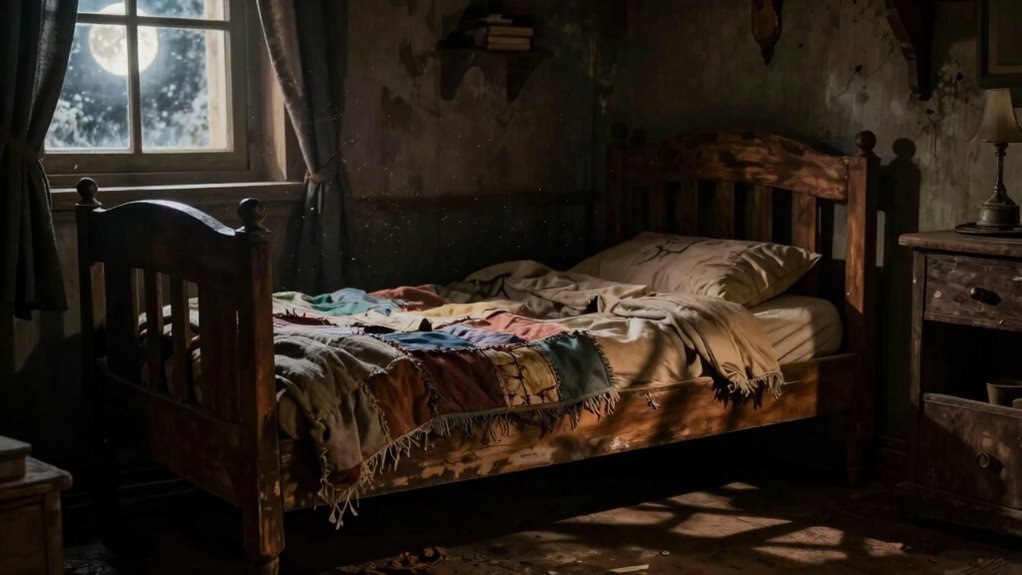

The idea of monsters under the bed has roots that go back centuries, rooted in childhood fears and cultural legends from around the world. These stories personify the unknown, often warning children about unseen dangers lurking in dark corners. They serve as symbols for anxiety and help young minds process fear of the unfamiliar. If you want to uncover the surprising history behind this common myth, there’s more to explore below.

Get decor and gifts delivered free — and shop member deals
- Fast, free delivery on millions of items
- Access to Prime Big Deal Days deals on October 6–7
- Prime Video, Amazon Music and more included
Key Takeaways
- The myth of monsters under the bed originates from ancient childhood fears and cultural legends predating modern horror media.
- Legends of unseen creatures in dark spaces, like goblins and spirits, have been passed down through generations globally.
- These stories serve as cautionary tales, reinforcing fears of the unknown lurking in shadows since early civilizations.
- The concept externalizes childhood anxieties, with cultural storytelling giving tangible faces to abstract fears.
- The symbolism persists into adulthood, reflecting deep-seated psychological needs and universal human fears of the dark and unseen.

Have you ever wondered where the idea of monsters hiding under the bed comes from? It’s a question that taps into childhood fears—a universal feeling many of us recall from when we were young. These fears aren’t just random; they’re deeply rooted in our minds, shaped by cultural legends and stories that have been passed down through generations. Long before modern horror movies or spooky bedtime tales, different cultures created legends about unseen creatures lurking in the dark, often embodying the unknown or our deepest anxieties.
Monsters under the bed stem from childhood fears and timeless legends about unseen dark creatures.
In many cultural legends, monsters are used to explain the fears children feel in unfamiliar or unsettling situations. For example, in Western folklore, stories about goblins, trolls, or mischievous spirits often serve as warnings or cautionary tales, making children wary of dangers they can’t see. These stories reinforce the idea that the dark is a place where threats hide, which inevitably feeds into childhood fears. As a child, you might have been told to leave the closet door shut or to stay away from shadows—these are echoes of older legends that kept children alert and cautious.
The concept of monsters under the bed specifically taps into a mix of cultural legends and psychological fears. It’s a vivid image that plays on the idea that something sinister could be hiding just out of sight, ready to pounce when you least expect it. This notion is reinforced by bedtime routines and stories that depict monsters as lurking in dark corners. Over time, these stories become part of the subconscious, transforming into the familiar childhood nightmare of a creature waiting beneath your bed, just out of reach. It’s your mind’s way of grappling with the fear of the unknown—a space where imagination runs wild and fears become tangible. Additionally, understanding the psychological origins of childhood fears can help us see how these legends serve as both a way to process anxiety and a form of cultural storytelling.
This myth persists because it resonates with a fundamental human tendency: to personify and externalize our fears. When you’re young, your mind naturally fills dark, quiet spaces with imagined threats. Cultural legends have long played a role in shaping these fears, giving them stories and faces. They serve as both caution and comfort—warning children of dangers while also offering a way to process what’s frightening. Even as you grow older, the idea of monsters under the bed can linger, a symbol of childhood fears that never fully disappear. It’s a reminder that those fears often stem from something deeper: our instinct to seek safety and understanding in a confusing world.
Frequently Asked Questions
Are Monsters Under the Bed a Universal Childhood Fear?
Yes, monsters under the bed are a universal childhood fear. You often associate them with nightmare symbolism that taps into your childhood imagination and fears of the unknown. This common fear reflects your subconscious anxieties about safety and the unfamiliar, making it a shared experience across cultures. As you grow, you recognize these monsters as symbols of your childhood fears, helping you understand your emotional development.
How Do Different Cultures Interpret the Monsters Under the Bed?
You’ll find that different cultures interpret monsters under the bed through their unique folklore and mythological creatures. For example, some see them as mischievous spirits, while others believe they’re dangerous demons or supernatural beings. These interpretations reflect cultural fears, morals, and traditions, shaping how children and adults perceive these nighttime terrors. By understanding these diverse views, you gain insight into how universal fears are shaped by specific cultural stories and legends.
When Did the Phrase “Monsters Under the Bed” First Appear?
You might think the phrase “monsters under the bed” is a modern idea, but it dates back to bedtime stories from centuries ago. The phrase first appeared in the late 19th or early 20th century, capturing childhood nightmares that turn ordinary fears into imaginary monsters lurking in the dark. This phrase became a symbol of childhood anxieties, helping kids understand their fears while giving parents a way to comfort them.
Do Psychological Factors Influence Fear of Monsters Under the Bed?
Yes, psychological factors influence your fear of monsters under the bed. Dream symbolism often taps into childhood anxiety, making you more sensitive to perceived threats. When you’re feeling vulnerable or anxious, your mind may amplify fears, causing monsters to seem real. These fears can be rooted in subconscious worries, and understanding this connection helps you recognize that your fear is often a reflection of deeper emotional states rather than actual dangers.
Are There Any Scientific Explanations for the Fear of Monsters?
Yes, scientific explanations for the fear of monsters include biological responses and evolutionary psychology. Your body reacts with heightened senses, increased heart rate, and adrenaline when you imagine threats, which helped our ancestors survive. Evolutionarily, fearing the unknown or hidden dangers, like monsters under the bed, was advantageous. These biological responses and survival instincts make you instinctively wary of unseen threats, even if they’re just fears rooted in your mind.
Conclusion
So, next time you peek under the bed and imagine shadows lurking, remember it’s a gentle reminder from your childhood fears. They’re like whispering winds, softly stirring memories of innocence and imagination. Those unseen friends underneath aren’t really monsters, just echoes of stories we told ourselves. As you drift into sleep, let these gentle shadows fade away, leaving behind only the warmth of understanding that even the scariest things can be just a fleeting, harmless dream.
Halloween Picks
halloween
As an affiliate, we earn on qualifying purchases.