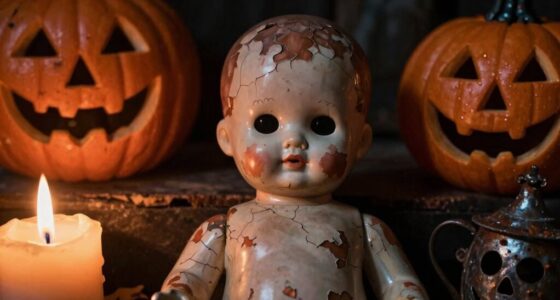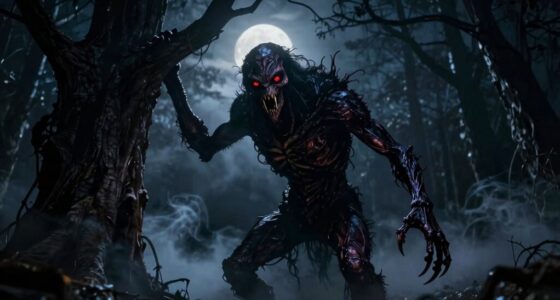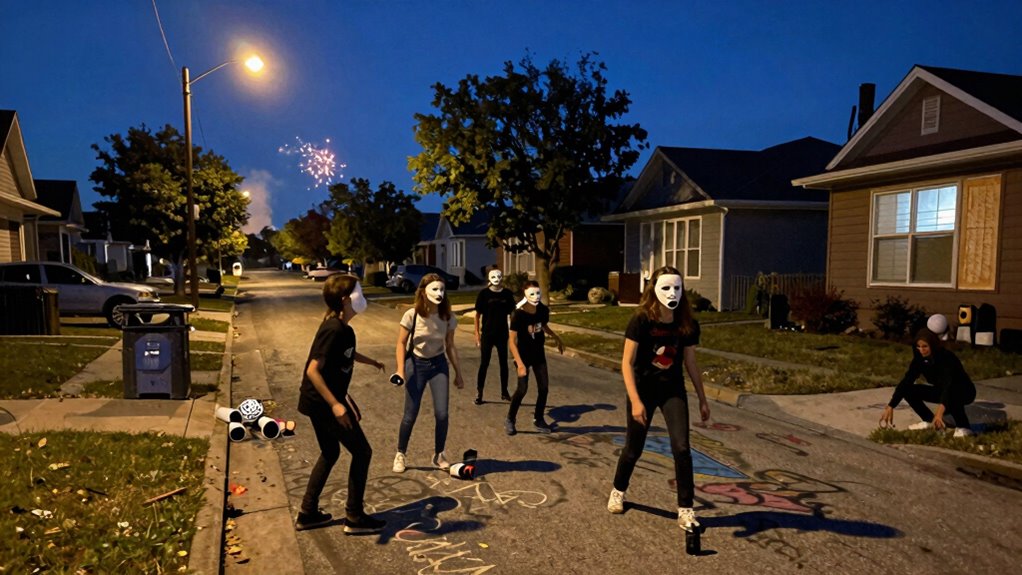

Mischief Night in the U.S. has roots in European customs dating back to medieval times, evolving into a night of playful pranks and mischief. It grew out of traditions like trick-or-treating and guising, where communities engaged in symbolic acts to ward off evil spirits. Over time, acts became more elaborate, sometimes crossing into vandalism, with urban legends warning of consequences. To uncover how these traditions shaped modern celebrations, keep exploring this fascinating history.

Get decor and gifts delivered free — and shop member deals
- Fast, free delivery on millions of items
- Access to Prime Big Deal Days deals on October 6–7
- Prime Video, Amazon Music and more included
Key Takeaways
- Mischief Night likely originated in late 19th or early 20th century, evolving from European Halloween customs.
- It developed in U.S. communities as a night of pranks, vandalism, and mischief linked to Halloween traditions.
- Urban legends and stories heightened its reputation as chaotic, involving warnings of property damage and supernatural retributions.
- The celebration grew more elaborate over time, with some acts crossing into petty crime, fueled by folklore and popular culture.
- Today, Mischief Night remains a blend of historical customs, local folklore, and modern prankster traditions in the U.S.
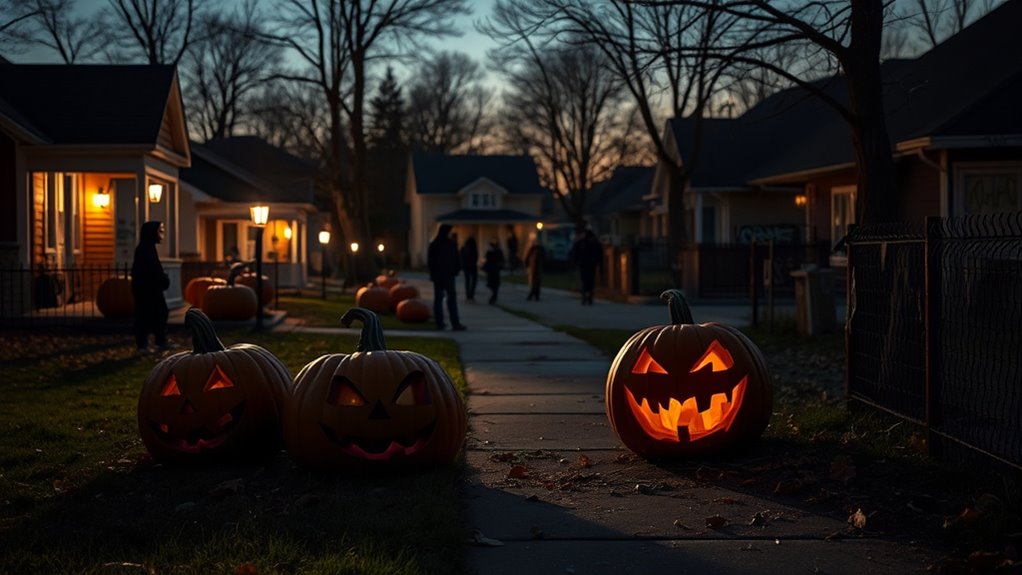
Have you ever wondered where Mischief Night originated? It’s a question that sparks curiosity, especially since the night is so intertwined with local traditions and urban legends. To understand its roots, you need to look back at the trick or treat origins, which trace to ancient customs and evolving folklore. Unlike Halloween, which has become more about costumes and candy, Mischief Night has a darker, more mischievous history rooted in community pranks and urban legends that have been passed down through generations. The tradition likely began in the late 19th or early 20th century, mainly in the United States and parts of the UK, where young people started celebrating the night before Halloween with pranks, vandalism, and playful mischief. Over time, these acts became more elaborate, sometimes crossing the line into property damage and petty crime, fueling stories and urban legends about the night’s dangers and mischievous spirit.
Many urban legends surround Mischief Night, often warning of serious consequences for those caught vandalizing property or causing trouble. These stories help reinforce the night’s reputation as a time for chaos, but they also serve as cautionary tales to discourage excessive mischief. The trick or treat origins of Halloween itself, with its roots in medieval European practices like souling and guising, share a common thread with Mischief Night’s playful yet rebellious spirit. Originally, these customs involved children and the community engaging in various rituals, sometimes involving pranks or symbolic acts meant to ward off evil spirits. As these traditions migrated to North America, they evolved into more community-centered activities like trick or treating, but in some regions, Mischief Night persisted as a separate, more unruly celebration.
Urban legends often tell of mischievous groups planning elaborate pranks, or even of haunted houses and cursed objects associated with the night. Some stories caution that pranksters could face serious repercussions or that the night is haunted by spirits seeking revenge. These tales, whether true or exaggerated, add an element of thrill and danger to the evening, encouraging both excitement and caution. Moreover, the influence of popular culture has helped shape the modern perception of Mischief Night as a night of chaos and fun. Overall, Mischief Night’s origins are a blend of historical customs, local folklore, and urban legends that continue to shape how communities celebrate it today. While some see it as a harmless tradition of pranks, others remember the stories of mischief gone wrong, reminding everyone that the night’s roots run deep in a mix of playful mischief and cautionary tales, all tied to the broader history of Halloween and local folklore.
As an affiliate, we earn on qualifying purchases.
Frequently Asked Questions
How Did Mischief Night Originate in Specific U.S. Regions?
You might not realize, but Mischief Night originated from local legends and regional variations across the U.S. in places like Detroit and New Jersey. These areas adopted the tradition in the early 20th century, with kids engaging in pranks on Halloween’s eve. Over time, communities shaped their own customs, making Mischief Night a unique, regional event rooted in local stories and traditions that vary from place to place.
What Are Traditional Activities Associated With Mischief Night?
On Mischief Night, you can expect wild tricks like sneaky pranks, graffiti vandalism, and playful chaos that turn neighborhoods upside down. People often pull elaborate pranks, like knocking on doors for trick or treating or setting harmless traps. It’s a night of mischievous fun, where you might see cars covered in soap or yards filled with silly surprises. Just remember, it’s all in good fun—until someone takes it too far!
How Has Mischief Night Evolved Over the Decades?
Over the decades, Mischief Night has evolved from simple pranks to more elaborate urban legends and modern customs. You might notice teens now organizing themed events or using social media to coordinate activities, shifting away from traditional vandalism. While some still embrace classic mischief, others incorporate humor and creativity, reflecting changing community attitudes. This evolution shows how the night adapts to current trends, blending old-school pranks with contemporary urban legends and customs.
Are There Any Notable Incidents Linked to Mischief Night History?
You might recall notable incidents linked to Mischief Night, where prank escalation and vandalism trends led to serious property damage. For example, in some areas, pranksters set off fireworks or spray-painted buildings, prompting community officials to increase patrols. These events highlight how Mischief Night has sometimes spiraled into more destructive behavior, emphasizing the importance of community efforts to curb vandalism trends and promote safe, fun traditions instead.
How Do Communities Typically Respond to Mischief Night Festivities?
Community concerns cause cautious responses to mischief night festivities. You’ll see neighborhoods bolster their bonds through neighborhood watch programs and community policing efforts, aiming to prevent property pranks and promote peace. Local leaders leverage these strategies, encouraging residents to report trouble and stay vigilant. By building bonds and boosting awareness, communities can combat chaos and create a safer, more synchronized space where mischief turns into manageable misdeeds, minimizing mischief’s malicious mood.
Conclusion
As you can see, Mischief Night has deep roots in American culture, evolving over the years. notably, studies show that around 60% of teenagers participate in pranks during this night, highlighting its popularity. While it’s meant to be playful, it’s important to remember the line between harmless fun and damage. So, next time you hear about Mischief Night, you’ll know it’s a tradition with a colorful, sometimes mischievous history behind it.
Fall Picks
fall essentials
As an affiliate, we earn on qualifying purchases.