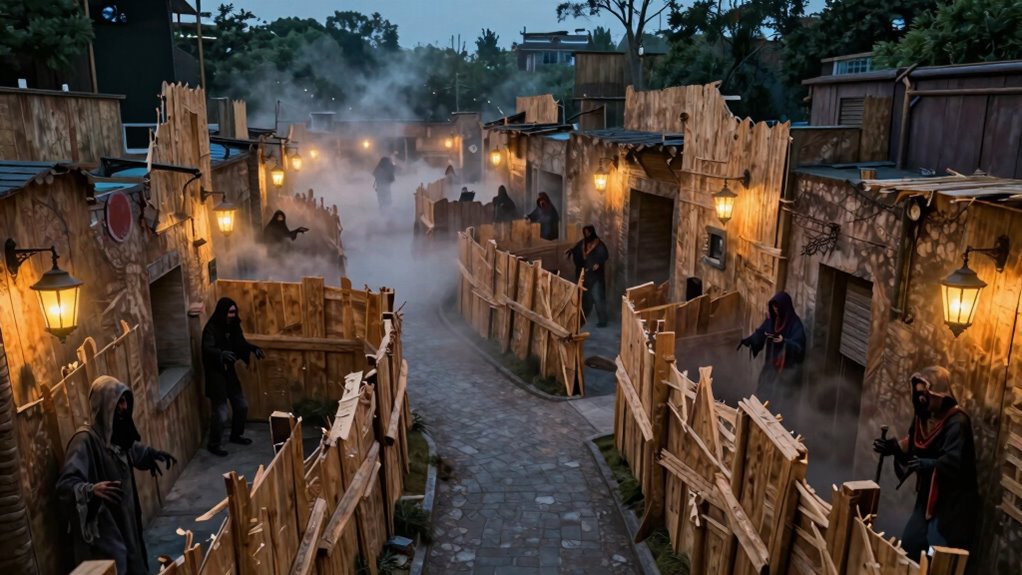
To create an effective DIY scare zone, you should carefully map out your layout to guide visitor flow while using natural barriers like fences or hay bales to hide or block areas. Strategically position sound effects, props, and lighting to surprise visitors from multiple angles, increasing disorientation. Focus on controlling traffic and breaking usual movement patterns to heighten fear. Incorporate eerie shadows, unsettling sounds, and creepy costumes to deepen the atmosphere. Keep experimenting with these tricks to craft a truly frightening experience.
Key Takeaways
- Map out a clear pathway that guides visitors past frightening setups while breaking usual movement patterns for unpredictability.
- Use natural barriers and props to control traffic flow and hide or block off specific zones effectively.
- Design layouts with disorienting elements and natural features like shadows to enhance suspense and anticipation.
- Strategically position entry, exit, and sound sources to surprise visitors and amplify the scare effect.
- Incorporate thematic costumes, props, and lighting to reinforce the zone’s mood and deepen visitor immersion.
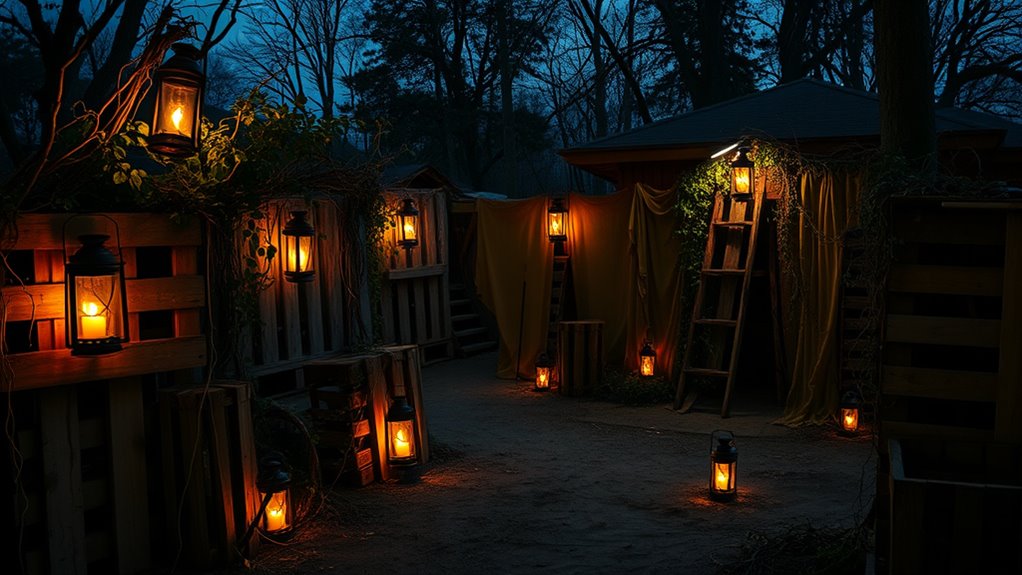
Ever wondered how to transform your yard into a spine-chilling scare zone without breaking the bank? The secret lies in clever layout tricks, effective costume design, and immersive sound effects. You don’t need a Hollywood budget to create a haunting atmosphere that’ll have your neighbors talking. Instead, focus on how you arrange your space and use sensory elements to maximize scare impact.
Start by mapping out your scare zone. Think about how visitors will move through the space and create a clear pathway that guides them past your most frightening setups. Use simple props and natural barriers like fences, hay bales, or even furniture to block off areas you want to keep hidden or to direct traffic flow. This not only enhances the feeling of unpredictability but also helps control the experience, making it more intense. Remember, the layout should evoke a feeling of disorientation or anticipation, so don’t be afraid to break the usual pattern of movement.
Costume design plays a vital role in setting the mood. You don’t need store-bought costumes; instead, craft your own using inexpensive materials. Think torn fabrics, make-up, and accessories that look weathered or grotesque. The more unsettling, the better. When combined with the layout, these costumes help create a cohesive, terrifying theme. For added effect, coordinate your costumes to match specific zones, like haunted woods or abandoned asylum areas, to deepen the immersion.
Sound effects are your secret weapon. Use a portable speaker or even your phone with a playlist of creepy noises—whispering voices, distant screams, eerie music, or unnatural animal sounds. Place sound sources strategically around your scare zone to surprise visitors from unexpected angles. Layering different sound effects can make the environment feel alive, adding an extra layer of fright. When people hear unsettling sounds close by, it amplifies their fear and heightens the overall experience.
Additionally, utilizing plant properties such as natural shadows or textures can enhance the eerie atmosphere and make your setup more convincing. When combined with lighting, props, and sound, these natural elements can significantly increase the scare factor.
Finally, combine all these elements thoughtfully. Use lighting sparingly—think flickering bulbs or glow-in-the-dark paint—to cast shadows and make your scene more disturbing. Add small props like fake limbs or cobwebs to enhance the creepy vibe. When layout, costume design, and sound effects work together seamlessly, your DIY scare zone becomes a truly chilling experience—without draining your wallet. With a bit of planning and creativity, you’ll have a horror-filled setup that’s as fun to create as it is to scare guests.

JOYIN 70" Halloween Animatronics Scarecrow Decoration Outdoor, Standing Ghost Prop with Motion Light Sound, Scary Animated Decor for Yard Farm Garden Indoor Haunted House
- Life-Size Prop: 70 inches tall with 39-inch arms
- Interactive and Spooky: Shakes with lights and sounds when approached
- Perfect for Halloween Decor: Ideal for parties, haunted houses, and yard displays
As an affiliate, we earn on qualifying purchases.
As an affiliate, we earn on qualifying purchases.
Frequently Asked Questions
What Safety Measures Are Essential for DIY Scare Zones?
You need to prioritize safety equipment like gloves, masks, and fire extinguishers to keep everyone safe. Effective crowd management is essential to prevent overcrowding and ensure smooth flow. Set clear pathways and use barriers to control movement. Regularly inspect your setup for hazards and communicate safety rules clearly. Always have a plan for emergencies, and make sure your guests and staff know how to respond rapidly.
How Much Does It Typically Cost to Create a Scare Zone?
Creating a scare zone typically costs between $500 and $5,000, depending on size and complexity. Did you know that most DIY setups stay under $2,000? To keep costs manageable, focus on budget tips like repurposing materials and using inexpensive decorations. Planning your layout carefully helps maximize impact without overspending, ensuring your scare zone is spooky and budget-friendly.
What Materials Are Best for DIY Scare Zone Props?
You should use inflatable decorations and foam crafting materials for your DIY scare zone props. Inflatable decorations are easy to set up and add a spooky, larger-than-life effect, while foam is versatile for creating detailed, lightweight props. Pick weather-resistant inflatables for durability, and use foam for custom shapes and textures. Combining these materials helps you craft an immersive, budget-friendly scare zone that’s simple to assemble and visually striking.
How Long Does Setup Usually Take for a DIY Scare Zone?
Setup duration for a DIY scare zone typically takes between a few hours to a full day, depending on your planning timeline and the complexity of your props and decorations. If you plan ahead and organize materials beforehand, you can streamline the process and reduce setup time. Rushing may cause delays, so allocating ample time guarantees your scare zone looks spooky and well-crafted. Proper planning makes the entire setup smoother and more efficient.
Are There Legal Restrictions on Creating Scare Zones in Public Spaces?
You need to check local permits before creating scare zones in public spaces, as many areas require approval to guarantee safety and compliance. You may also face restrictions related to public liability insurance, which protects you if someone gets injured. Failing to obtain proper permits or insurance could lead to legal issues or fines. Always contact local authorities first to understand specific regulations and avoid potential legal problems.
Conclusion
By understanding how theme parks craft their scare zones, you can uncover the secrets behind their haunting allure. It’s as if they’ve woven a spell, blending suspense, surprise, and strategic layout to keep you on edge. So, next time you walk through a fear-filled zone, remember—these tricks aren’t just for thrill-seekers; they’re the heartbeat of every chilling experience, turning each moment into a dance of shadows and screams. After all, isn’t fear the ultimate thrill?