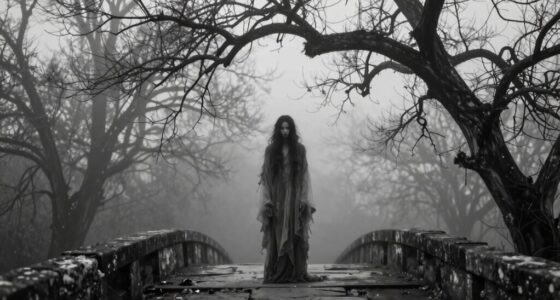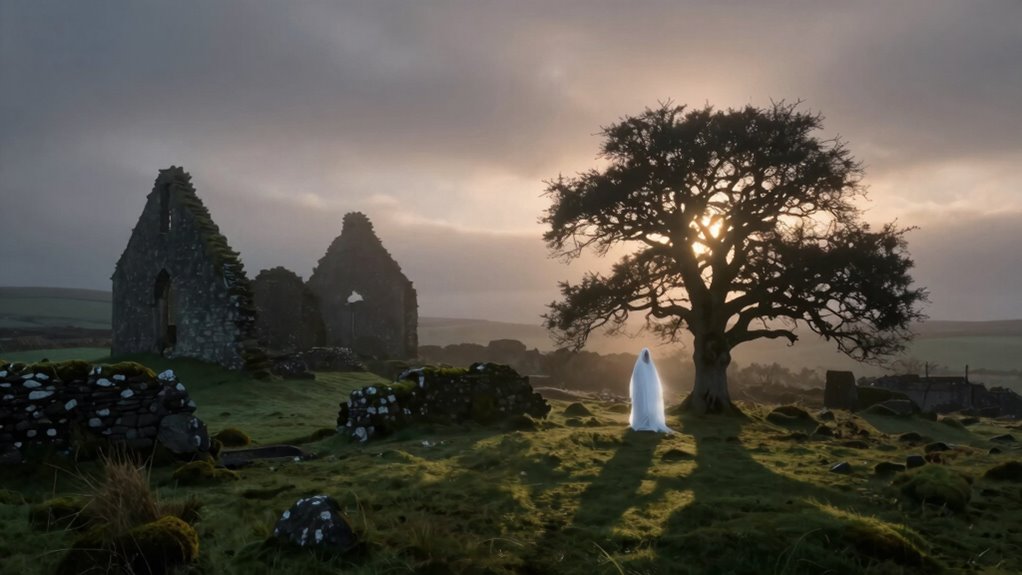

Ireland’s Banshee is a legendary spirit that signals impending death with her mournful, haunting wail. She’s often described as a beautiful, ghostly woman dressed in white, standing silently near windows or trees. Her cry symbolizes loss and mourning, embodying Irish cultural identity and the deep connection between life and death. Stories highlight her role as a powerful emblem of grief and mortality. To uncover the true stories behind her eerie presence, keep going—you’ll discover more secrets.

Get decor and gifts delivered free with Prime
- Fast, free delivery on millions of items
- Prime Video, Amazon Music and more included
- Member-only deals all year
Key Takeaways
- The Banshee is a female spirit who signals death with a mournful wail, often forewarning families of an impending loss.
- Her cry is both terrifying and beautiful, serving as a powerful symbol of mourning and the connection between life and death.
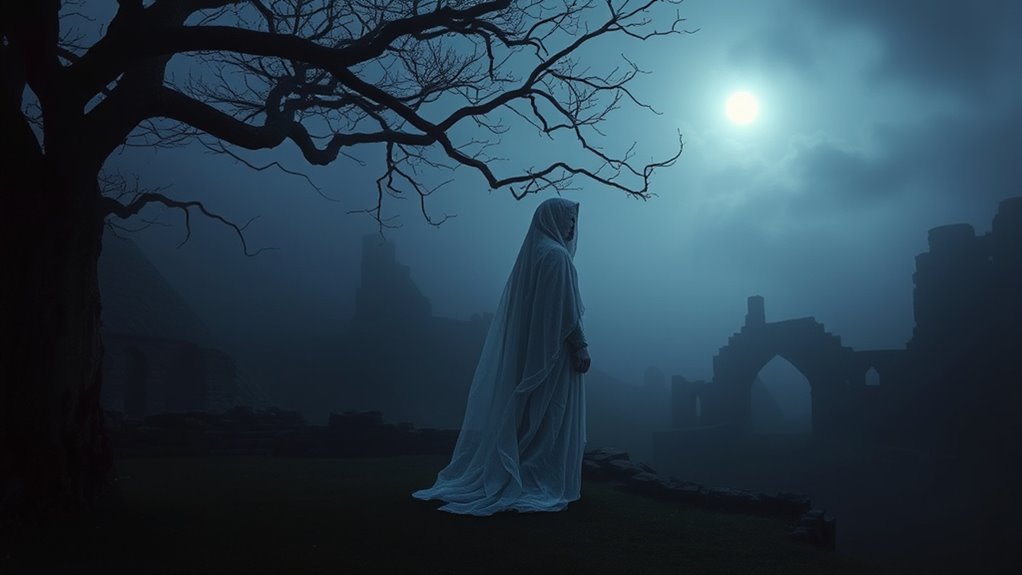
- She is commonly depicted dressed in white with long, flowing hair, standing silently near windows or trees.
- Folklore portrays her as more than a ghost; she embodies grief and the emotional resonance of loss in Irish culture.
- Stories of the Banshee have inspired songs and traditions that reflect her role as a haunting emblem of mortality.
Have you ever heard of Ireland’s Banshee, the legendary spirit said to foretell death with her mournful wail? If you’re intrigued by folklore symbolism and the stories that shape cultural identity, then the banshee’s tale is one you shouldn’t ignore. Traditionally, she’s depicted as a haunting female figure, her wailing voice echoing through the night, signaling that someone’s death is imminent. But beyond the spooky stories, the banshee embodies more than just a warning—she’s woven into Ireland’s cultural fabric, influencing music legends and folk traditions alike.
Ireland’s Banshee symbolizes mourning, death, and cultural identity through haunting melodies and legendary stories.
In Irish folklore, the banshee isn’t just a ghostly messenger; she’s a symbol of the sacred connection between life and death. Her mournful cry is seen as a powerful emblem of mourning and loss, encapsulating the deep emotional resonance of grief. Many stories describe her as a woman dressed in white, with long, flowing hair, sometimes with a hood or cloak, standing silently by the window or a tree. Her wail is said to be both terrifying and beautiful, a haunting melody that resonates with the themes of mortality and the supernatural. This folklore symbolism turns her from a mere specter into a meaningful figure representing the uncontrollable forces of life. Interestingly, her image and symbolism have been preserved through folklore storytelling and continue to influence contemporary Irish culture.
Music legends have long drawn inspiration from her story, transforming her mournful wail into haunting ballads and eerie melodies. Irish folk songs often reference the banshee’s cry, using her as a metaphor for tragic loss or the inevitability of death. These songs, passed down through generations, echo her mournful tone and serve as a reminder of the fragile boundary between the living and the dead. Listening to such tunes, you can almost hear the echoes of her lament, which underscores her role as a cultural icon rooted in Ireland’s collective memory.
The banshee’s influence extends beyond music and folklore symbolism. She’s become a symbol of Irish identity, embodying both the beauty and darkness of the island’s history. Her story reminds you that cultural myths often serve as collective reflections of human fears and hopes, passed along through storytelling, song, and tradition. The mournful wail of the banshee continues to resonate in modern Irish culture, a haunting reminder of the enduring power of folklore to shape identity, evoke emotion, and preserve history. Whether as a ghostly warning or a symbol of mourning, her legend remains a compelling part of Ireland’s rich storytelling heritage.
As an affiliate, we earn on qualifying purchases.
Frequently Asked Questions
Are Banshees Always Female Spirits?
You might think banshees are always female spirits, but gender roles and cultural variations suggest otherwise. In Irish folklore, banshees are typically female, but in other cultures, similar spirits can be male or genderless. These stories reflect societal views on gender and death, showing that while banshees are usually depicted as women, different traditions sometimes portray similar entities differently, highlighting the richness of cultural interpretations.
Do Banshees Appear Only in Irish Folklore?
Think of banshees like a vintage app still running today; they’re primarily Irish but not exclusive to Ireland’s mythological origins. You might find similar spirits in Welsh or Scottish folklore, showing their wide cultural symbolism. While they’re most famously linked to Irish legend, these spectral women appear in other Celtic tales, embodying death’s inevitable nature. So, no, banshees don’t appear only in Irish folklore—they’ve become a broader symbol of mourning across Celtic cultures.
Can Banshees Be Seen or Heard by Anyone?
You might see visual manifestations or hear auditory phenomena if a banshee appears or makes her cry. However, sightings and sounds are usually considered rare and often happen to those who are close to death or experiencing grief. While some believe anyone could be affected, most stories suggest banshees target specific families or individuals, making their appearances and sounds deeply personal and often shrouded in mystery.
What Are Common Banshee Warning Signs?
You’ll notice common banshee warning signs through supernatural manifestations like eerie wails, sobbing, or sudden chills. These sounds often serve as cultural symbolism, signaling imminent death or significant change. Some also report seeing ghostly figures or experiencing a sense of foreboding. These signs are believed to alert you, serving as a supernatural warning that tragedy may be near, emphasizing the banshee’s role in Irish folklore as an omen.
Are Banshees Considered Good or Evil Spirits?
You might see banshees as morally ambiguous spirits, neither strictly good nor evil. In Irish folklore, they serve as cultural symbolism, warning of impending death rather than acting with malicious intent. Their role is complex, reflecting deeper themes of mortality and the supernatural. Instead of fitting neatly into good or evil categories, banshees embody a nuanced presence that reminds you of life’s fragile balance and the mysteries beyond human understanding.
Conclusion
As you walk through Ireland’s legends, the banshee feels like a whispering wind, a ghostly messenger warning of change. These stories aren’t just tales; they’re a mirror to the land’s soul, echoing fears and hopes. So, next time you hear a distant wail, remember it’s not just a scream from the shadows—it’s Ireland’s heartbeat, alive and eternal, guiding you through its mysterious, misty depths.
Halloween Picks
halloween
As an affiliate, we earn on qualifying purchases.