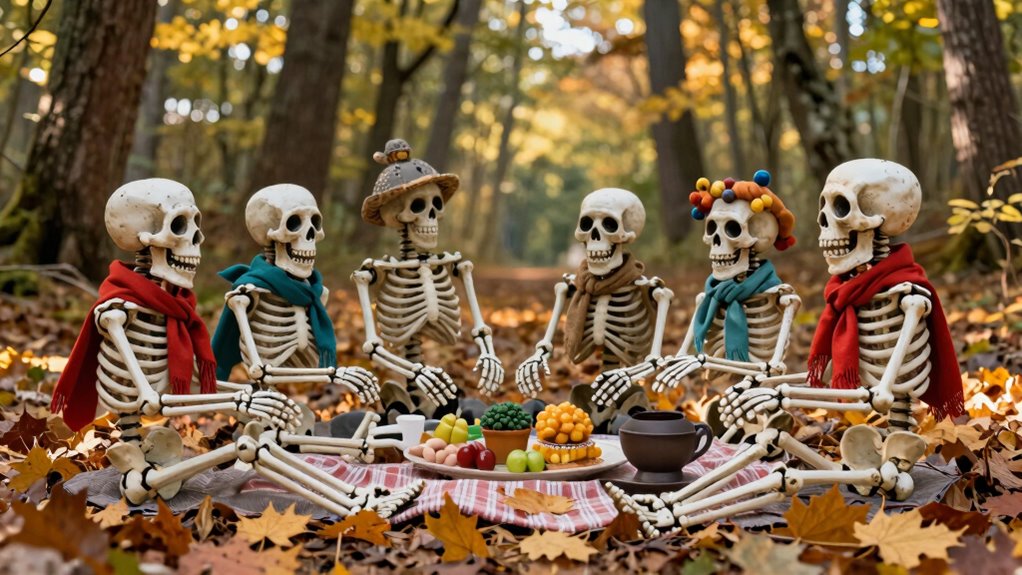

You might notice skeletons now appear funny rather than frightening because society has shifted their image from symbols of fear to playful, humorous figures. Costumes and decorations often feature silly poses, exaggerated movements, and funny antics that entertain instead of scare. This change reflects a cultural evolution where traditional spooky symbols are adapted with humor and creativity, making them more relatable and endearing. If you keep exploring, you’ll discover how this playful view has become a lasting part of tradition.

Get decor and gifts delivered free with Prime
- Fast, free delivery on millions of items
- Prime Video, Amazon Music and more included
- Member-only deals all year
Key Takeaways
- Skeleton imagery has shifted from frightening symbols to humorous, playful representations reflecting modern cultural humor.
- Halloween costumes now emphasize comedy through exaggerated poses, silly accessories, and humorous antics rather than fear.
- The tradition of combining macabre themes with comedy creates a long-standing playful contrast that delights audiences.
- Societal adaptation transforms skeleton symbols to align with current humor, making them more relatable and endearing.
- Visual gags and comedic timing in skeleton costumes evoke instant laughter, maintaining their popularity through entertainment.
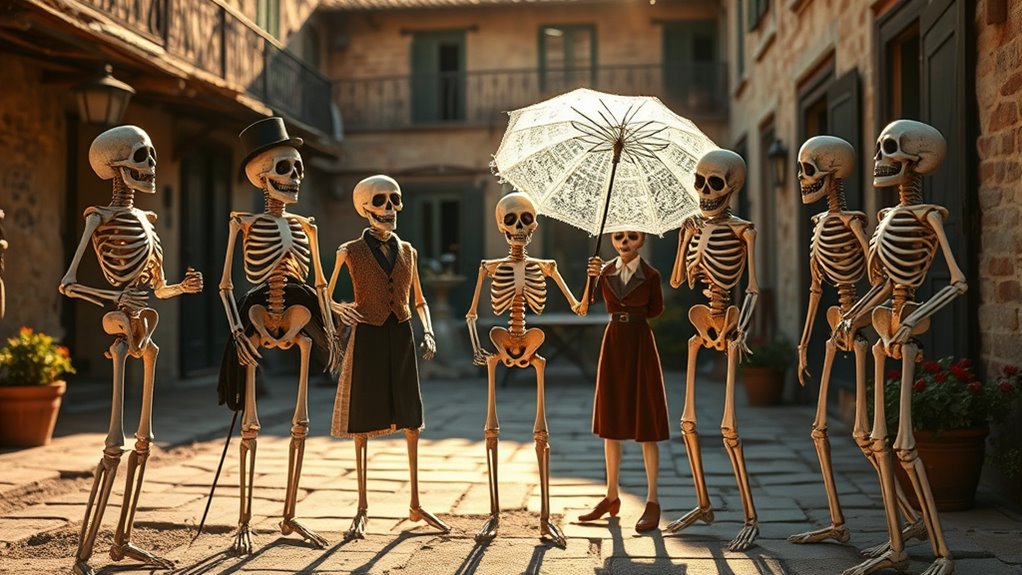
Have you noticed how skeletons have gone from spooky symbols to sources of comedy? It’s a fascinating shift that reflects how cultural perceptions evolve over time. Once primarily associated with fear and death, skeletons now often appear in humorous contexts, especially during Halloween. You probably see them in a variety of Halloween costumes, where they’re dressed up as silly characters or in exaggerated poses that make you laugh rather than scare you. This change isn’t accidental; it’s rooted in a long-standing tradition that plays with the contrast between something inherently macabre and the lightheartedness of comedy. Additionally, the cultural evolution of skeleton imagery demonstrates how societies adapt symbols to fit contemporary values and humor, transforming their original meanings. When you think about Halloween costumes featuring skeletons, you’ll notice how they’ve become more playful and creative. Instead of simply being frightening, they’re now designed to entertain and amuse. You might see skeletons wearing sunglasses, dancing, or engaging in humorous antics that showcase comedic timing. That’s no accident. The way a skeleton is posed or animated can instantly elicit laughter, especially when it’s placed in situations that parody or parody horror. The comedic timing in these costumes allows for visual gags that resonate with audiences, making them more about fun than fright. It’s this blend of humor and tradition that keeps skeletons relevant and endearing.
funny skeleton Halloween costume
As an affiliate, we earn on qualifying purchases.
As an affiliate, we earn on qualifying purchases.
Frequently Asked Questions
How Did Skeletons Become Associated With Humor Historically?
You might not realize it, but skeletons became humorous through centuries of blending religious symbolism with morbid humor. Historically, they challenged moral implications by lightening serious themes like death, making them more approachable. Comedians and artists played with skeleton imagery, turning it into jokes and decorations. This tradition helped demystify death, transforming skeletons from symbols of fear and mortality into funny, everyday symbols rooted in long-standing cultural and religious practices.
Are There Cultural Differences in Skeleton Humor Globally?
Yes, there are cultural differences in skeleton humor worldwide. You’ll find that regional humor often reflects local stereotypes and traditions, shaping how skeletons are portrayed. In some cultures, skeletons symbolize death playfully, while in others, they’re part of festive celebrations or folklore. These variations highlight how humor adapts to cultural norms, making skeleton jokes a diverse and fascinating reflection of regional stereotypes and traditions across the globe.
What Psychological Factors Make Skeleton Jokes Appealing Today?
Skeleton jokes captivate you because they tap into your sense of moral ambiguity and cognitive dissonance, making humor feel rebellious yet familiar. The unexpected contrast between death’s seriousness and playful humor sparks your curiosity, creating a mental playground where absurdity reigns. This delightful tension offers a safe space to confront mortality, making skeleton humor irresistibly funny and oddly comforting—like a paradoxical hug from the universe itself.
Do Skeletons Have a Presence in Modern Pop Culture Beyond Comedy?
Yes, skeletons have a strong presence in modern pop culture beyond comedy. You’ll see them as cultural symbols in Halloween decorations, tattoos, and art, representing mortality and rebirth. They also influence fashion trends, with skeleton motifs appearing on clothing, accessories, and even high-end designer pieces. This widespread use reflects their deep-rooted symbolism and their ability to stay relevant, blending tradition with contemporary style and making them a versatile cultural icon.
How Has the Portrayal of Skeletons in Media Evolved Over Time?
You see, the portrayal of skeletons in media has evolved from simple cartoon stereotypes to complex horror transformations. You might notice that early cartoons depicted skeletons as funny or silly, but over time, they’ve become more menacing in horror movies, embodying fear. Yet, humor still persists, blending tradition and modern creativity. This evolution reflects changing cultural attitudes, balancing between lightheartedness and genuine fear, making skeletons versatile symbols in pop culture.
Conclusion
So, next time you see a skeleton cracking a joke or dancing around, remember it’s not just funny—it’s a tradition that’s stood the test of time. Skeletons have become the playful tricksters of our culture, turning bones into punchlines and reminding us that humor often rises from the most unexpected places. They’re like comedy’s skeleton crew, proving that even in death, there’s room for a little laughter to breathe life into history.
Fall Picks
fall essentials
As an affiliate, we earn on qualifying purchases.