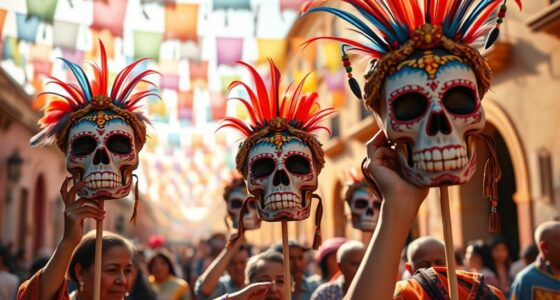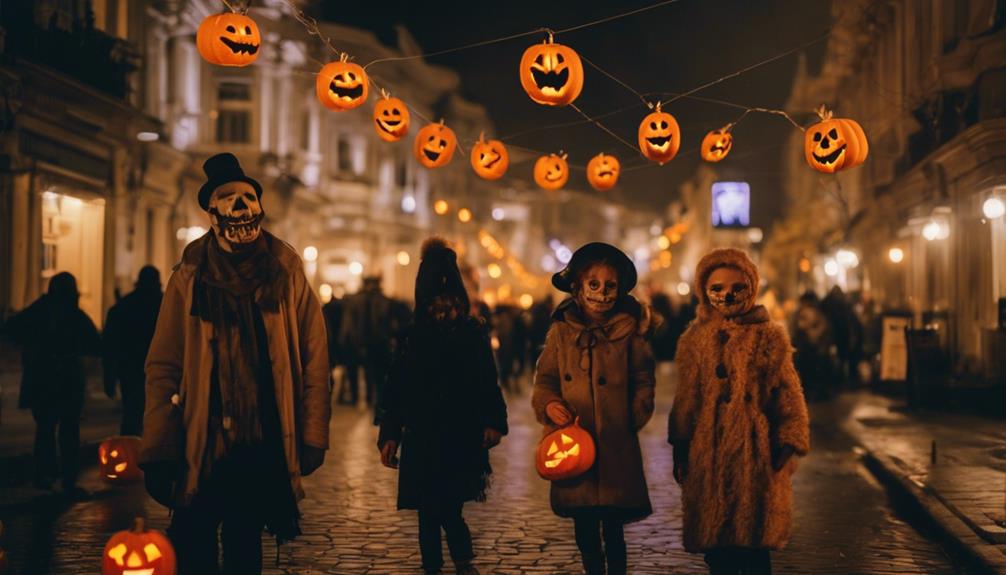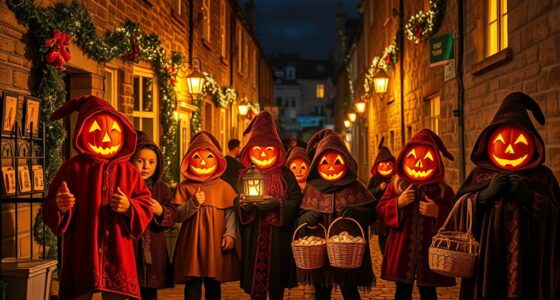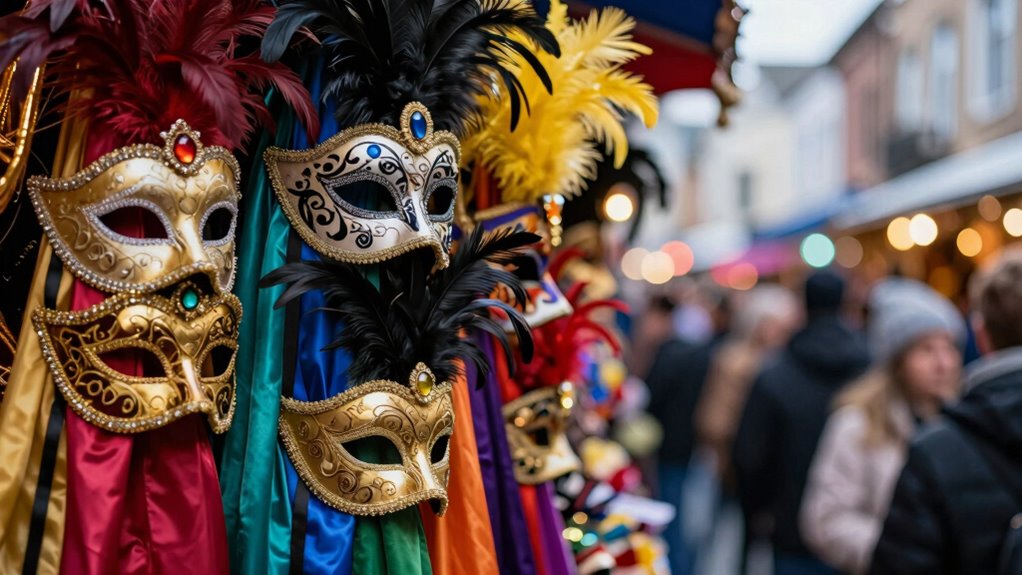

Carnival masks are a fascinating part of cultural history, dating back to ancient Egypt, Greece, and Rome. They once served as tools for social liberation, anonymity, and storytelling during festivals and rituals. Unlike Halloween costumes, which focus on individual characters, masks embody themes of tradition, mystery, and self-expression rooted in centuries of cultural significance. If you keep exploring, you’ll discover how these historic masks continue to inspire modern celebrations worldwide.
Open a free Amazon Business account
Business pricing, bulk buying and tax-exempt orders.
As an affiliate, we earn on qualifying purchases.
Key Takeaways
- Carnival masks have ancient origins in rituals and performances, symbolizing transformation and anonymity, unlike modern Halloween costumes.
- They serve cultural and spiritual roles, connecting wearers to traditions and mythologies across diverse societies.
- Unlike Halloween costumes, carnival masks emphasize cultural identity, storytelling, and historical symbolism rather than just entertainment.
- Carnival masks often feature intricate, ornate designs reflecting artistry and cultural heritage, differing from the playful or spooky themes of Halloween costumes.
- Both utilize concealment and transformation, but carnival masks are rooted in centuries-old customs and societal rituals as a form of self-expression.
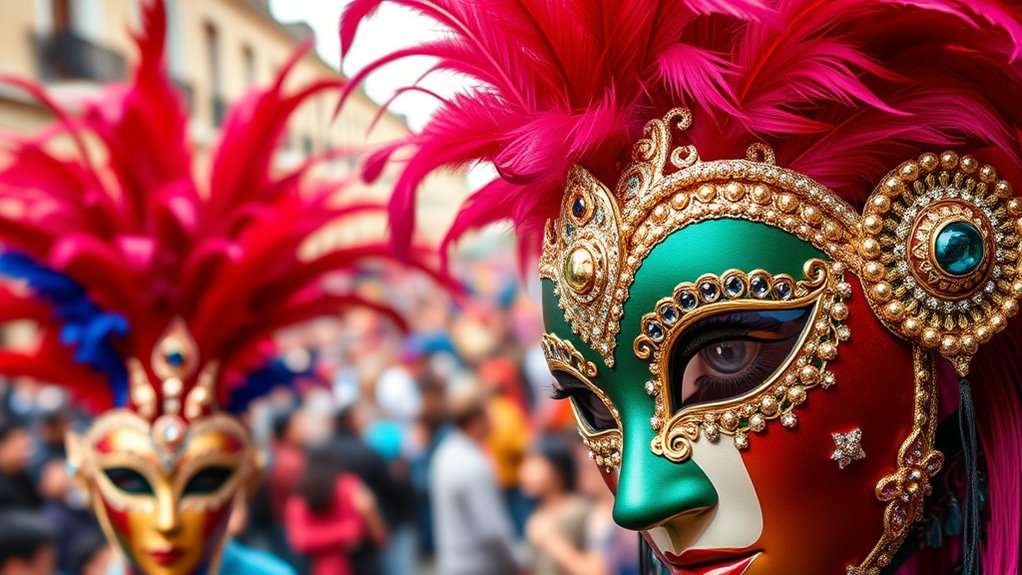
Have you ever wondered what makes Carnival masks so enchanting? These colorful, mysterious coverings have a rich history that dates back centuries and carry deep cultural significance. The origins of Carnival masks trace back to ancient civilizations like Egypt, Greece, and Rome, where masks were used in rituals, celebrations, and theatrical performances. Over time, these traditions blended and evolved, especially in Europe during the Middle Ages and the Renaissance, when masks became central to festivals that allowed people to escape societal norms and express themselves freely. This history of masks as symbols of transformation and anonymity has persisted through centuries, shaping the vibrant Carnival traditions we see today. Their symbolic meaning continues to resonate, emphasizing themes of liberation and identity. The cultural significance of Carnival masks goes beyond their decorative appeal. They serve as a powerful tool for social liberation, allowing wearers to shed their identities and adopt new personas temporarily. In places like Venice, masks became a way for people of different social classes to mingle without the constraints of hierarchy. Wearing a mask offered anonymity, giving individuals the freedom to speak, act, and behave differently than they normally would. This sense of liberation is at the heart of Carnival celebrations around the world, where masks symbolize a temporary escape from everyday life and social expectations. Throughout history, different cultures have used masks to embody spirits, deities, or mythological figures, giving each mask a unique meaning rooted in tradition. In South America, for example, masks are integral to indigenous rituals and ceremonies that honor ancestors and invoke spiritual protection. In the Caribbean, Carnival masks often feature elaborate designs that reflect local myths, history, and folklore. These masks are not just costumes; they are living symbols of cultural identity, storytelling, and collective memory. By wearing a mask, you connect with centuries of tradition and community, participating in a shared ritual that celebrates life, history, and cultural heritage. Today, Carnival masks continue to captivate people around the world, blending old-world symbolism with modern artistry. Whether in Venice’s intricate, ornate designs or in the bold, expressive styles of Caribbean festivities, masks remain a powerful expression of creativity and cultural pride. They remind us of their historical origins and cultural significance, inviting us to embrace the transformative spirit of Carnival. Wearing a mask isn’t just about concealment; it’s about stepping into a different world, honoring traditions, and celebrating the human desire for freedom, mystery, and self-expression. In that way, Carnival masks remain timeless, enchanting symbols that connect us to our collective past while inspiring our present celebrations.

Teacher Appreciation Gifts for Women, Christmas Ideas Gifts for Teachers
- Perfect for Various Teacher Occasions: Teacher's Week, Day, birthday, retirement, and more
- Complete 9-Piece Gift Set: Includes tote bag, glass, candle, makeup bag, keychain, bookmarks, sunflower crochet, dried flowers
- Thoughtful and Carefully Packaged: Expresses love and appreciation with each item
As an affiliate, we earn on qualifying purchases.
Frequently Asked Questions
How Do Carnival Masks Differ Culturally From Halloween Masks?
You’ll see that carnival masks differ culturally from Halloween masks through their deep roots in regional traditions and cultural symbolism. Carnival masks often reflect local history, religious beliefs, or societal roles, serving as expressions of cultural identity. Halloween masks tend to focus on themes like horror, fantasy, or pop culture. While Halloween masks emphasize entertainment, carnival masks celebrate cultural heritage, making them unique reflections of regional traditions and collective history.
Are Carnival Masks Suitable for Everyday Wear Beyond Festivals?
Carnival masks are generally not suitable for everyday wear beyond festivals. Only about 10% of people wear them casually, often due to the intricate mask maintenance and the need for costume coordination. Their elaborate designs and cultural significance make them more appropriate for special occasions. Wearing them daily might seem out of place and can even offend cultural sensitivities, so it’s best to reserve these masks for celebrations and events.
What Materials Are Traditionally Used in Authentic Carnival Masks?
Authentic carnival masks are traditionally crafted using materials like papier-mâché, feathers, beads, and vibrant fabrics. You’ll notice skilled mask makers use intricate mask making techniques to guarantee both aesthetic appeal and material durability. These masks are designed to withstand festivities and display detailed craftsmanship. When choosing one, consider how durable the materials are for long-term wear, and appreciate the artistry that makes each mask unique and culturally significant.
Can Carnival Masks Be Personalized or Customized Easily?
Yes, carnival masks can be personalized or customized easily. You can explore various mask personalization options like adding your own designs, colors, or embellishments to reflect your style. Many artisans and shops offer customization options, allowing you to choose materials, decorations, and even specific themes. This makes your mask unique and special, perfect for expressing your personality or fitting a particular event or celebration.
How Long Does It Typically Take to Craft a Traditional Carnival Mask?
You can expect the craft time estimate for a traditional carnival mask to be about a few days to a week, depending on detail and complexity. The mask-making duration involves delicate layers of artistry, like a painter’s brush gliding across a canvas. This process balances patience and skill, ensuring each piece captures the vibrant spirit of carnival. Rushing might blur the intricate beauty you’re aiming to create.
Conclusion
So, next time you see a Halloween costume, remember carnival masks are like hidden jewels in a treasure chest—equally dazzling but often overlooked. They carry centuries of mystery and tradition, waiting to be uncovered. Embrace their rich history and let them transform your next celebration into a voyage through time. After all, these masks are the keys to a world of enchantment, waiting just beneath the surface, ready to reveal their secrets when you least expect it.
Pool season Picks
robotic pool cleaners
As an affiliate, we earn on qualifying purchases.