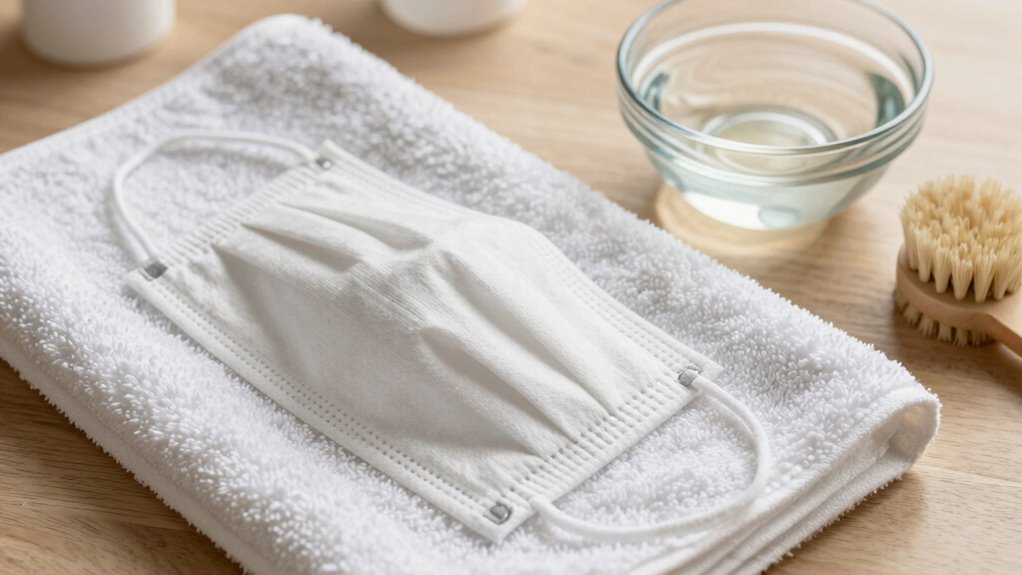

To clean and store your masks without damage, hand wash them gently with mild detergent, avoiding harsh chemicals or bleach that could weaken the fabric. Rinse thoroughly and air dry in a well-ventilated area away from direct sunlight. Store masks in breathable containers or fabric-lined drawers, ensuring they are completely dry before storage to prevent mold or bacteria. Proper care maintains their effectiveness and comfort—keep exploring to learn more tips for long-lasting mask maintenance.

Get decor and gifts delivered free with Prime
- Fast, free delivery on millions of items
- Prime Video, Amazon Music and more included
- Member-only deals all year
Key Takeaways
- Use gentle detergents and rinse thoroughly to clean masks without leaving residues or damaging fabric.
- Air dry masks in well-ventilated areas, avoiding high heat to prevent warping and fabric weakening.
- Store masks in dry, breathable containers away from direct sunlight to prevent mold and fabric degradation.
- Wash and dry masks promptly after use or dampness to prevent mold growth and maintain integrity.
- Handle masks carefully when folding or storing to preserve fit, breathability, and filtration effectiveness.
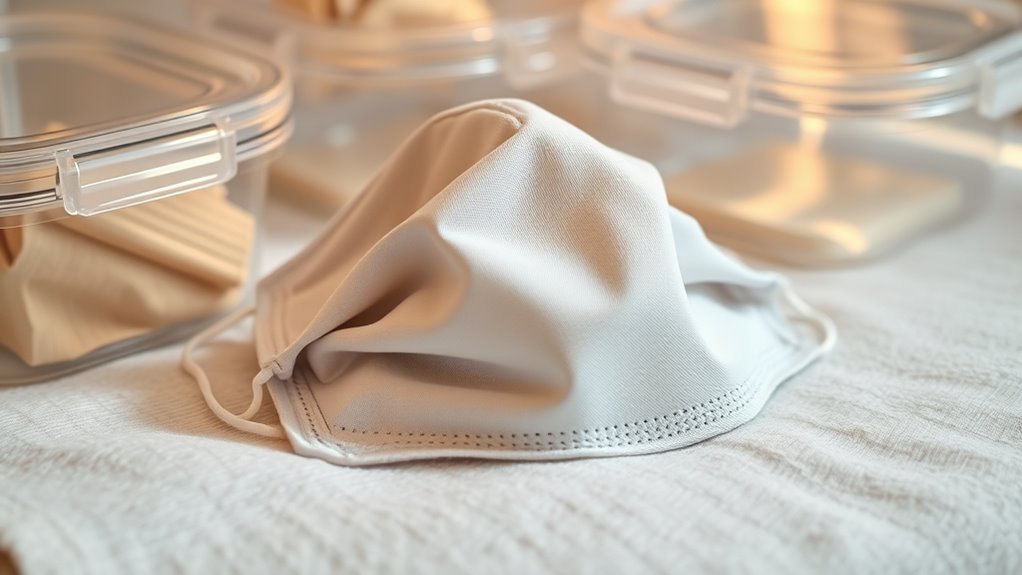
Taking care of your DIY face masks is essential to guarantee they remain effective and safe to use. Proper cleaning and storage are key to maintaining their protective qualities and comfort. When it comes to cleaning, focus on preserving the fabric’s breathability, which is vital for comfort and filtration efficiency. Use gentle detergents that clean thoroughly without leaving residues that could clog fibers or reduce airflow. Avoid harsh chemicals or bleach, as these can weaken the fabric and diminish its breathability over time. After washing, make sure to rinse thoroughly to remove all soap traces, which can cause irritation or reduce airflow through the mask. Additionally, consider the type of fabric to ensure you are not damaging any special coatings or layers that enhance filtration. Drying your mask properly is equally important. Air drying is generally best because it minimizes potential damage caused by heat. Hang your mask in a well-ventilated area, ideally outdoors or near an open window, to facilitate thorough drying and airflow. Avoid using high-heat settings on dryers, as excessive heat can warp or weaken the fabric, compromising both breathability and fit. When storing your mask, pay attention to storage humidity. Keep it in a dry, breathable container or a clean, fabric-lined drawer to prevent moisture buildup. Excess moisture can promote mold growth and bacterial proliferation, which defeats the purpose of wearing a clean mask. If your mask gets damp or sweaty during use, wash and dry it promptly before storing to prevent humidity-related issues. Proper storage also involves keeping your masks away from direct sunlight, which can degrade certain fabrics over time. Sun exposure may cause fading or weakening of fibers, reducing both comfort and protective performance. Additionally, avoid placing masks in airtight containers or plastic bags without ventilation. Trapped humidity inside can create a breeding ground for germs and mold, making your mask unsafe to wear. Instead, fold your mask carefully, ensuring it’s completely dry, and store it in a clean, breathable fabric bag or container. This approach helps maintain a dry environment, preserves fabric integrity, and keeps the mask ready for reuse. Remember that air purifier technology can help reduce airborne contaminants in your environment, supporting the overall safety of your masks and air quality.
Frequently Asked Questions
Can I Use Bleach to Disinfect My Mask?
Using bleach to disinfect your mask isn’t recommended because it can compromise fabric durability and safety. Bleach safety is tricky; it may cause irritation or damage the material, especially if not properly diluted. Instead, opt for hot water and soap or a gentle disinfectant approved for fabrics. This approach guarantees your mask stays effective and durable, keeping you safe without risking damage from harsh chemicals like bleach.
How Often Should I Replace My Reusable Mask?
Think of your reusable mask as a loyal friend; it needs regular check-ups to stay effective. You should replace it every 30 to 60 days, depending on mask material and wear. If it becomes visibly damaged, stretched out, or retains odors despite cleaning, it’s time for a new one. Following this replacement frequency guarantees your mask remains a reliable barrier, keeping you safe and comfortable.
Is It Safe to Air Dry My Mask Outside?
Yes, it’s safe to air dry your mask outside if you follow proper outdoor cleaning safety and air drying tips. Place your mask in a well-ventilated area, ideally in direct sunlight for natural disinfection, and avoid windy or dusty spots. Turn it inside out to ensure even drying, and hang it securely. Make sure it’s fully dry before storing or wearing again to prevent mold or bacteria growth.
What Types of Fabric Are Best for DIY Masks?
Think of your mask as a trusty shield in a battle; you want it to withstand wear and tear. Cotton and linen are your best allies because of their fabric durability and breathability, making them comfortable and effective. Avoid flimsy or synthetic materials that may break down easily or restrict airflow. By choosing these natural fabrics, you guarantee your mask remains a reliable, breathable barrier for everyday use.
How Do I Prevent Mask Deformation During Washing?
To prevent mask deformation during washing, always opt for gentle cleaning methods like hand washing with mild detergent. Steer clear of wringing or twisting the fabric, as this can distort the mask shape. Instead, gently squeeze out excess water and reshape the mask while it’s damp. Air dry flat to maintain mask shape preservation, ensuring your mask stays effective and comfortable for repeated use.
Conclusion
Keeping your mask clean and well-stored is essential for effective protection and longevity. Did you know that the CDC recommends washing masks after every use? By following simple DIY care tips, you can extend your mask’s lifespan and maintain its effectiveness. Just remember to handle it gently and store it properly. A little extra effort can make a big difference in keeping you safe and comfortable every day.
Halloween Picks
halloween
As an affiliate, we earn on qualifying purchases.