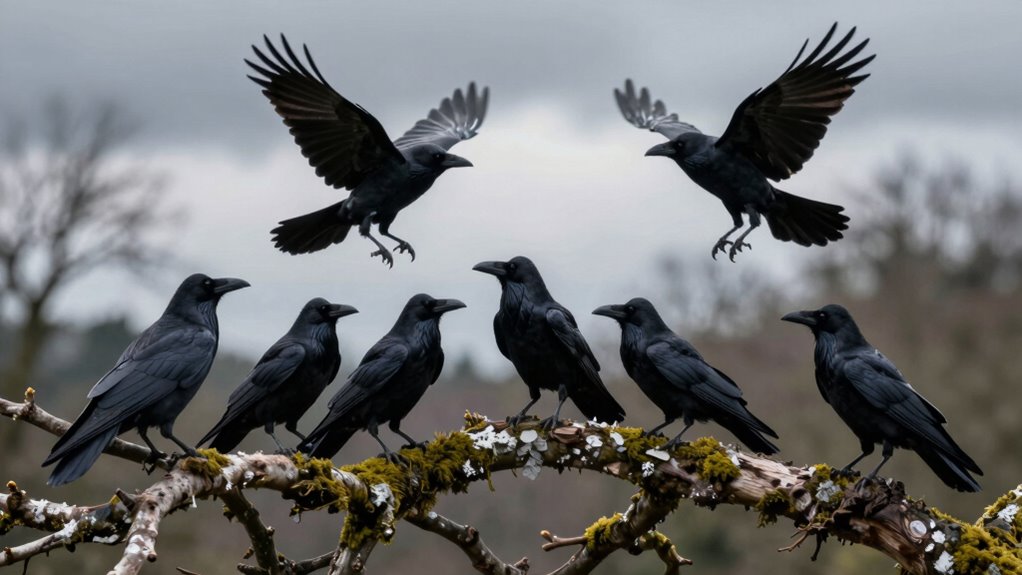

Ravens and crows have long served as powerful messengers, omens, and symbols in folklore across the globe. They’re seen as links between the physical and spiritual worlds, signaling change, mystery, or even danger. Cultures like Norse, Celtic, Native American, and Asian traditions interpret these birds differently—sometimes as wise guides, creators, or tricksters. Their rich symbolism reflects our fascination with the unknown. If you keep exploring, you’ll uncover the intriguing stories behind these mysterious birds.

Get decor and gifts delivered free with Prime
- Fast, free delivery on millions of items
- Prime Video, Amazon Music and more included
- Member-only deals all year
Key Takeaways
- Ravens and crows are seen as messengers between the physical and spiritual worlds across many cultures.
- They symbolize both wisdom and transformation, often signaling change or impending events.
- In Norse mythology, Odin’s ravens represent insight, prophecy, and knowledge.
- Celtic and Native American folklore associate them with death, transition, and guiding souls.
- Their symbolism varies but consistently reflects themes of mystery, duality, and connection to the supernatural.
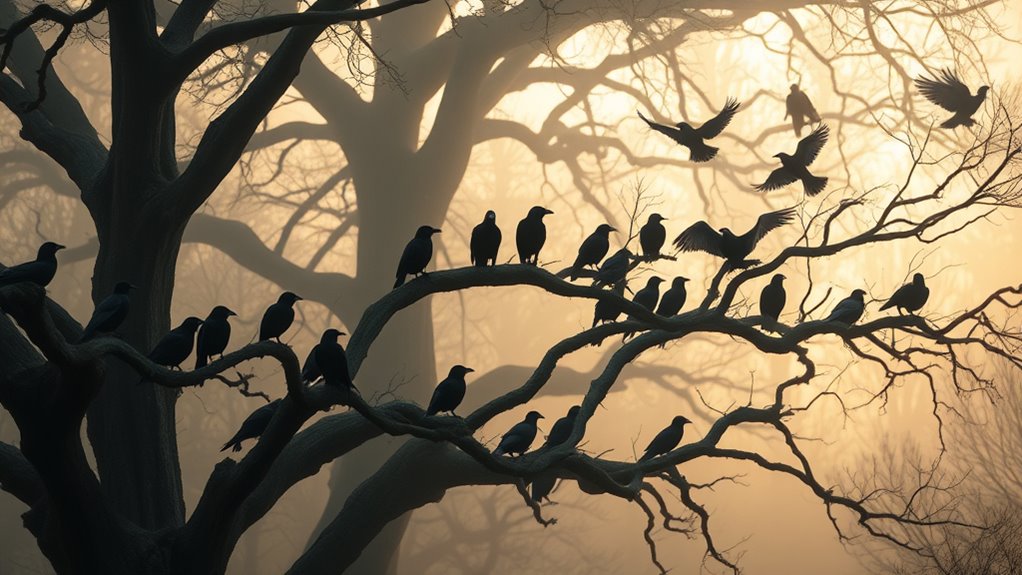
Ravens and crows have long fascinated humanity, their black feathers and sharp calls sparking myths and legends across cultures. These birds are powerful symbols that carry deep meanings in various societies, and understanding their symbolic significance can reveal much about human beliefs and fears. In many traditions, ravens and crows are seen as messengers between the worlds—connecting the physical domain with the spiritual or supernatural. Their presence often signals change, mystery, or even impending danger, making them prominent figures in folklore and myth.
Ravens and crows symbolize mystery, transformation, and spiritual messages across diverse cultures and beliefs.
In Norse mythology, you might notice ravens as symbols of wisdom and prophecy. Odin, the chief god, is famously accompanied by two ravens—Huginn and Muninn—whose names mean “Thought” and “Memory.” These birds are not just messengers but also symbols of intelligence and insight, representing Odin’s ability to see beyond the present. Their cultural representation underscores a respect for knowledge, and their visits are often interpreted as divine omens. Similarly, in Celtic folklore, crows and ravens are linked with the battlefield, death, and the afterlife. They symbolize transformation and the cycle of life and death, often seen as guides for souls passing from this world to the next.
Across different cultures, the symbolic meanings of these birds shift, but they consistently embody the idea of duality—both protectors and harbingers. In Native American traditions, ravens are seen as creators and tricksters, embodying both wisdom and mischief. Their cultural representations emphasize their role as mediators, capable of revealing hidden truths or leading you astray. In some Asian cultures, crows are considered symbols of good fortune, prosperity, or even messengers of ancestors, highlighting a more positive view of their presence. Additionally, the behavioral traits of these birds have contributed to their mythic status, as their intelligence and adaptability make them seem almost mystical.
These cultural interpretations influence how societies perceive and interact with ravens and crows. Their symbolism often appears in art, literature, and ritual practices, reinforcing their importance. Whether viewed as ominous signs or divine guides, these birds serve as powerful reminders of the unseen forces at work in our lives. The rich symbolism surrounding ravens and crows reveals humanity’s fascination with the mysterious and the unknown. Their cultural representations continue to evolve, but their role as messengers, symbols of transformation, and symbols of wisdom persist across time and tradition. By recognizing these symbolic meanings, you gain a deeper appreciation of how humans have long embedded these birds into their collective consciousness, shaping myths and legends that endure today.
raven and crow symbolism art prints
As an affiliate, we earn on qualifying purchases.
As an affiliate, we earn on qualifying purchases.
Frequently Asked Questions
How Do Ravens and Crows Communicate With Each Other?
You observe that ravens and crows communicate through vocalization patterns like caws, clicks, and rattles, which convey different messages. They also use body language, such as wing gestures and postures, to signal intentions or alert others. By combining these vocalizations and body language cues, they effectively exchange information, warn about predators, or coordinate group activities, making their communication intricate and highly adaptive to their environment.
Are There Any Cultural Differences in Crow and Raven Symbolism Worldwide?
You’ll find that cultural symbolism and mythological significance of crows and ravens vary worldwide. In some cultures, they’re seen as messengers or omens of change, while others associate them with death or protection. For example, in Norse mythology, ravens symbolize wisdom and prophecy, whereas in Native American traditions, they often represent transformation and creativity. These diverse beliefs show how deeply different societies interpret these intelligent birds’ roles.
What Are Some Notable Historical Stories Involving These Birds?
You might find yourself drawn into mythological stories where ravens and crows serve as winged messengers bridging worlds. These birds appear in legends like Odin’s ravens Huginn and Muninn, who fly across domains gathering knowledge, embodying avian symbolism of wisdom. In Native American tales, crows act as tricksters and creators. These stories reveal how ancient civilizations imbued these birds with deep spiritual significance, making them timeless symbols of mystery and transformation.
Do Ravens and Crows Have Any Unique Physical or Behavioral Traits?
You’ll notice ravens and crows have distinctive feather coloration, with glossy black feathers that shimmer in the light. They exhibit complex bird flight patterns, often soaring high or performing acrobatic dives. These birds are highly intelligent, showing behaviors like problem-solving and tool use. Their agility and adaptability make them unique among birds, and their dark plumage often symbolizes mystery and intelligence across cultures.
How Do Modern Societies Interpret Raven and Crow Symbolism Today?
Today, you might see ravens and crows as symbols of mystery and intelligence in modern literary works. Superstitions surrounding ravens often link them to hidden knowledge or warnings, influencing how societies interpret their presence. In contemporary culture, they represent transformation, adaptability, and sometimes omen-like messages, blending ancient beliefs with new interpretations. Overall, these birds continue to inspire stories and symbolism, reflecting their enduring significance across different contexts.
Conclusion
You might be surprised to learn that in many cultures, over 70% associate ravens and crows with both wisdom and mystery. These birds have long symbolized messages from beyond and omens of change. Their dark presence often sparks curiosity and respect, reminding you that nature’s symbols hold deep meanings. So next time you spot a raven or crow, remember—you’re witnessing a creature woven into centuries of myth and folklore, bridging the known and the unknown.
Halloween Picks
halloween
As an affiliate, we earn on qualifying purchases.