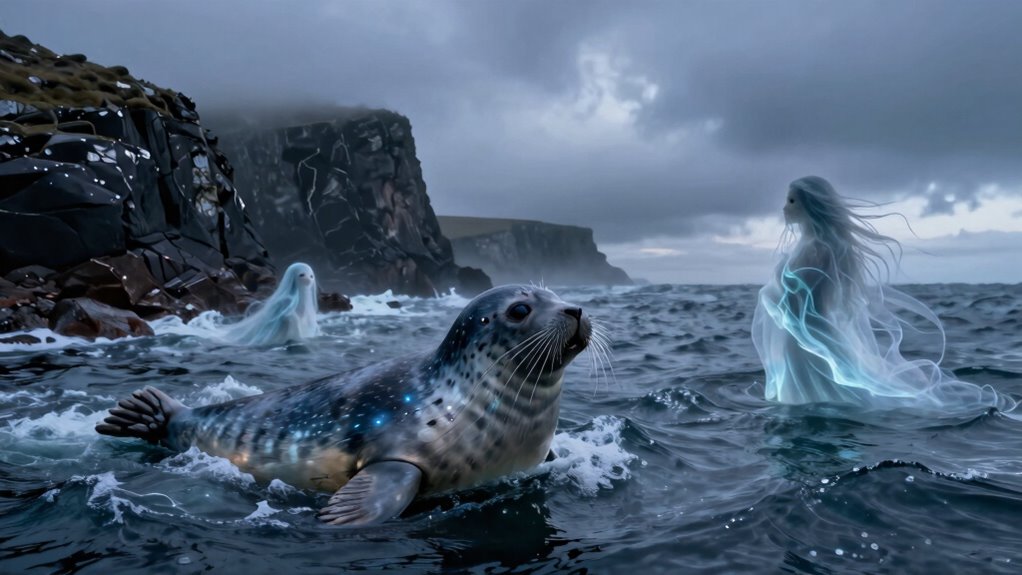

In Scotland’s folklore, selkies and sea spirits offer haunting stories beyond ghost tales, revealing mysterious underwater worlds full of enchanting and dangerous creatures. You might imagine seals shedding their skins to become human lovers or beautiful spirits lurking beneath the waves, embodying longing and loss. These legends reflect the ocean’s power and secrets, blending myth, mystery, and reverence. If you explore further, you’ll uncover even more of these mesmerizing tales that continue to echo along Scotland’s coast.
Listen free for 30 days with Audible
Thousands of audiobooks and originals — cancel anytime.
As an affiliate, we earn on qualifying purchases.
Key Takeaways
- Scottish folklore depicts selkies as enchanting sea creatures that can shed their seal skins to become human, symbolizing longing and mystery.
- Sea spirits in Scottish myth often appear as beautiful women or fearsome monsters, embodying the ocean’s unpredictable and spooky nature.
- These legends serve as cautionary tales, emphasizing respect for the ocean’s power and the danger of venturing into its mysterious depths.
- Transformations between seals and humans reflect the fluid boundary between land and sea, adding a supernatural, eerie element to coastal stories.
- The enduring legends evoke a sense of mystique, inspiring exploration of Scotland’s submerged past and the spooky allure of its sea spirits.
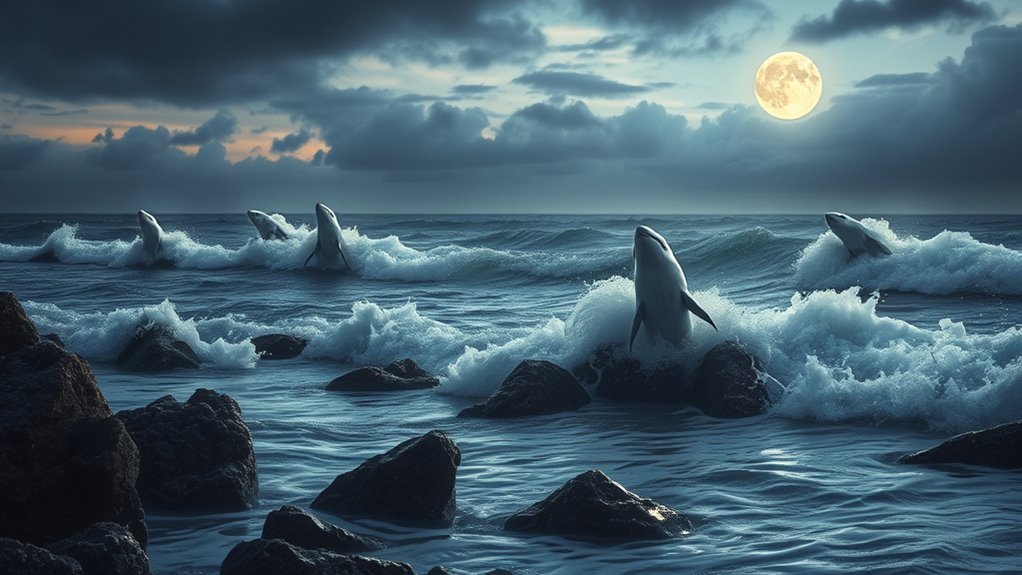
In the misty waters surrounding Scotland, tales of selkies and sea spirits have fascinated local communities for centuries. These stories originate from a rich underwater folklore that has persisted across generations, blending myth and mystery. You might find yourself drawn into legends of mythical transformations, where humans become seals or spirits emerge from the depths, blurring the line between reality and enchantment. Selkies, in particular, are renowned for their ability to shed their seal skins and walk on land as humans, only to slip back into the sea when the mood strikes. It’s a compelling story of longing and loss, embodying the deep connection between the Scottish coast and the mysterious creatures that inhabit it.
In Scottish waters, selkies’ tales of transformation and longing reveal a deep bond with the mysterious sea spirits.
This underwater folklore is filled with tales of spirits lurking beneath the waves—beings that can appear as beautiful women or fearsome monsters, depending on the story. You’re encouraged to imagine a world where the boundaries between sea and land are fluid, where spirits and mythical creatures move seamlessly through both domains. These stories often serve as cautionary tales or expressions of respect for the ocean’s power, warning sailors and villagers alike of the dangers lurking beneath the surface. The selkies, with their enchanting allure and tragic fates, symbolize the allure of the sea and its secrets, reminding you that some mysteries might never be fully understood or explained.
The transformative nature of these tales reveals the deep cultural significance of the sea in Scottish history. You might see these stories as more than mere entertainment; they’re a reflection of the awe and reverence the Scots have for the ocean’s unpredictable moods. The idea of mythical transformations isn’t just about shape-shifting; it embodies the ever-changing nature of the sea itself—beautiful, dangerous, and full of unseen wonders. As you explore these stories, you begin to realize that they serve as a bridge to an ancient world where spirits and humans coexist, and where the ocean’s depths hold secrets beyond your wildest imaginations. Additionally, the stories often include rituals and taboos, emphasizing the respect and reverence that ancient Scottish communities held for the ocean and its mysteries.
Whether you believe in the supernatural or not, you can’t deny the power these stories hold. They evoke a sense of mystery, beckoning you to explore Scotland’s submerged past and the legends that continue to thrive beneath the waves. The underwater folklore of selkies and sea spirits remains a fascinating chapter in Scottish culture, whispering to those who listen about the magic, melancholy, and myth that define the coast’s enduring mystique.
Scottish folklore selkie figurine
As an affiliate, we earn on qualifying purchases.
As an affiliate, we earn on qualifying purchases.
Frequently Asked Questions
Are There Modern Sightings of Selkies in Scotland Today?
You might find reports of modern sightings and sea spirit encounters, but there’s no solid evidence confirming selkies still appear today. Many enthusiasts believe these stories are modern folklore or local legends passed down through generations. If you explore coastal areas of Scotland, especially around the Orkney and Shetland Islands, you might hear local tales or encounter people who claim to have seen mysterious seals or strange occurrences, fueling ongoing fascination with selkie legends.
How Do Scottish Sea Spirits Compare to Those in Other Cultures?
You’ll find Scottish sea spirits like selkies share mythical comparisons with those in other cultures, yet cultural variations shape their stories uniquely. Unlike Japanese kappas or Greek sirens, Scottish selkies are often portrayed as enchanting seal-human shapeshifters with a bittersweet longing. These differences highlight how each culture interprets the sea’s mysteries, blending local folklore with universal themes of love, loss, and the unknown beneath the waves.
What Is the Historical Origin of Selkie Legends?
You might wonder about the mythical origins of selkie legends, which likely stem from ancient seafaring communities observing seals and humans’ mysterious connection. These stories serve as rich cultural symbolism, embodying themes of longing, transformation, and boundary-crossing. Over centuries, such tales evolved, intertwining local beliefs with sea lore, creating a enthralling tapestry that reflects humanity’s fascination with the ocean’s secrets and the thin line between reality and myth.
Are There Any Specific Rituals Associated With Sea Spirits?
You might participate in ritual ceremonies to honor sea spirits, where offerings like shells, food, or symbolic objects are presented to seek favor or protection. These rituals often involve prayers, chants, or dances, creating a connection between you and the spirits. Sea spirit offerings are meant to appease these mystical beings, fostering good fortune and safety during sea voyages or fishing endeavors.
How Do Scottish Communities Today Honor Their Sea Folklore?
Like waves crashing on the shore, Scottish communities honor their sea folklore through coastal storytelling and marine conservation efforts. You might attend local festivals, share traditional tales, or participate in beach cleanups that celebrate the ocean’s magic. These acts keep sea spirits alive in hearts and habitats, blending myth with action. By protecting marine life, you help preserve the stories that connect people to the sea’s mysterious, enchanting spirit.
Conclusion
As you plunge into Scotland’s rich lore of selkies and sea spirits, you realize these stories aren’t just tales—they’re windows into a world where the line between land and sea blurs. These legends remind you that the ocean’s mysteries are deeper than they appear, hiding secrets beneath the surface. So, keep your eyes open and your mind curious; sometimes, the most enchanting truths are just waiting to be uncovered beneath the waves.
College move-in / dorm season Picks
dorm essentials
As an affiliate, we earn on qualifying purchases.