On St. Patrick’s Day, Irish folklore gets pretty wild with tales of bans on pagan practices, yet these legends still influence celebrations today. You’ll find stories of leprechauns, mischievous spirits guarding hidden treasure, and shamrocks symbolizing protection and luck. Despite efforts to suppress pagan customs, these myths persisted and became part of Ireland’s vibrant traditions. If you keep exploring, you’ll discover how ancient beliefs continue to shape modern festivities in surprising ways.
Key Takeaways
- Irish authorities historically banned pagan customs, but symbols like shamrocks and leprechauns persisted in popular culture.
- Leprechauns symbolize Irish trickery and are linked to myths where catching one grants wishes, blending folklore with modern celebrations.
- Shamrocks, used by St. Patrick, represent the Holy Trinity and are believed to ward off evil spirits, symbolizing faith and protection.
- Despite bans, Irish folklore evolved, embedding spirits, blessings, and superstitions into festive traditions over centuries.
- Modern St. Patrick’s Day celebrations continue to honor these ancient myths, blending sacred symbols, trickster tales, and cultural identity.
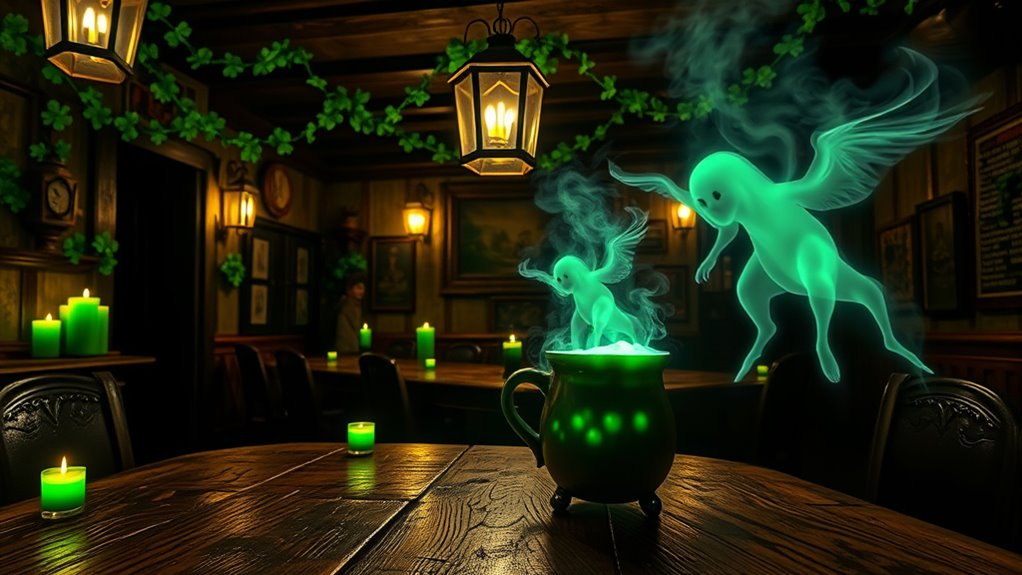
Have you ever wondered why St. Patrick’s Day is filled with so many quirky traditions and strange beliefs? It all ties back to ancient Irish folklore, where leprechaun myths and shamrock symbolism play central roles. Leprechauns, those tiny, mischievous fairy men, are often depicted as guardians of hidden treasure, and their stories have fascinated people for centuries. According to legend, if you catch a leprechaun, he must grant you three wishes in exchange for his freedom. These stories aren’t just amusing tales; they serve as reminders of Ireland’s rich mythological past. The leprechaun’s elusive nature and penchant for trickery symbolize the unpredictable spirit of Irish folklore. Over time, these myths became intertwined with modern celebrations, adding a touch of magic and mystery to St. Patrick’s Day.
Meanwhile, shamrock symbolism is deeply embedded in Irish culture and folklore. The three-leafed plant is said to have been used by St. Patrick himself to explain the Holy Trinity, making it a powerful symbol of faith and protection. People believed that carrying a shamrock could ward off evil spirits and bring good luck, which is why you’ll see these little plants everywhere during the holiday. The shamrock’s significance extends beyond religion; it also represents Ireland’s lush landscape and the hope for prosperity. Wearing shamrocks or incorporating them into decorations isn’t just a tradition — it’s a way to connect with Ireland’s spiritual roots and to invite blessings into your life. This symbolism has persisted through generations, transforming from sacred talismans into festive motifs. Additionally, the persistence of these symbols in contemporary celebrations highlights their cultural significance and enduring influence on Irish identity.
But things get even stranger when you look into the historical bans and superstitions surrounding these symbols. At times, Irish authorities or the church sought to suppress some of these pagan elements, seeing them as superstitions that threatened religious authority. Yet, these symbols refused to fade away. Instead, they became part of the broader folklore that fuels the lively celebrations today. The belief in spirits, bans on certain practices, and the idea of blessings all blend into a rich tapestry of traditions that make St. Patrick’s Day so unique. Whether it’s the playful antics of leprechauns or the spiritual power of shamrocks, these stories remind you that Irish folklore is alive and vibrant, constantly evolving but rooted in ancient beliefs. So next time you see a shamrock or hear a leprechaun myth, remember you’re engaging with centuries of Irish tradition that have shaped the way millions celebrate this lively holiday.

MM MEGIJAAKI 12 Pack Mini Leprechaun Figurine St. Patrick's Day Mini Figures to Hide, Small Leperchan Figurines for Leprechaun Trap Table Decor (12)
- A Swarm of Lucky Charm: Welcome a troop of 12…
- Ultimate St. Patrick’s Day Party Supplies: This versatile set is the…
- Classic, Cute & Full of Character: Each mini leprechaun is bursting…
As an affiliate, we earn on qualifying purchases.
As an affiliate, we earn on qualifying purchases.
Frequently Asked Questions
Are There Any Specific Foods Traditionally Associated With St. Patrick’s Day?
You typically enjoy Irish stews and classic corned beef and cabbage on St. Patrick’s Day. Green beverages, like green beer or shamrock-shaded cocktails, also add festive flair. These foods and drinks celebrate Irish culture and make the day special. You’ll find that hearty Irish stews warm you up, while green beverages add fun, making your celebration lively and authentic.
How Did Shamrocks Become a Symbol of Irish Identity?
You might think shamrocks are just cute plants, but they’re powerful symbols of Irish nationalism. Legend says St. Patrick used the three-leaf shamrock to teach about the Holy Trinity, intertwining religion and identity. Over time, shamrock symbolism grew, representing Ireland’s resilience and pride. Today, they stand as a badge of Irish heritage, reminding you of a rich history rooted in unity and cultural strength.
You might not know that Irish legends include Leprechaun myths, where these mischievous fairies hide pots of gold, or stories about Celtic druids who believed in sacred spirits and ancient magic. Some say St. Patrick’s influence merged with these older beliefs, blending Christianity with Celtic mysticism. These lesser-known legends reveal Ireland’s rich tapestry of folklore, showing how ancient spirits and mythic creatures became part of St. Patrick’s story.
Are There Modern-Day Rituals or Superstitions Unique to Certain Regions?
You’ll find regional customs and modern superstitions still alive on St. Patrick’s Day. In some areas, people wear specific colors or follow unique rituals like jumping over fires or avoiding certain foods. Others believe in new superstitions, such as carrying lucky charms or avoiding unlucky numbers. These local traditions add a fresh twist to the holiday, blending old folklore with contemporary beliefs, making each celebration feel special and regional.
How Has St. Patrick’s Day Evolved Globally Over the Centuries?
You see, St. Patrick’s Day has evolved through cultural transformations into a global celebration that blends Irish traditions with local customs. You might notice parades, festivals, and themed events worldwide, reflecting how different regions adapt the holiday. Over centuries, it’s shifted from a religious feast to a festive occasion emphasizing unity, history, and fun. So, as you partake, remember you’re part of a worldwide evolution of this vibrant celebration.
Conclusion
As you celebrate St. Patrick’s Day, remember the strange tales behind the shamrocks and leprechauns. From bans on certain festivities to blessings that ward off evil, the folklore is as colorful as the day itself. It’s amusing how a holiday known for parades and pints also holds secrets of spirits and superstitions. So, while you enjoy the fun, consider the curious contrasts that make this day both lively and mysterious.