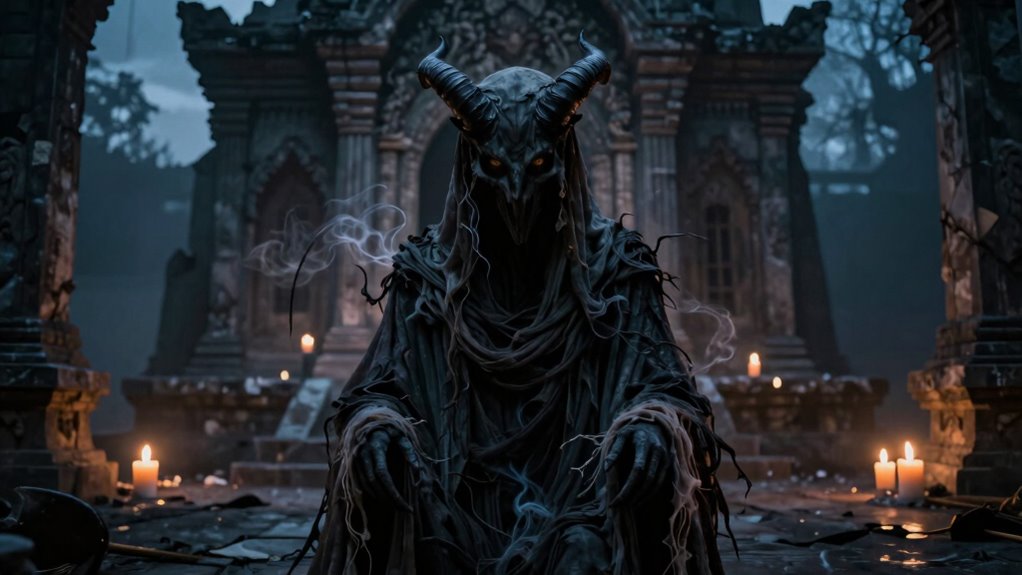

You might find it surprising, but djinn’s journey from ancient Middle Eastern spirits to Halloween icons reflects a long history of transforming folklore into symbols of mystery. Originally seen as powerful, shape-shifting beings with both good and evil traits, they now represent the unknown and supernatural in modern stories. Their spooky, elusive image fits perfectly with Halloween’s eerie atmosphere. Keep exploring to uncover how their cultural roots shape their role in today’s spooky traditions.
Open a free Amazon Business account
Business pricing, bulk buying and tax-exempt orders.
As an affiliate, we earn on qualifying purchases.
Key Takeaways
- Djinn’s mysterious, shape-shifting nature aligns with Halloween’s theme of supernatural and unknown entities.
- Their dual symbolism of benevolence and malevolence enhances their allure as complex Halloween icons.
- Evolving stories portray djinn as shadowy, elusive figures, fitting Halloween’s eerie and spooky atmosphere.
- Cultural adaptation transforms djinn from ancient spirits into symbols of supernatural power and mystery.
- Modern Halloween imagery emphasizes their role as mysterious beings who grant twisted wishes or lurk in darkness.
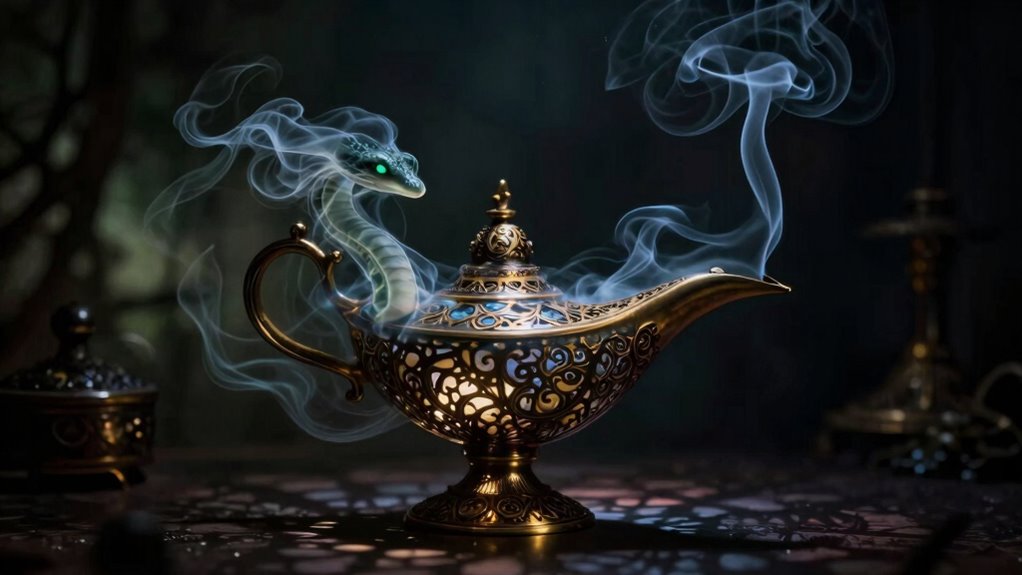
As Halloween approaches, many people think of ghosts, witches, and monsters, but there’s a growing fascination with the mysterious and supernatural figure of the djinn. Historically rooted in ancient folklore, djinn are powerful spirits from Middle Eastern tales, often depicted as shape-shifters capable of granting wishes or causing mischief. Their origins trace back centuries, where they appeared in stories from the Arabian Nights and other ancient texts, embodying both benevolent and malevolent forces. Their cultural significance as indigenous knowledge emphasizes their deep roots in regional traditions and beliefs. Over time, these stories transformed into symbols of the unknown, embodying mysteries beyond human comprehension.
Today, the djinn have taken on a new role as Halloween icons, blending their ancient symbolism with modern storytelling. You might see them depicted as shadowy, elusive figures lurking in dark corners or as entities that grant wishes with a twist. Their image has evolved from the original tales, where they were complex spiritual beings, into symbols of supernatural power that fit neatly within Halloween’s eerie atmosphere. This shift reflects how cultures adapt stories to fit contemporary fears and fascinations, turning ancient legends into pop culture icons. Interestingly, the adaptation of djinn into modern folklore demonstrates how cultural evolution influences the way stories are reshaped over time.
The transformation of the djinn into a Halloween figure also highlights how ancient folklore influences modern symbolism. You recognize this in the way they’re portrayed in movies, costumes, and decorations—mysterious, powerful, and slightly ominous. This modernization strips away some of their original cultural context but maintains the core idea of entities that dwell in the unseen world, waiting to be summoned or feared. Their ambiguity makes them perfect for the holiday’s themes of mystery and the supernatural. You might see them as part of haunted house narratives or costume ideas because they evoke that sense of otherworldly power and unpredictability.
What makes the djinn so compelling as a Halloween icon is their dual nature. They can symbolize both the danger and the allure of the unknown. In ancient stories, they were neither inherently good nor evil—more like reflections of human fears and desires. Now, as symbols in Halloween culture, they serve as reminders that some mysteries are better left unexplored. Their presence on Halloween emphasizes the thrill of encountering the supernatural, echoing their original role in folklore as beings that blur the lines between worlds. That timeless ambiguity keeps the djinn relevant, transforming them from ancient legends into modern symbols of the mysterious and supernatural for your holiday celebrations. Recognizing their cultural significance helps appreciate how folklore influences modern traditions and symbolism.
As an affiliate, we earn on qualifying purchases.
Frequently Asked Questions
How Did Djinn Originally Appear in Middle Eastern Folklore?
In ancient stories, djinn appeared as supernatural beings from Middle Eastern folklore, embodying both good and evil. Their cultural origins trace back to pre-Islamic Arabian traditions, where they were seen as spirits or entities with immense power, living in an unseen world. You’d find them described as shape-shifters or tricksters, reflecting the complex nature of these beings in Middle Eastern culture, long before they became Halloween icons.
Are Djinn Considered Entirely Evil or Can They Be Benevolent?
You might think djinn are purely mischievous, but they’re more like Benevolent spirits sometimes, embodying moral ambiguity. Not all are evil; some guide and protect, while others cause mischief. Their nature varies based on stories and beliefs, reflecting a complex mix of intentions. So, instead of seeing them as entirely wicked, recognize that djinn can be both good and bad, depending on their circumstances and the stories you hear.
When Did Djinn Start Appearing in Western Popular Culture?
You see, djinn started appearing in Western popular culture during the 18th and 19th centuries, influenced by medieval demonology and increased interest in supernatural mythology. Writers and scholars began translating Middle Eastern texts, which introduced djinn as mysterious, powerful beings. Over time, their portrayal shifted from purely malevolent spirits to complex characters, blending into Western horror, fantasy, and Halloween themes, ultimately becoming iconic symbols of supernatural intrigue.
How Do Djinn Differ From Traditional Ghosts or Spirits?
You’ll notice that djinn differ from traditional ghosts or spirits because they’re supernatural entities originating from the spiritual domains, not just restless souls. Unlike ghosts, which are often tied to specific locations or tragic events, djinn are independent beings with their own personalities and powers. They’re seen as more complex, capable of both good and evil, and are considered active participants in the spiritual domains rather than merely echoes of the past.
What Are Common Misconceptions About Djinn in Modern Media?
You might think djinn are just evil spirits from stories, but media stereotypes and cultural reinterpretations often distort them. Movies portray djinn as villains or wish-granting monsters, overlooking their complex, nuanced origins. This simplified image acts like a shadow, hiding their true nature—neither entirely good nor evil. Recognizing these misconceptions helps you see djinn as rich, cultural symbols, not just spooky figures, enriching your understanding beyond popular stereotypes.
Conclusion
Today, you see djinn as spooky Halloween icons, but their origins are far more nuanced. Imagine a family in the Middle East who, centuries ago, believed djinn could protect or harm them, reflecting complex cultural fears. Now, as symbols of mystery and the supernatural, djinn have transformed into a universal icon that taps into your curiosity about the unknown. Their evolution shows how folklore adapts, blending tradition with modern myth to keep the stories alive.
Labor Day sales Picks
labor day deals
As an affiliate, we earn on qualifying purchases.