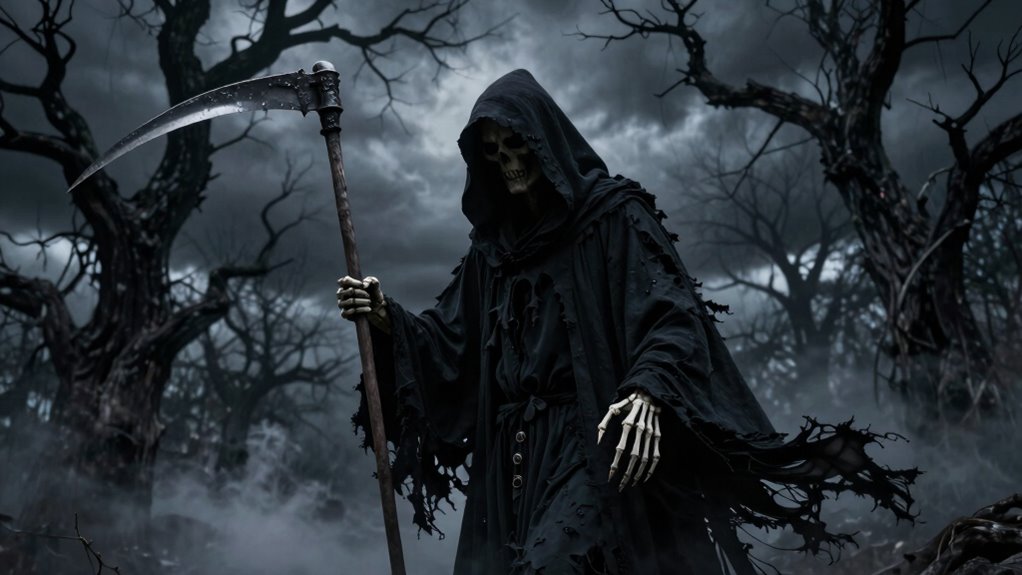

The Grim Reaper symbolizes more than just death; it’s a powerful reminder that mortality is universal and unavoidable. Picture the scythe harvesting souls, emphasizing life’s fleeting nature and the cycle of life and death across cultures. It also acts as a mirror, showing that no one escapes death, regardless of status. If you want to uncover the deeper meanings behind this haunting figure and how it unites us all, keep exploring.

Get decor and gifts delivered free with Prime
- Fast, free delivery on millions of items
- Prime Video, Amazon Music and more included
- Member-only deals all year
Key Takeaways
- The Grim Reaper symbolizes the universal and inescapable nature of mortality across cultures.
- Its scythe represents the harvest of souls, marking the transition from life to death.
- The figure embodies equality, reminding us that death spares no social or moral status.
- In some traditions, it is viewed as a guide aiding spiritual understanding of mortality.
- Overall, it reflects acceptance of death as a natural, integral part of human existence.
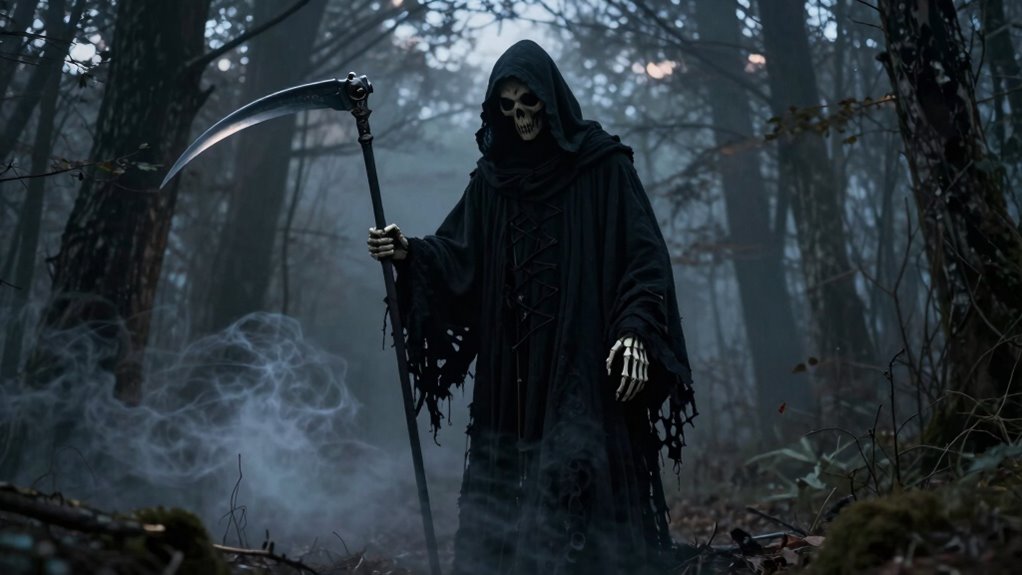
Throughout history, the Grim Reaper has often been portrayed as a chilling figure cloaked in darkness, but beneath its eerie façade lies a deeper symbolism that reflects humanity’s relationship with mortality. This figure isn’t just a spooky character from folklore; it embodies complex ideas about life, death, and the inevitable nature of mortality. When you look at the Grim Reaper, you’re witnessing a symbolic representation that transcends individual cultures, serving as a universal icon of death’s certainty. Its presence in stories and art isn’t meant to scare for scare’s sake; it’s a reminder that death is an inescapable part of the human experience.
In different cultures, the Grim Reaper’s image carries significant cultural symbolism. For example, in Western traditions, it’s often depicted as a skeletal figure wielding a scythe, symbolizing the harvest of souls and the passage from life to death. The scythe itself is a powerful metaphor—it’s used to “cut down” life, emphasizing the finality of death. The dark cloak and hood evoke mystery and concealment, hinting at the unknown aspects of the afterlife and the secrets that lie beyond mortal existence. This imagery helps societies process the fear of death, transforming it into a shared symbol that provides some comfort, or at least understanding, of mortality’s role in human life. Recognizing the symbolism of death across cultures highlights its universal significance.
You might also notice how the Grim Reaper functions as a cultural symbol of fairness—no one escapes death, regardless of social status, wealth, or power. It’s a stark reminder that mortality levels all distinctions, making it a potent cultural symbolism of equality in the face of life’s fleeting nature. It also reflects the universal concept of mortality, which is a fundamental aspect of human existence shared across societies. In some traditions, the figure symbolizes acceptance and the natural cycle of life and death, encouraging individuals to reflect on their mortality and live meaningfully. Others see the Reaper as a guide, not a harbinger of doom, but a necessary part of the spiritual journey. Recognizing the universal presence of the Grim Reaper across different cultures highlights its role as a symbol of mortality that unites humanity in understanding life’s impermanence. Additionally, understanding the cultural symbolism behind this figure can foster a greater appreciation for diverse spiritual perspectives on death and the afterlife.
Ultimately, the Grim Reaper’s symbolic representation isn’t just about fear; it’s about acknowledging a universal truth. Its cultural symbolism invites us to confront mortality with acceptance, understanding that death is not the end but an integral part of existence. By recognizing this, you can see the figure not as a terrifying apparition but as a profound emblem of life’s transient beauty and the inevitable passage that awaits us all.
As an affiliate, we earn on qualifying purchases.
Frequently Asked Questions
How Did the Grim Reaper Originate in Different Cultures?
You’ll find that the grim reaper’s origins vary across cultures, rooted in diverse mythological symbolism. In Western traditions, he emerges from medieval Europe, representing death’s inevitability. In contrast, other cultures like Japan have figures such as Shinigami, symbolizing death’s messengers. These mythological origins reflect how different societies interpret mortality, often personifying it as a guide or judge, emphasizing the universal yet culturally unique nature of death’s symbolism.
Are There Variations of the Grim Reaper in Modern Media?
You’ll find many variations of the Grim Reaper in modern media, reflecting diverse death symbolism and cultural representations. From comic books to movies, creators adapt its image to embody different themes—sometimes as a sinister figure, other times as a sympathetic guide. As the saying goes, “History repeats itself,” and these depictions reveal society’s evolving attitudes toward mortality, blending tradition with contemporary storytelling to keep the symbol relevant.
What Symbols Are Associated With the Grim Reaper?
You’ll notice the Grim Reaper is often associated with symbols like skeletons, representing death’s universality, and the scythe, which signifies harvest and the cutting of life’s thread. Skeleton symbolism emphasizes mortality, while the scythe’s significance lies in its role as a tool for reaping souls. These symbols remind you that death is inevitable and serve as powerful memento mori, urging you to reflect on life’s fleeting nature.
Has the Grim Reaper Evolved Over Time in Folklore?
You’ll notice the Grim Reaper has evolved through time, shaped by cultural interpretations and symbolic representations. Coincidences in history, like the Black Death or modern cinema, have influenced its image, making it more than just a skeleton with a scythe. Over centuries, it’s shifted from a neutral guide to a more ominous figure, reflecting society’s changing views on death and mortality.
What Psychological Themes Does the Grim Reaper Represent?
The grim reaper symbolizes death and the fear of mortality, embodying the universal anxiety about life’s end. You might see it as a reminder of life’s fleeting nature, prompting reflection on your own mortality. Its presence taps into deep psychological themes like acceptance, fear, and the inevitable cycle of life and death. This figure helps you confront mortality, making death less abstract and more a part of your understanding of existence.
Conclusion
Now that you understand the true symbolism behind the Grim Reaper, it’s clear he’s more than just a spooky figure—he’s a reminder of life’s inevitable cycle. Did you know that nearly 60% of people find folklore like this helps them confront their fears about mortality? Embracing these stories can actually bring comfort, showing that death is a natural part of life’s journey. So, next time you see the Reaper, remember he’s a symbol of life’s perpetual flow.
Halloween Picks
halloween
As an affiliate, we earn on qualifying purchases.