Nepal’s Gai Jatra turns grief into a lively parade because it’s a traditional way for communities to honor the dead while celebrating life. You’ll see families decorating chariots, wearing masks, and dressing in humorous costumes to transform mourning into a joyful event. The festival emphasizes resilience, cultural values, and spiritual acceptance, blending sorrow with humor and community bonding. If you explore further, you’ll discover how this colorful celebration offers a unique perspective on death and remembrance.
Key Takeaways
- Gai Jatra transforms mourning into a vibrant celebration to help communities cope with loss through collective joy.
- It incorporates humorous costumes and playful rituals to ease grief and promote spiritual acceptance.
- The festival emphasizes death as a natural part of life’s cycle, fostering cultural resilience and social cohesion.
- Community participation and storytelling strengthen bonds and honor ancestors’ memories.
- The colorful processions and festivities serve as a symbolic journey toward spiritual liberation and healing.
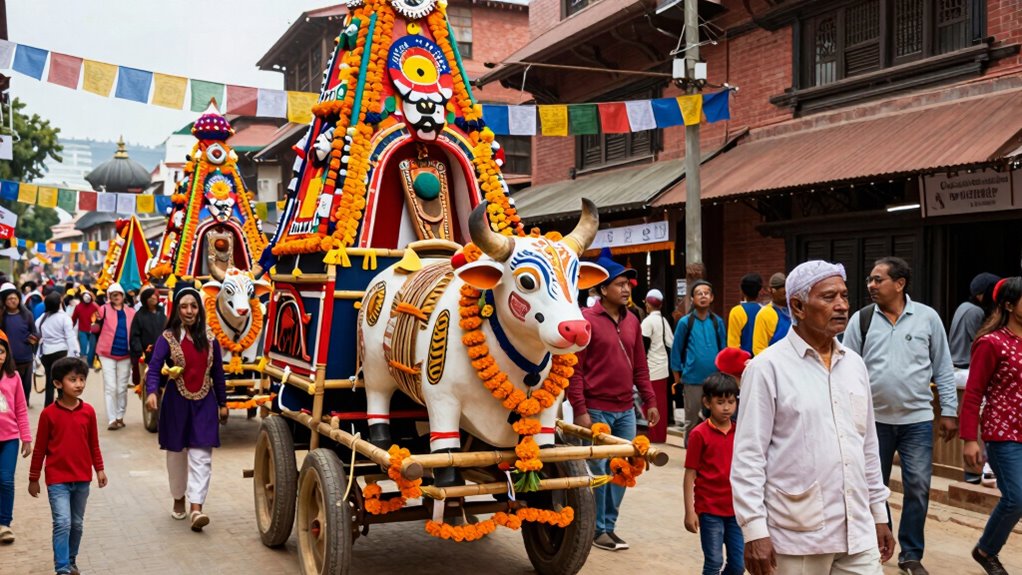
Every year in Nepal, the festival of Gai Jatra transforms collective grief into a vibrant procession, allowing communities to honor their loved ones while celebrating life. This festival is deeply rooted in funeral rituals that have been passed down through generations, serving as both a mourning practice and a communal celebration. As you observe or participate, you’ll notice how the rituals blend sorrow with joy, reflecting the Nepalese view of death as a natural part of life’s cycle. Gai Jatra is more than just a parade; it’s a profound expression of the cultural significance attached to death, emphasizing acceptance, remembrance, and the hope of spiritual liberation.
During Gai Jatra, families who have lost loved ones in the past year create elaborate chariots and parade through the streets. These chariots are often decorated with images of the deceased, flowers, and bright fabrics, transforming grief into art. You’ll see people wearing masks, costumes, and sometimes even humorous attire, which might seem unusual at first but serves a vital purpose. These playful elements are a way to ease pain and remind everyone that life continues beyond loss. The festival’s unique approach to funeral rituals highlights the community’s collective effort to confront death with resilience and humor, rather than fear. Notably, the festival underscores the importance of cultural resilience in maintaining social cohesion.
The cultural significance of Gai Jatra lies in its ability to unite the community through shared mourning and celebration. It acts as a social fabric that brings people together, regardless of age or social status. You’ll observe neighbors, friends, and even strangers participating equally, reinforcing bonds and collective memory. The festival also serves as an educational moment for younger generations, helping them understand the importance of honoring ancestors and accepting mortality. Through the colorful processions, traditional music, and storytelling, Gai Jatra keeps alive the stories and values associated with Nepalese spirituality and cultural identity.
In essence, Gai Jatra’s vibrant display of funeral rituals offers a powerful reminder that grief need not be hidden or suppressed. Instead, it becomes a communal experience that fosters healing and connection. You’ll see how this festival transforms sorrow into a celebration of life, demonstrating that honoring the dead is an act of cultural resilience. It’s a testament to how Nepalese communities view death not as an end, but as a part of an ongoing spiritual journey—one that is celebrated with color, humor, and heartfelt remembrance.
As an affiliate, we earn on qualifying purchases.
Frequently Asked Questions
How Long Has Gai Jatra Been Celebrated in Nepal?
You’ll find that Gai Jatra has been celebrated in Nepal for over 400 years, rooted in the country’s rich cultural history. Its historical roots stem from a time when families honored their deceased loved ones through vibrant processions, transforming grief into a lively parade. This festival’s cultural significance lies in helping people cope with loss, fostering community bonds, and celebrating life with humor and creativity, making it a unique and meaningful tradition.
Are There Specific Rituals Performed During Gai Jatra?
During Gai Jatra, you observe specific rituals like offering prayers, processions, and the symbolic cow costumes, reflecting funeral rituals that honor the departed. These rituals hold deep cultural significance, helping families cope with grief and celebrate the lives lost. You’ll see street parades, singing, and dancing, transforming mourning into a communal festival that strengthens cultural bonds and preserves traditions through joyful remembrance and shared sorrow.
Who Traditionally Participates in Gai Jatra Festivities?
During Gai Jatra, you’ll find that families, community members, and performers actively participate, emphasizing the event’s cultural significance. As you join the festivities, you become part of a vibrant community involved in processions, dances, and traditional rituals. This collective participation helps transform grief into celebration, fostering unity and remembrance. Your involvement highlights the deep-rooted cultural importance of Gai Jatra, making it a powerful shared experience that honors loved ones while strengthening community bonds.
How Has Gai Jatra Evolved Over the Years?
You’ll notice that Gai Jatra has evolved from a solemn procession into a vibrant celebration. Today, participants wear colorful festival costumes, blending traditional and modern styles. Musical performances now fill the streets, creating a lively atmosphere. Over the years, the festival has become more inclusive, allowing more community members to join in the festivities, turning grief into joy and community bonding. This evolution highlights Nepal’s dynamic cultural spirit.
What Are the Origins of Gai Jatra’s Customs?
You might think Gai Jatra’s customs are just quirky festival costumes, but they’re rooted in deep cultural symbolism. Originating as a way to honor the deceased and ease grief, families dressed up in humorous or satirical outfits to mock death’s finality. Over time, this playful tradition evolved into a vibrant parade, turning mourning into celebration, and showcasing Nepal’s unique way of transforming sorrow into communal joy through colorful costumes and meaningful rituals.
Conclusion
So, next time you see a lively parade honoring those lost, remember—it’s a paradox. Instead of mourning in silence, Nepal turns grief into a colorful celebration, proving that sometimes, the best way to handle loss is to dance right through it. Ironically, what begins as sorrow transforms into joy, reminding us that even in grief, there’s room for hope, laughter, and a parade that keeps memories alive in the most unexpected way.