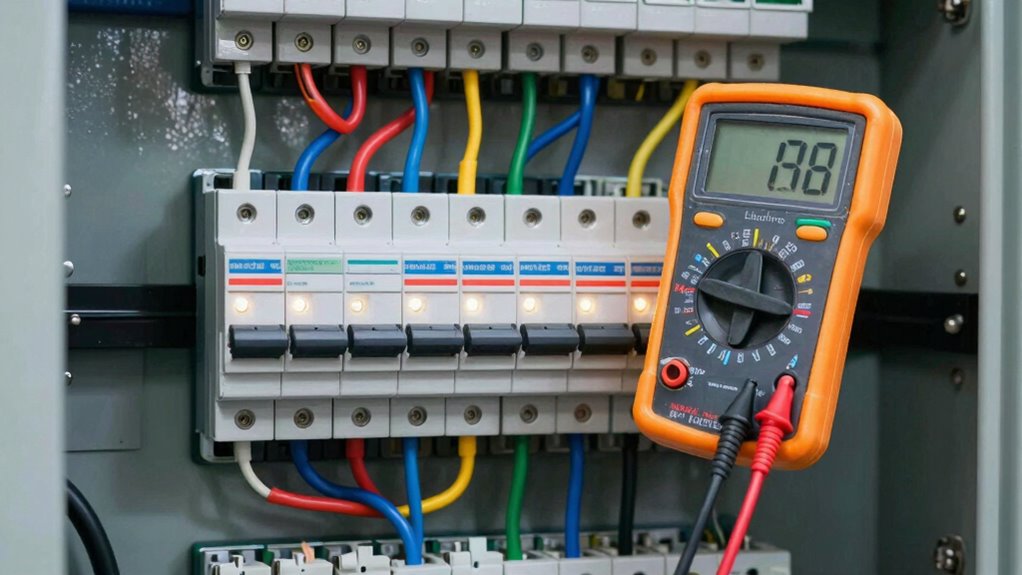

To stop blowing circuits, you need to calculate your power load accurately. Begin by checking each appliance’s wattage from labels or manuals, or multiply voltage by current. Add these together to find the total load. Aim to keep your circuit’s load around 80% of its maximum capacity to prevent overloads and overheating. By understanding this simple process, you’ll guarantee your electrical system stays safe and reliable — and there’s more to uncover if you continue exploring.

Get decor and gifts delivered free with Prime
- Fast, free delivery on millions of items
- Prime Video, Amazon Music and more included
- Member-only deals all year
Key Takeaways
- Calculate total wattage of connected devices to ensure it stays within 80% of the circuit’s capacity.
- Check appliance labels or use voltage and current ratings to determine individual device wattage.
- Use the total wattage to select the appropriate circuit breaker size and wiring gauge.
- Avoid overloading by distributing high-power devices across different circuits.
- Regularly review and adjust loads to prevent trips and maintain electrical safety.
Have you ever wondered how to determine the right amount of power needed for your electrical systems? Calculating the correct power load isn’t just about avoiding trips and outages; it’s also about ensuring electrical safety for everyone involved. When you overload a circuit, you risk overheating wires, causing short circuits, or even starting fires. That’s why understanding how to properly calculate your power load is essential for safe and reliable electrical operation. The process starts with identifying all the devices and appliances you plan to run simultaneously, then determining their individual wattages. Once you have that information, you add up the total wattage to get a clear picture of your overall load.
To do this accurately, you need to know the power consumption of each item. Most appliances have a label indicating their wattage, or you can find this information in the user manual. If the wattage isn’t listed directly, you can calculate it by multiplying the voltage and current (W = V x A). For example, a device drawing 10 amps on a 120-volt circuit consumes about 1,200 watts. Adding these figures together provides the total wattage your circuit will handle when all devices are in use. But remember, it’s wise to leave some margin to prevent overloads—generally, only load your circuit to about 80% of its maximum capacity. This buffer helps maintain electrical safety and reduces the risk of circuit troubleshooting issues down the line.
Knowing your total load makes it easier to select the right circuit breaker size and wiring gauge, which are critical components in preventing overloads. If you’re unsure about how to interpret these figures or how to set up your system properly, consulting a professional electrician is always a good move. Proper calculations help you avoid blowing circuits repeatedly, saving you headaches and potential damage. Plus, they strengthen your understanding of electrical safety principles, which is invaluable in troubleshooting problems when they arise. When circuits trip unexpectedly, it’s often a sign that your load exceeds capacity or that there’s a fault somewhere. By regularly calculating and monitoring your power load, you can catch issues early and prevent dangerous situations. Additionally, understanding electrical safety principles can help you implement preventative measures effectively. Being familiar with circuit capacity ensures that you don’t inadvertently push your system beyond safe limits, which is crucial for long-term reliability. Regularly reviewing your power load and understanding power distribution can also aid in maintaining a safe and efficient electrical system. Incorporating load calculations into your routine can help identify potential hazards before they become serious problems.
As an affiliate, we earn on qualifying purchases.
Frequently Asked Questions
How Often Should Circuit Loads Be Re-Evaluated?
You should re-evaluate circuit loads annually or whenever you add new appliances to guarantee circuit capacity isn’t exceeded. Regular re-evaluation helps you identify potential overloads and maintain proper load balancing. Keep an eye on changes in your usage patterns, and if you notice frequent trips or overheating, check your circuits sooner. Maintaining this routine ensures your electrical system stays safe, efficient, and prevents blown circuits caused by overloaded circuits.
What Tools Are Best for Measuring Electrical Load?
You should use current meters and load analyzers to measure electrical load accurately. Current meters, like clamp meters, quickly gauge the current flow without disconnecting circuits. Load analyzers provide detailed insights into overall power consumption and distribution. Together, these tools help you identify overloads, optimize energy use, and prevent circuit failures. Regular use guarantees your electrical system remains safe and efficient, avoiding blowing circuits due to unanticipated loads.
Can Overloads Cause Permanent Electrical Damage?
Overloads are like a dam overflowing—yes, they can cause permanent electrical damage. When you exceed circuit capacity, wires and components heat up, risking damage that’s often irreversible. For electrical safety, it’s essential to stay within recommended load limits. Overloading can weaken insulation or burn out devices, leading to costly repairs. Always calculate your power load carefully to prevent damage and keep your electrical system safe and reliable.
How Do Temperature Changes Affect Circuit Load Calculations?
Temperature effects can considerably impact circuit load calculations. When temperatures rise, conductors may expand, increasing resistance and reducing capacity, so you need to make load adjustments accordingly. Conversely, cooler temperatures improve conductor efficiency, allowing higher loads without overloading. Always consider temperature changes in your calculations to guarantee your circuit remains safe and efficient. Proper load adjustments help prevent overheating, equipment failure, and potential electrical hazards.
Are There Safety Tips for Working With High Power Loads?
Always prioritize grounding safety and insulation checks when working with high power loads. Make sure your equipment is properly grounded to prevent shocks or fires, and inspect insulation thoroughly to avoid short circuits. Use insulated tools, wear protective gear, and keep a safe distance from live components. Double-check connections before powering on, and never work alone. Staying vigilant and following these safety tips keeps you safe and prevents costly accidents.
Conclusion
Now that you know how to calculate your power load, you can confidently avoid blown circuits and electrical mishaps. Remember, overloading a circuit by just 20% can trip it, causing inconvenience and potential hazards. Imagine the frustration of losing power during a vital moment—by doing these simple calculations, you’ll keep your home safe and powered. Take control today, and make electrical safety a priority for peace of mind tomorrow.
Halloween Picks
halloween
As an affiliate, we earn on qualifying purchases.