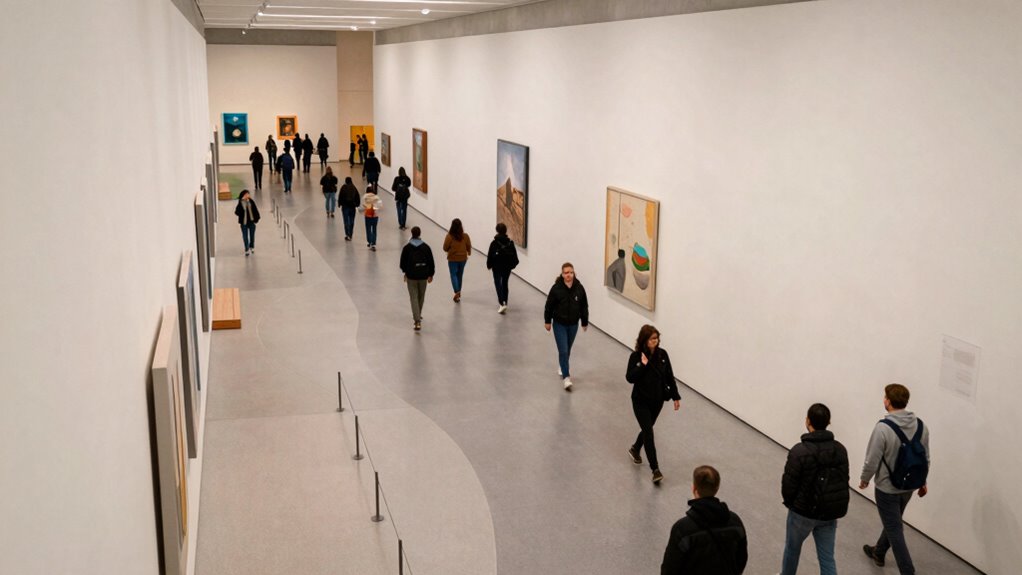

To prevent bottlenecks and bunching, design your visitor flow with wide, well-placed pathways that naturally distribute foot traffic. Avoid narrow corridors and dead-ends, and strategically position popular exhibits to spread visitors evenly. Use clear signage and flexible pathways to guide visitors smoothly, and consider real-time monitoring to adapt as needed. Thoughtful spatial planning and technology integration help keep movement continuous. Keep exploring to discover more tips for creating a seamless visitor experience.

Get decor and gifts delivered free — and shop member deals
- Fast, free delivery on millions of items
- Access to Prime Big Deal Days deals on October 6–7
- Prime Video, Amazon Music and more included
Key Takeaways
- Design wide, unobstructed pathways and avoid narrow corridors to facilitate smooth movement and prevent congestion.
- Strategically distribute popular exhibits to disperse visitor flow evenly across the space.
- Implement clear, visible signage and wayfinding to guide visitors efficiently and reduce hesitation.
- Use real-time monitoring technology to identify congestion and adjust pathways or redirect visitors proactively.
- Create multiple access points and flexible routes that can be adapted during peak times to maintain continuous movement.
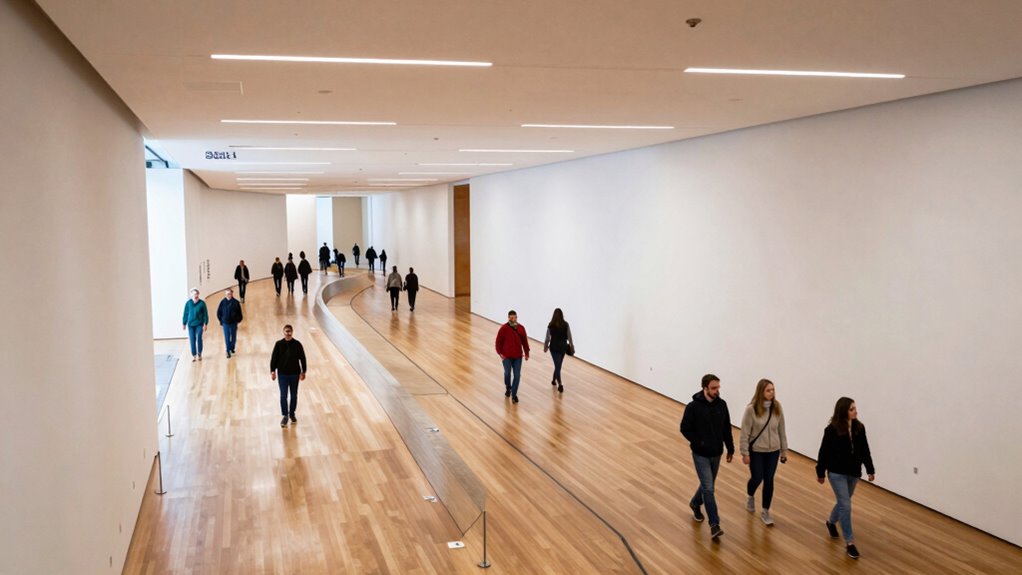
Have you ever wondered how museums, stores, or event spaces guide visitors seamlessly through their spaces? It’s all about effective visitor flow design. When done right, it minimizes congestion, enhances the visitor experience, and keeps everyone moving smoothly. At the core of this is crowd management, which involves understanding how people move and behave within a given environment. You need to plan for common bottlenecks and anticipate how visitors will navigate your space. Spatial planning becomes your best tool here; it’s about designing pathways, exhibit placements, and entry points that naturally distribute foot traffic.
You want to avoid creating narrow corridors or dead-ends that can cause bunching. Instead, you should think of your space as a system where each element encourages continuous movement. For example, placing popular exhibits or displays strategically can disperse crowds evenly, preventing overcrowding in any one spot. When visitors see multiple points of interest, they’re more likely to spread out rather than cluster in one area. Also, consider the placement of entrances and exits. Having multiple access points not only improves crowd management but also directs flow more evenly across the space. If possible, design these entryways to be wide enough to accommodate peak times without causing delays or congestion.
Another key aspect is signage and wayfinding. Clear, visible signage helps visitors understand where they should go next, reducing hesitation and confusion. When people know their route, they’re less likely to bunch up or slow down unnecessarily. You should also think about creating flexible pathways that can be adjusted based on real-time crowd conditions. During busy periods, temporary barriers or one-way systems can help manage flow and prevent bunching. Conversely, during quieter times, those pathways can be opened up to allow more freedom of movement. Implementing crowd monitoring technology can provide valuable insights into visitor behavior and help optimize your spatial planning.
Incorporating technology can take your crowd management to the next level. Real-time monitoring systems, like sensors or cameras, can give you instant data on where congestion occurs. This allows you to respond promptly, opening or closing pathways or redirecting visitors as needed. Proper spatial planning, which involves thoughtful space utilization, combined with proactive crowd management ensures visitors enjoy a smooth, comfortable experience. It’s about designing your space smartly so visitors naturally flow through without feeling rushed or cramped. When you prioritize these elements, you create an environment that feels welcoming, organized, and efficient—making every visit memorable for all the right reasons. Additionally, understanding visitor behavior patterns can help refine your layout to better accommodate fluctuations in crowd density. Recognizing these patterns enables you to adapt your design proactively, ensuring continuous, unimpeded movement throughout your space. Effective spatial planning relies heavily on understanding these behavior patterns to optimize traffic flow.
As an affiliate, we earn on qualifying purchases.
Frequently Asked Questions
How Can Technology Improve Visitor Flow Management?
Technology can profoundly improve your visitor flow management through real-time monitoring and automated ticketing. With real-time data, you can track visitor numbers and adjust staffing or opening hours instantly to prevent bottlenecks. Automated ticketing streamlines entry, reduces wait times, and evenly spreads visitors throughout your space. These tools help you maintain a smooth flow, enhance visitor experience, and avoid bunching, ensuring your venue runs efficiently.
What Are Common Signs of Poor Visitor Flow?
You’ll notice signs of poor visitor flow through high crowd density in certain areas and path congestion, where visitors cluster or struggle to move freely. These issues often lead to frustration, safety concerns, and bottlenecks. If you see visitors stopping abruptly or walking slowly, it indicates congestion. Monitoring these signs helps you identify problem spots quickly, so you can implement measures to improve movement and prevent overcrowding.
How Often Should Visitor Flow Be Reassessed?
You should reassess visitor flow regularly, ideally every few months, especially after significant changes or observed issues. For example, a retail store noticed congestion during peak hours, prompting them to monitor visitor behavior and adjust flow flexibility. Frequent reviews help identify emerging bottlenecks early, ensuring your design adapts to changing patterns and maintains smooth movement. Staying proactive keeps visitors satisfied and prevents costly bottlenecks.
What Role Does Signage Play in Flow Design?
Signage plays a vital role in flow design by guiding visitors efficiently through the space. You should incorporate clear wayfinding strategies and visual cues to direct movement and prevent bottlenecks. Effective signage reduces confusion, speeds up navigation, and disperses crowds evenly. By strategically placing signs, you help visitors find their way effortlessly, improving overall flow and minimizing bunching, which enhances safety and visitor experience.
How Do Seasonal Changes Affect Visitor Flow Strategies?
Seasonal changes completely transform your visitor flow, causing crowd fluctuations that can turn your space into a bustling metropolis or a ghost town overnight. You must implement seasonal adjustments, tailoring signage, pathways, and staffing to match these shifts. By anticipating peak seasons and lulls, you prevent bottlenecks and bunching, ensuring a smooth experience year-round. Flexibility in your flow strategies keeps visitors happy, no matter the season’s unpredictability.
Conclusion
By designing your visitor flow thoughtfully, you prevent bottlenecks, reduce bunching, and create a seamless experience. You guide visitors smoothly from one space to the next, control congestion with strategic layouts, and encourage steady movement with clear signage. You guarantee safety and satisfaction simultaneously, fostering a welcoming environment where everyone feels comfortable. Ultimately, you turn chaos into order, congestion into comfort, and confusion into clarity—making every visitor’s journey enjoyable and efficient.
Fall Picks
fall essentials
As an affiliate, we earn on qualifying purchases.