
TL;DR

Get decor and gifts delivered free with Prime
- Fast, free delivery on millions of items
- Prime Video, Amazon Music and more included
- Member-only deals all year
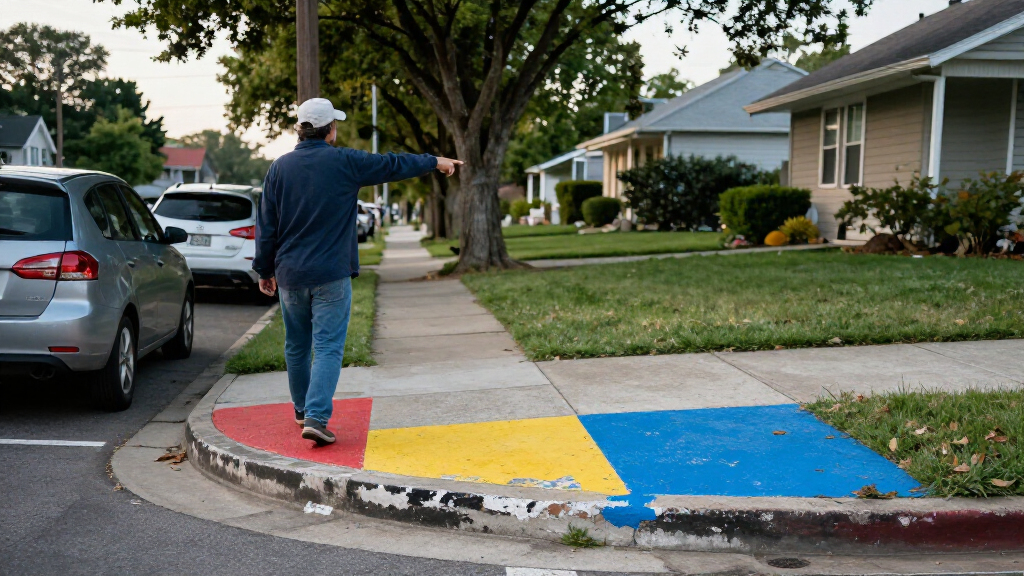
A Family Handyman guide describes five common curb colors and their general parking meanings: red for no stopping or parking, white for brief passenger pickup and drop-off, yellow for loading, green for time-limited parking and blue for accessible parking. The rules vary by city, so drivers should check posted signs and local regulations before leaving a vehicle.
Family Handyman has published a guide explaining the general parking meanings of red, white, yellow, green and blue curbs, a reminder for drivers that an empty space is not necessarily a legal place to stop. The guide draws on California’s Driver’s Handbook and local transportation agency materials, and says city rules and posted signs take priority because color meanings and permitted hours can vary.
The guide describes red curbs as generally prohibiting stopping and parking, including a brief wait in the vehicle. They are often used near fire hydrants, intersections and bus stops, where a parked vehicle could obstruct access or traffic. Some red zones permit buses to stop for passenger pickup or drop-off, according to the guide.
White curbs commonly allow brief passenger pickup or drop-off, often near places such as schools, hotels and hospitals; they are not generally treated as ordinary parking spaces. Yellow curbs usually indicate loading zones, where vehicles may stop temporarily to load or unload. The allowed vehicle types and stopping periods can depend on local rules and signs.
Green curbs generally designate short-term parking, with time limits that may differ by location and may be paired with meters or time-of-day restrictions. Blue curbs identify accessible parking for drivers with the required disability placard or qualifying license plate. The guide also warns drivers to keep the striped access area beside an accessible space clear.
Why Curb Colors Affect Parking
Misreading a curb can mean stopping where access must remain open, occupying a loading zone or using an accessible space without authorization. The colors offer a quick visual cue, but they do not replace the rules that apply at a particular block. Signs, time limits and local regulations determine whether a stop is allowed and for how long.
The distinction matters because the same color may have exceptions. A brief passenger stop might be permitted at one white curb, while a nearby zone may also allow goods loading under local rules. Checking signs before leaving the vehicle can help drivers avoid a citation and keep designated spaces available for their intended users.
Popular right now

Ninja Foodi 8-Quart DualZone 6-in-1 Air Fryer, Grey (DZ201)

Ninja Foodi Smart Dual Heat Air Fry Oven, 13-in-1, Silver (SP351)

Samsung 75-Inch M80H Series Mini LED 4K Smart TV (2026)
As an affiliate, we earn on qualifying purchases.
Local Rules Shape Curb Use
The California Driver’s Handbook lists five common curb colors, but the Family Handyman guide cautions that the meanings are not uniform nationwide. Municipalities set curb rules for local needs, and restrictions may apply only at certain times. That means a general guide can explain common patterns, but cannot establish the rule for every street.
The source points to examples of local variation: Los Angeles has specific rules for loading zones, while Seattle uses yellow paint in some areas near driveways that drivers must keep clear. San Francisco, according to the guide, permits certain white curbs to be used for quick loading or unloading of goods. The cited materials include California DMV guidance, city transportation agencies and the Federal Highway Administration’s traffic-control manual.
““The different curb colors help drivers know where they can park, stop, or drop someone off.””
— Family Handyman guide
What Paint Alone Cannot Tell You
A curb color by itself may not establish the full parking rule. The guide does not provide an exhaustive list of regulations for every city, street or time period. It also does not set out the exact stopping limits that apply to each individual curb described.
Whether a vehicle may use a zone, how long it may remain and whether an exception applies are questions for local signs and municipal rules. Drivers should not assume that a general color description overrides a posted restriction.
Check Signs Before Stopping
Before parking or stopping, drivers should read nearby signs for permitted activities, time limits, vehicle restrictions and hours of operation, then consult the relevant city or transportation department if the rule is unclear. Local signage is the practical next check, especially in loading areas, near driveways and in accessible parking zones.
The guide offers general definitions rather than announcing a new regulation. The applicable rules remain those adopted by the local jurisdiction, and drivers should follow them even when they differ from the usual meaning of a curb color.
Key Questions
Does a red curb always mean no stopping?
Red generally means no stopping or parking, but the guide notes that some red zones allow buses to stop for passengers. Check local signs for exceptions.
Can I park at a white curb?
White usually permits a brief passenger pickup or drop-off, not ordinary parking. Some cities also allow other limited uses at certain white curbs, so read the posted rules.
What is a yellow curb for?
Yellow usually marks a loading zone. The types of vehicles allowed and the time permitted can vary by city and should be stated on nearby signs.
Who can park at a blue curb?
Blue curbs designate accessible parking for vehicles displaying a valid disability placard or qualifying license plate. Keep the adjacent striped access area clear.
Are curb-color rules the same in every city?
No. Curb colors have common meanings, but local regulations and signs can differ. Check the rules for the specific street before stopping or parking.
Source: familyhandyman.com