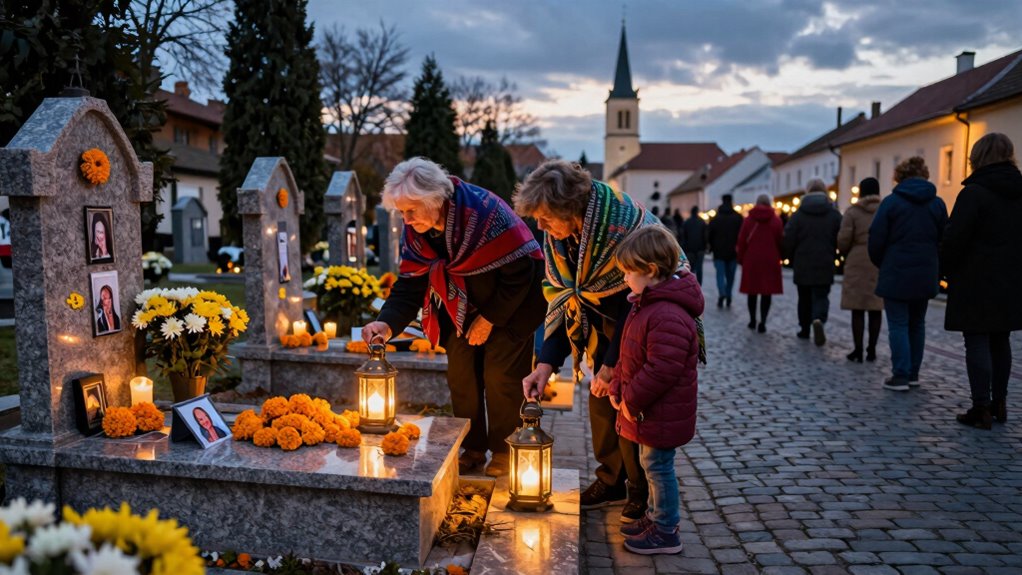

On All Saints’ Day across Europe, you’ll find people visiting cemeteries to honor loved ones by cleaning and decorating graves with flowers and candles. Many light candles to symbolize hope and remembrance, creating a warm, communal atmosphere. Traditions vary by region—some attend religious services beforehand, while others have family picnics near graves. These customs strengthen cultural bonds and keep memories alive. If you want to explore more about how different countries celebrate, there’s plenty to discover.

Get decor and gifts delivered free with Prime
- Fast, free delivery on millions of items
- Prime Video, Amazon Music and more included
- Member-only deals all year
Key Takeaways
- People visit cemeteries to honor loved ones, decorating graves with flowers, candles, and personal mementos.
- In some countries, religious services precede cemetery visits, while others focus on family gatherings or community events.
- Lighting candles at gravesites creates a sea of flickering lights, symbolizing hope and remembrance across regions.
- Customs vary regionally, including picnics near cemeteries, leaving small tokens, and conducting processions.
- The day fosters cultural identity, community bonds, and remembrance of ancestors through shared traditions.

All Saints’ Day, celebrated on November 1st across much of Europe, is a time when families honor their loved ones who have passed away. You might find yourself visiting cemeteries, where traditions run deep and reflect a blend of history and cultural practices. Cemetery traditions during this day often involve cleaning and decorating graves with flowers, candles, and sometimes personal mementos. As you walk through these sacred spaces, you’ll notice how communities come together, creating a warm, respectful atmosphere. These practices aren’t random; they trace back to the historical origins of All Saints’ Day, which was initially established to honor all saints, known and unknown. Over centuries, it became a day for remembering the deceased, especially those who are not formally canonized but are still loved and missed. The tradition of decorating graves, particularly with white flowers like chrysanthemums or marigolds, symbolizes purity and the fleeting nature of life. Lighting candles at gravesites is another universal custom, illuminating the night and representing hope or remembrance. In many regions, families gather at cemeteries at dusk, sharing stories and prayers, turning a solemn visit into a communal act of memory.
In addition, these customs often serve to strengthen cultural identity and reinforce community bonds across generations. Across Europe, the way people observe this day can vary considerably. In some countries, like Poland and Spain, it’s common to attend religious services before heading to the cemetery. In parts of Italy, families also prepare elaborate picnics nearby, turning the cemetery visit into a family gathering. You might notice that in countries like France and Belgium, the tradition of leaving flowers on graves is especially prominent, with some families choosing to leave small tokens or religious symbols as offerings. In Eastern Europe, it’s customary to light numerous candles, creating a sea of flickering lights that brighten the night sky. These rituals serve not just as acts of remembrance but also as a way to keep cultural identity alive through generations. They symbolize a collective connection to ancestors and a shared respect for history and tradition. Additionally, cultural practices often incorporate unique local customs, showcasing the diversity of observances across regions. For example, in some areas, there are special processions or community events that highlight local rituals and customs.
Understanding these diverse practices helps to appreciate how deeply tradition influences community cohesion and cultural continuity. Whether you’re participating in a quiet vigil or joining a community celebration, your experience on All Saints’ Day ties you into a long-standing tradition rooted in history and cultural significance. It’s a day where the past and present converge, reminding you of the enduring importance of memory, family, and the respect owed to those who came before.
Popular right now

LG 85-inch QNED75B Mini LED Smart TV Bundle with HDMI and CPS Protection Plan

Philips 4400 Series Fully Automatic Espresso Machine with LatteGo Milk System

Ninja Foodi 10-Qt DualZone Smart XL Air Fryer, 6-in-1, DZ550
As an affiliate, we earn on qualifying purchases.
Frequently Asked Questions
How Do Different European Countries Celebrate All Saints’ Day Uniquely?
You’ll notice that European countries celebrate All Saints’ Day uniquely through regional religious rituals and modern festive practices. In Poland, families visit graves and light candles, creating a solemn atmosphere. In Spain, lively processions and fireworks blend tradition with celebration. Meanwhile, Italy combines religious mass with contemporary festivals. Each country’s mix of traditional rituals and modern festivities reflects its cultural identity, making the holiday a diverse and meaningful experience across Europe.
What Traditional Foods Are Associated With All Saints’ Day Across Europe?
You might think All Saints’ Day food customs are just about solemn prayers, but regional culinary traditions tell a different story. In Italy, you feast on soul cakes called “All Saints’ Day bread,” while Germans indulge in sweet “Saint’s bread” with raisins. French regions serve up “chamallow” marshmallow treats, and Poles enjoy hearty mushroom soups. These foods turn remembrance into a delicious, if slightly ironic, celebration of life.
Are There Any Specific Customs for Children During All Saints’ Day?
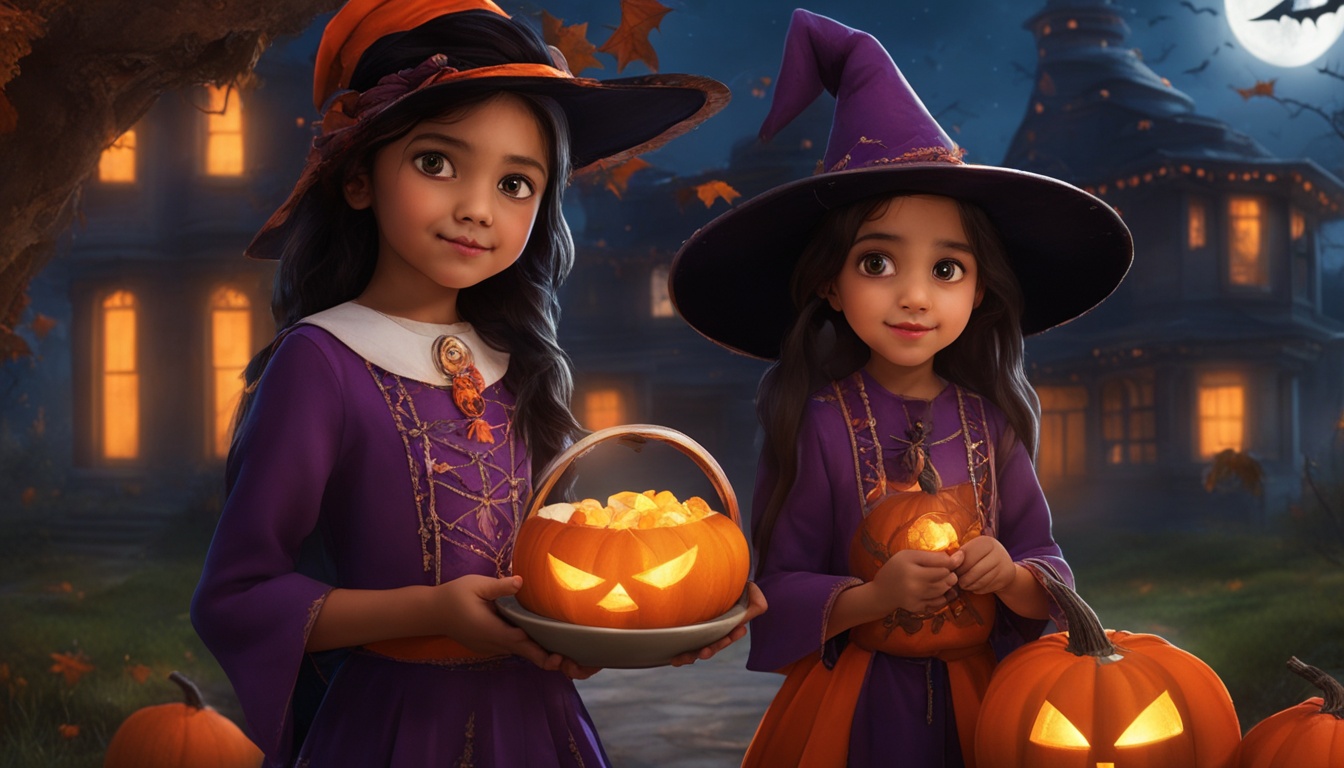
During All Saints’ Day, children’s customs include dressing up in costumes, often inspired by saints or spooky themes, to celebrate the occasion. You might notice a candy tradition where children go door-to-door, collecting sweets and treats from neighbors. This fun activity encourages community bonding, and the costumes add a playful, festive spirit to the day, making it a memorable experience for kids and adults alike.
How Has All Saints’ Day Celebration Evolved Over Recent Decades?
You’ve probably noticed All Saints’ Day now feels more like a costume party than a solemn remembrance. Historically, it honored saints and martyrs, but now, modern adaptations include elaborate costumes, themed parties, and social media tributes. Over recent decades, the celebration’s evolved from quiet church visits to lively, sometimes commercialized, festivities, blending tradition with trend. It’s like the holiday’s gone from prayer to party — all in the name of honoring the past.
What Are the Most Common Symbols Used in All Saints’ Day Observances?
You’ll notice that memorial flowers and candle lighting are the most common symbols during All Saints’ Day. People place memorial flowers on graves to honor loved ones, creating a beautiful, respectful display. Candle lighting is also widespread, symbolizing remembrance and guiding spirits. These symbols help you connect with the tradition’s spiritual essence, fostering reflection and paying tribute to those who have passed.
Conclusion
As you explore All Saints’ Day across Europe, you realize it’s more than just a day for remembrance—it’s a vibrant blend of traditions and personal stories. Imagine walking through a cemetery in Italy, where families gather, lighting candles on loved ones’ graves, creating a glowing mosaic of memories. Whether it’s a quiet visit or lively festivities, this day reminds you how cultures honor their past while embracing community and continuity.