
Around the world, dark Valentine traditions blend mystical rituals with unexpected sweetness. In Mexico, lovers offer personal items to ward off evil spirits and strengthen bonds. Balkan traditions test love through daring acts like enduring cold water or daring feats, symbolizing resilience. Japanese women give chocolates as social obligations or genuine tokens of love. These customs reveal that love can be both intense and tender, rooted in ancient beliefs. Keep exploring to uncover more fascinating, sweetly dark love customs.
Key Takeaways
- Mexican “Dia de los Enamorados” involves offering personal items to ward off evil spirits and strengthen love through mystical rituals.
- Balkan lovers perform daring acts like enduring cold water or hardships to symbolize resilience and deepen their devotion.
- Japanese women exchange chocolates with romantic partners and friends, blending love with social obligation in a ritualistic manner.
- Love rituals worldwide often incorporate dark symbols and mystical elements, emphasizing love’s spiritual protection and mysterious depths.
- Many traditions originate from ancient beliefs, connecting love with resilience, mystical forces, and enduring strength through symbolic acts.
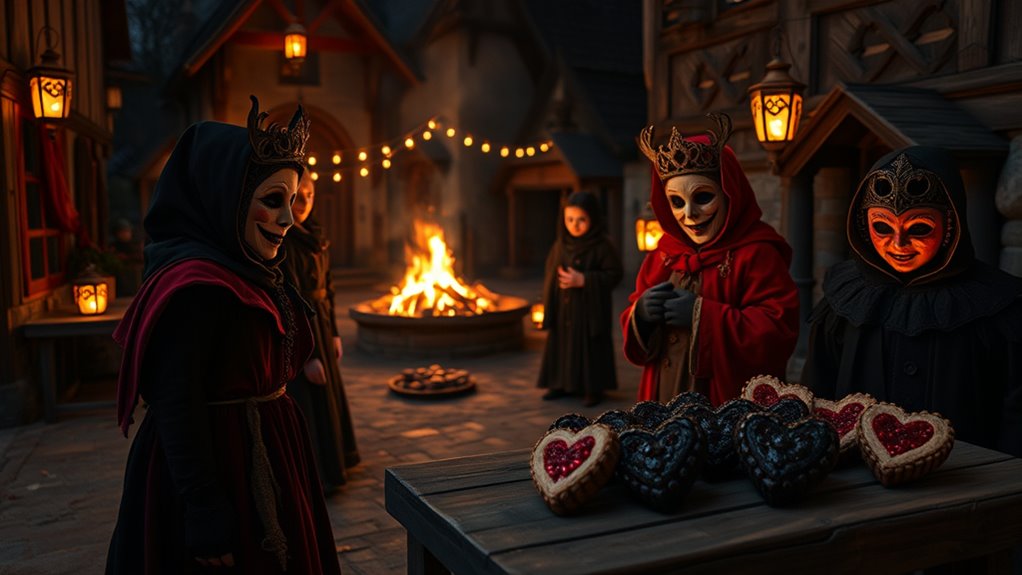
Valentine’s Day is often associated with love and romance, but around the world, some cultures embrace darker, more mysterious traditions that reveal a different side of this holiday. Instead of the typical expression of affection, these societies have developed romantic customs and cultural rituals that are surprisingly eerie yet retain a sense of tenderness. You might find it fascinating how these practices blend love with tradition’s darker elements, creating unique ways to celebrate relationships.
In some regions, Valentine’s Day is not just about exchanging chocolates and flowers but involves rituals that symbolize love’s enduring strength amid darkness. For example, in parts of Mexico, young people participate in “Dia de los Enamorados” with customs that involve symbolic acts of devotion, such as offering personal items or performing rituals meant to ward off evil spirits. These acts are believed to protect lovers, strengthening their bond through mystical means. Such cultural rituals highlight how love is intertwined with spiritual protection, blending romantic customs with deeper beliefs.
In Mexico, love rituals ward off evil spirits, strengthening bonds through mystical acts of devotion.
In Japan, the tradition takes a darker turn with the custom of “Giri Choco” and “Honmei Choco,” where women give chocolates not only to romantic partners but also to colleagues and friends, often in a formal, almost ritualistic manner. While it might seem sweet on the surface, the underlying cultural ritual involves a complex web of social obligations and unspoken expectations. This ritual emphasizes loyalty and social harmony, revealing how love and obligation can intertwine in a manner that’s more intense than simple affection. It’s a subtle, yet powerful reminder that love sometimes requires sacrifice and adherence to societal norms.
In some European countries, especially in the Balkans, Valentine’s Day is celebrated with customs that border on the macabre. Young lovers may participate in rituals involving symbolic acts of bravery or endurance, like staying in cold water or performing daring feats to prove their love’s strength. These acts serve as cultural rituals that symbolize resilience and devotion, emphasizing that true love involves overcoming hardships. These traditions, while dark, are rooted in a belief that love must be tested through trials, making the celebration both intense and meaningful.
Across different cultures, these dark Valentine traditions reveal that love isn’t always sweet and simple. Instead, it can involve powerful cultural rituals that embrace the mysterious, the mystical, and sometimes the darker aspects of human emotion. Whether through symbolic acts, spiritual protection, or endurance tests, these customs remind you that love’s depths are as varied as they are profound, often blending darkness with tenderness in ways that are strangely beautiful. Interestingly, many of these practices have roots in ancient beliefs that seek to connect love with spiritual strength and resilience.
Frequently Asked Questions
Are These Traditions Celebrated by All Age Groups?
These traditions aren’t celebrated by all age groups equally. You’ll notice varied participation because of generational differences, with younger generations often more enthusiastic about these unique customs. Older folks might prefer traditional ways, while kids and teens embrace the fun and novelty. So, while many groups participate, the level of engagement can differ based on age, making these traditions a diverse and colorful part of Valentine’s celebrations worldwide.
How Did These Traditions Originate Historically?
You might wonder how these traditions began, and their historical origins reveal a blend of ancient customs and evolving beliefs. They often stem from cultural significance, celebrating love and remembrance in unique ways that date back centuries. Over time, communities adapted these rituals, infusing them with symbolic meaning and community spirit. Their roots reflect deep historical narratives, intertwined with local histories, shaping these dark yet sweet celebrations into meaningful acts of connection and remembrance.
Do These Customs Influence Modern Valentine’s Day Celebrations?
These customs definitely influence modern Valentine’s Day celebrations by adding unique cultural significance and historical origins to the holiday. You might notice that some traditions, rooted in dark or unusual origins, still shape how people observe love and companionship today. These practices remind you of the diverse ways cultures express affection, blending history with modern sentiment. Embracing these customs can deepen your appreciation for Valentine’s Day’s rich, global tapestry.
Are Any of These Traditions Considered Controversial?
Some of these dark Valentine traditions are considered controversial because they touch on cultural sensitivities and challenge tradition acceptance. You might find that certain customs, like those involving superstitions or rituals, upset local communities or offend modern views. Whether accepted or not, these traditions reveal deep cultural roots and show how different societies interpret love and remembrance, even if they seem strange or unsettling to outsiders.
How Do Local Communities Feel About These Unique Customs?
You might find that local communities generally embrace these unique Valentine’s customs, seeing them as essential to cultural preservation. Community acceptance varies, but many residents take pride in celebrating their traditions, even if outsiders find them unusual. These customs often strengthen local identity and foster a sense of belonging. While some may have concerns, most communities view these traditions as a meaningful way to honor their history and keep their heritage alive.
Conclusion
So, next Valentine’s Day, remember these bizarre traditions and realize you’re part of a worldwide love circus with more twists than a rollercoaster. From haunting rituals to sweetly creepy customs, love isn’t just about hearts and chocolates—it’s a wild, dark adventure. Embrace the madness, and maybe, just maybe, you’ll see that love’s weirdness is what makes it truly unforgettable. After all, who needs normal when you can have a Valentine’s celebration that’s completely, wonderfully bizarre?