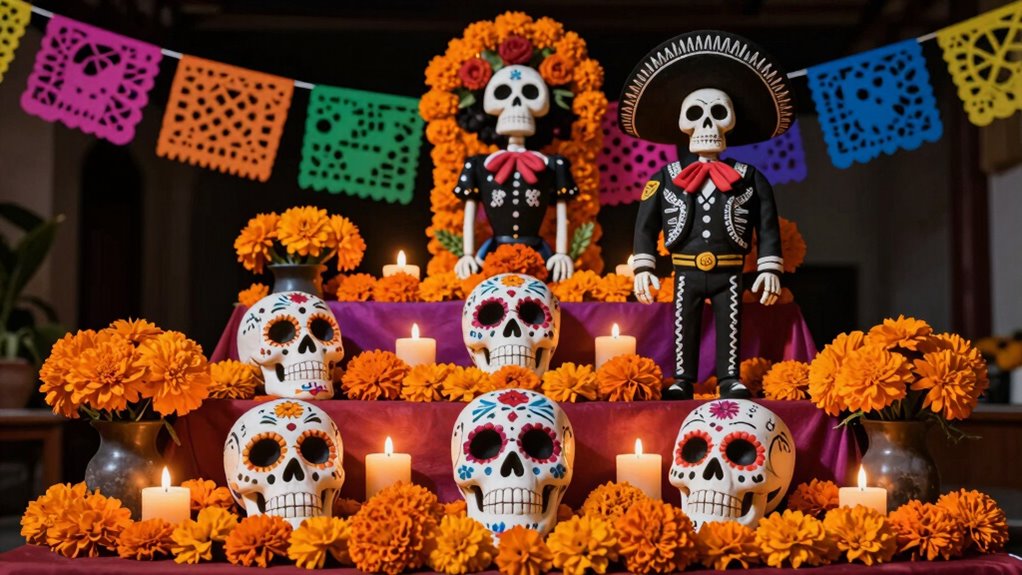
Many people mistake Mexico’s Day of the Dead for Halloween or somber mourning, but it’s actually a joyful celebration honoring loved ones with bright colors, music, and lively altars. It’s not about sadness; it’s about remembering and celebrating life with happiness and gratitude. Cemetery visits are just one part of the tradition, which also includes home altars and colorful sugar skulls. Keep exploring to discover the true spirit of this vibrant holiday.
Key Takeaways
- Day of the Dead is a joyful celebration of life and remembrance, not a somber or Halloween-like event.
- Cemetery visits are just one aspect; families also set up colorful altars at home called ofrendas.
- Sugar skulls symbolize departed loved ones, decorated with bright colors and intricate designs to celebrate their personalities.
- The holiday emphasizes positive remembrance, focusing on love and community rather than mourning or sadness.
- Decorations, music, and storytelling create a lively atmosphere, highlighting the cultural importance of honoring ancestors joyfully.
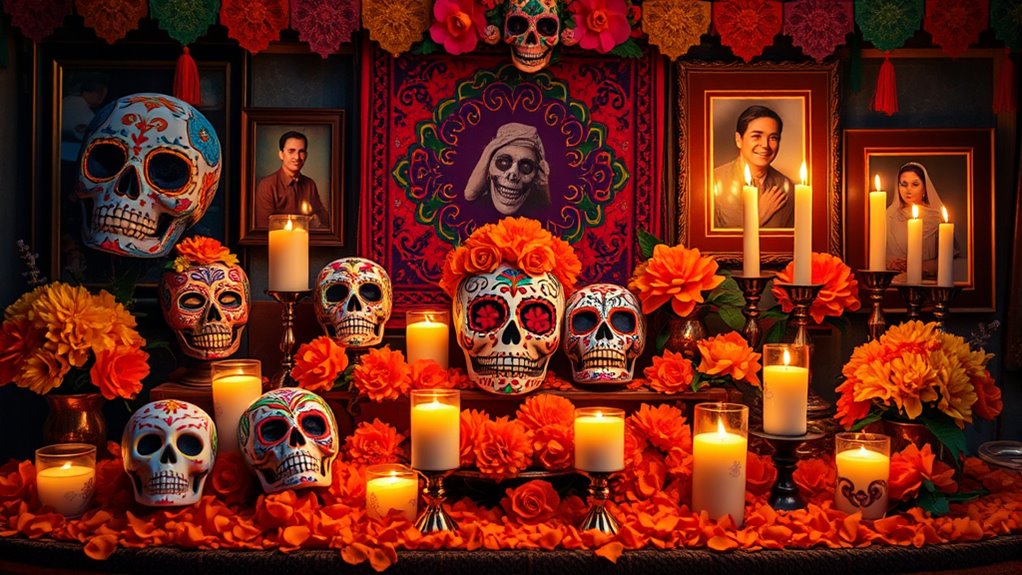
Many people around the world mistakenly view Mexico’s ‘Day of the Dead’ as a somber occasion or simply a Halloween-inspired celebration. In reality, it’s a vibrant, joyful event that honors loved ones who have passed away. You might have seen images of colorful altars, decorated with marigolds, photographs, and offerings. But one of the most iconic symbols of this tradition is the sugar skull. These intricately decorated skulls symbolize the departed and are a key part of the sugar skull traditions. They’re often crafted with bright colors and detailed designs, representing the personality and spirit of the deceased. Rather than being morbid, they embody a celebration of life and remembrance. The tradition encourages you to remember your ancestors with positivity and gratitude. Cultural significance underscores the importance of celebrating life rather than mourning death in this holiday. Cemetery celebrations are another common misconception. Many assume that the only way Mexicans observe the Day of the Dead is by visiting graves. While cemetery visits are indeed part of the tradition, they’re just one element of a broader cultural practice. During the festivities, families often set up altars at home, called ofrendas, which are decorated with photographs, favorite foods, drinks, and personal mementos of the departed. These altars serve as a welcoming space where the spirits are believed to return for a visit. When you attend a cemetery celebration, you’ll see families gathering to clean tombstones, light candles, and share stories. The atmosphere is lively and colorful, with music, dance, and communal joy. These cemetery visits are less about mourning and more about celebrating the lives of those who have gone before. Understanding these aspects helps you appreciate the true meaning behind the Day of the Dead. It’s not a day of grief but a cultural expression rooted in love, memory, and celebration. The sugar skull traditions and cemetery celebrations work together to create a lively, meaningful experience that unites families and communities. When you see the vibrant decorations, hear the cheerful music, and witness families sharing stories at grave sites, you’ll realize that this holiday is a powerful reminder of the enduring connection between the living and the dead. It’s about honoring ancestors with joy rather than sorrow, embracing life’s cycle with color, creativity, and respect. By dispelling these misconceptions, you can better understand and appreciate the true spirit of Mexico’s most cherished celebration.

Sugar Skull Couple Statue, Sugar Skull Decor, Day of The Dead Decorations,Resin Skulls Sculptures Home Decor,Dia De Los Muertos Decor,Halloween Adorable Skulls Figurines Gifts for Women (Couple)
【Sugar Skull Couple Statue】: This is a little sugar skull couple. Valentine's day gifts.They are designed to sit…
As an affiliate, we earn on qualifying purchases.
As an affiliate, we earn on qualifying purchases.
Frequently Asked Questions
Is Day of the Dead Celebrated Outside Mexico?
Yes, the Day of the Dead is celebrated outside Mexico, embracing various cultural variations through international celebrations. You might see altars, sugar skulls, and marigolds in places like the United States, Guatemala, and parts of Central America. These events honor loved ones and reflect local traditions, blending original Mexican customs with regional influences. So, you can experience this meaningful celebration beyond Mexico’s borders, appreciating its universal significance and diverse expressions.
Do All Mexican Families Observe Day of the Dead Traditions?
Not all Mexican families observe Day of the Dead traditions, as family traditions vary widely, and regional variations influence how it’s celebrated. Some families honor their ancestors with altars and offerings, while others may not observe the holiday at all. You’ll find that cultural practices differ from one region to another, reflecting local customs and beliefs. Ultimately, participation depends on personal, familial, and regional choices, making each celebration unique.
Is Sugar Skull Makeup Mandatory for Day of the Dead?
You don’t have to wear sugar skull makeup for Day of the Dead; it’s not mandatory. The makeup artistry often symbolizes the cultural significance of honoring loved ones who’ve passed, but many families choose different ways to celebrate. Some might wear traditional clothing or decorate altars instead. It’s all about personal expression and respecting the customs, so feel free to participate in a way that feels meaningful to you.
Are There Specific Foods Associated With Day of the Dead?
Think of the Day of the Dead as a vibrant tapestry woven with special foods. You’ll find pan de muerto, a sweet bread shaped like a skull or crossbones, taking center stage. Sugar skulls also decorate altars, representing loved ones. These treats symbolize the cycle of life and death, inviting spirits to join the celebration. You’ll enjoy these foods as a delicious way to honor and remember those who’ve passed.
How Long Does the Day of the Dead Celebration Last?
You’ll find that the Day of the Dead celebration lasts for two days, starting on November 1st and ending on November 2nd. This tradition carries deep cultural significance and has rich historical roots, honoring deceased loved ones. During these days, families create altars, share special foods, and remember those who have passed. The extended celebration allows everyone to connect with their heritage and reflect on life and death in a meaningful way.
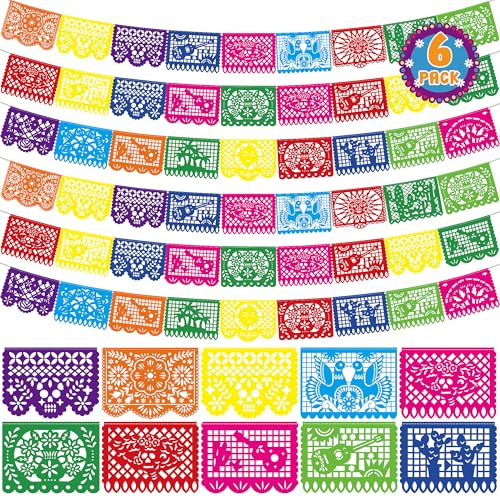
6 PCS Cinco De Mayo Banner, 110FT Colorful Fiesta Party Decorations, Plastic Hanging Papel Picado Mexican Banner for Dia De Los Muertos Decorations Day of Dead Altar Kit Fiesta Decor Party Favor
cinco de mayo banner mexican party fiesta decorations plastic Mexican favor 5 decor backdrop theme birthday office colorful…
As an affiliate, we earn on qualifying purchases.
As an affiliate, we earn on qualifying purchases.
Conclusion
So, next time you think you’ve got the ‘Day of the Dead’ all figured out, remember how easily misconceptions can turn celebration into confusion. It’s ironic how a holiday meant to honor loved ones can be misunderstood as morbid or spooky. Instead of dismissing these traditions, take a moment to truly understand them. After all, what better way to honor the dead than by embracing the vibrant, meaningful customs you once thought were just a quirky Halloween replica?

Sereliy Dia De Los Muertos Ofrenda Altar Kit, 3 Sets Mini Ofrenda Altar Shadow Box, Wooden Day of Dead Small Ofrenda Altar, Dia De Los Muertos Decorations for Celebration & Remembrance
Tribute to Tradition: Celebrate the spirit of altar de muertos de madera with this beautifully crafted wooden Ofrenda…
As an affiliate, we earn on qualifying purchases.
As an affiliate, we earn on qualifying purchases.

BlissYard Dia de Los Muertos Banner 71×43 Inch Day of The Dead Backdrop Mexican Party Banner with Sugar Skulls, Marigolds, Papel Picado for Day of The Dead, Halloween, and Party Decorations
【Festive Dia de los Muertos Celebration】 This banner and backdrop showcases a vibrant Dia de los Muertos scene…
As an affiliate, we earn on qualifying purchases.
As an affiliate, we earn on qualifying purchases.