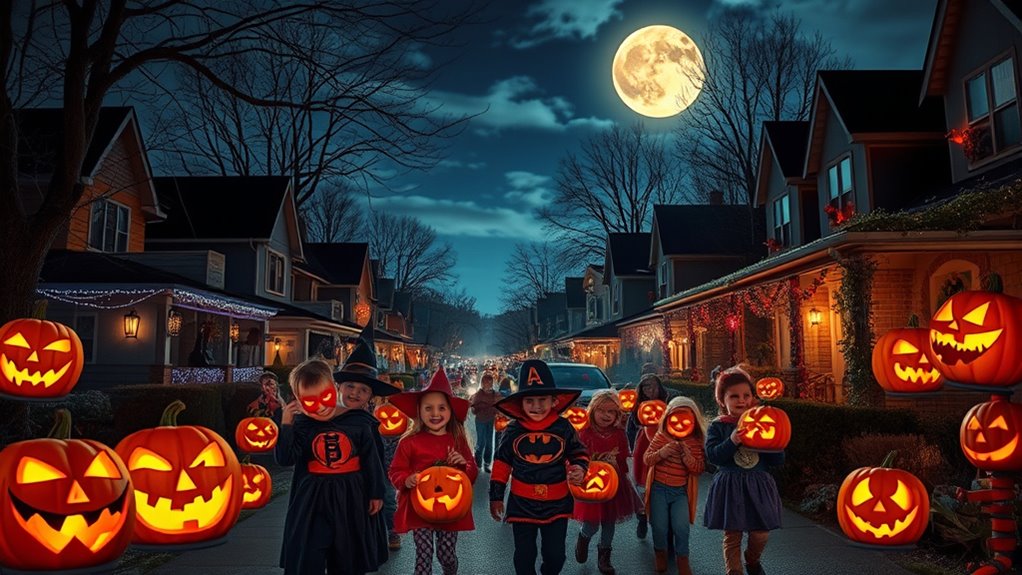

Halloween shapes global economies with over a billion dollars spent annually on costumes, candy, and events. Millions worldwide participate in costume dressing, often inspired by pop culture, while billions of pounds of candy are bought to share and indulge in. Countries like the US, Canada, and the UK lead the way, but participation keeps growing around the globe. If you want to uncover more fascinating stats about Halloween’s worldwide influence, keep exploring.

Get decor and gifts delivered free with Prime
- Fast, free delivery on millions of items
- Prime Video, Amazon Music and more included
- Member-only deals all year
Key Takeaways
- Over 600 million pounds of candy are purchased in the U.S. during Halloween annually.
- Halloween costumes, especially superhero-themed, dominate global retail sales, generating billions worldwide.
- Countries like the U.S., Canada, and the UK have high participation rates in Halloween celebrations.
- Halloween has been adopted internationally, influencing local traditions, costumes, and community events.
- The holiday significantly boosts retail revenue through costume sales, candy, parties, and themed merchandise.
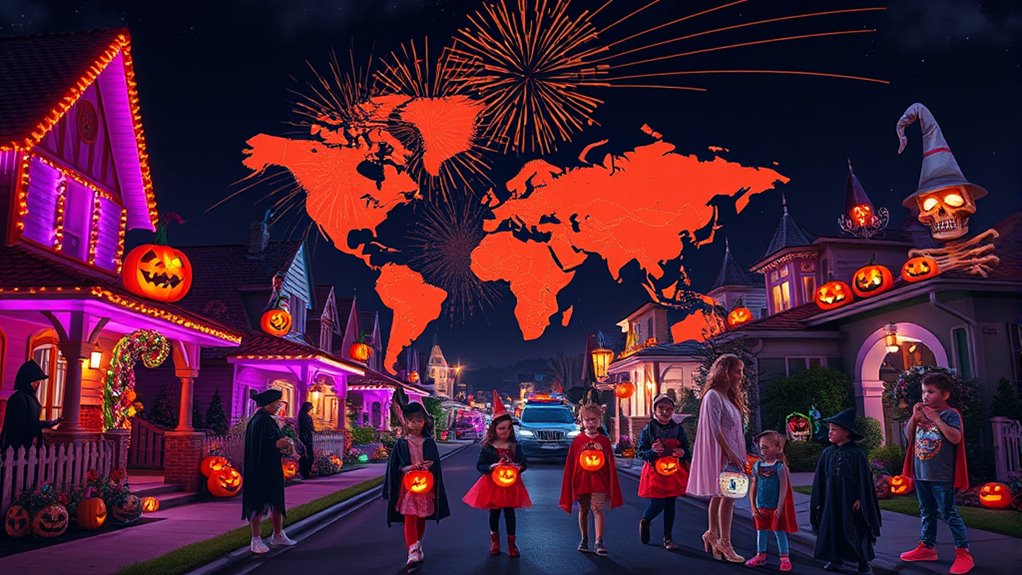
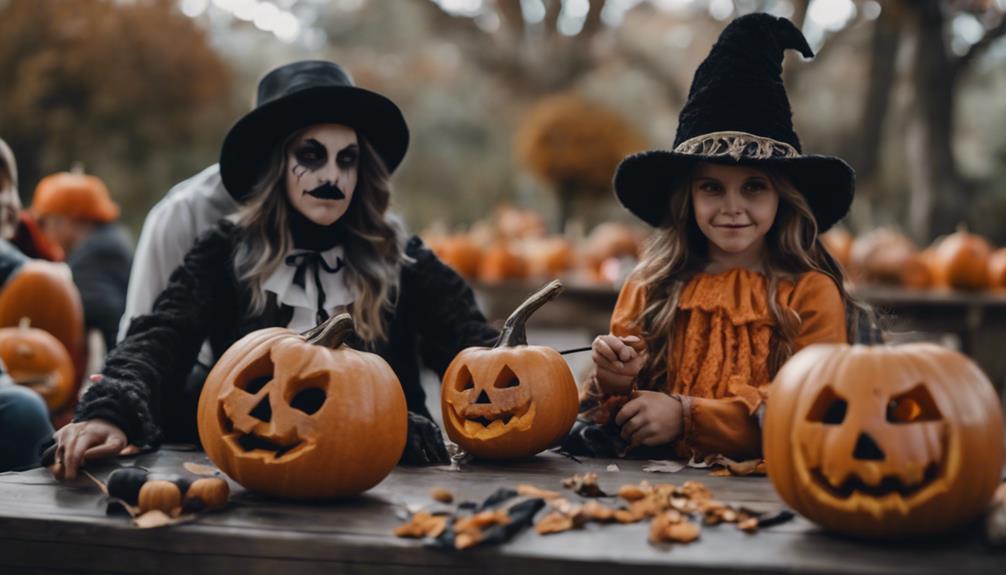
Have you ever wondered just how much Halloween impacts our lives each year? It’s more than just spooky decorations and costume parties; it shapes trends, influences spending habits, and even affects global economies. One of the most noticeable aspects is costume trends. Every year, millions of people, from kids to adults, spend hours choosing or creating the perfect costume. Popular themes often reflect current pop culture, movies, or viral internet sensations. For example, superhero costumes tend to dominate the scene, with characters from Marvel and DC comics leading the pack. Meanwhile, nostalgic throwbacks, like 80s or 90s icons, also find their way into the mix. These trends aren’t just about personal expression—they influence retail sales, with stores stocking up on themed accessories, makeup, and props to meet the demand. As a result, costume shopping becomes a significant seasonal industry, generating billions worldwide annually.
Candy consumption is another crucial aspect of Halloween’s influence. It’s estimated that in the United States alone, over 600 million pounds of candy are purchased during the Halloween season. This figure highlights just how much candy plays a role in the holiday’s celebration. Kids and adults alike indulge in sweets, with households handing out treats in hopes of satisfying the sweet tooths of enthusiastic trick-or-treaters. The types of candy vary, but classics like chocolate bars, gummies, and lollipops are perennial favorites. The sheer volume consumed indicates a shift in consumer behavior, where Halloween candy sales boost profits for manufacturers and retailers. In some countries, candy consumption peaks during Halloween, with people eagerly snatching up their favorite treats well before October 31st. It’s also interesting to note how Halloween has transformed candy into a cultural symbol, creating a communal experience centered around sharing and indulgence.
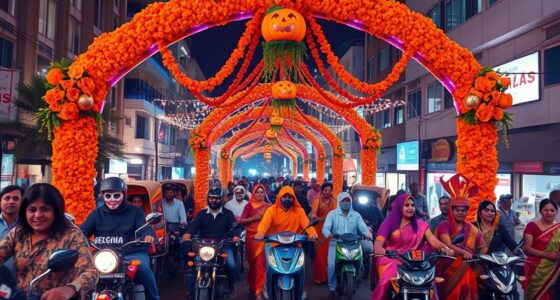
Beyond individual habits, Halloween’s economic impact is staggering. Retailers report significant revenue boosts during October, driven in part by costume trends and candy sales. Events, parties, and themed merchandise further inflate spending, making Halloween a major commercial holiday globally. Countries like the United States, Canada, and the UK see some of the highest participation rates, but the holiday’s influence extends worldwide, with many nations adopting their own traditions. All of these factors showcase how Halloween isn’t just a night of scares and fun; it’s a cultural phenomenon that shapes consumer habits, influences fashion and food trends, and brings communities together in celebration. So, next time you pick out a costume or reach for a piece of candy, remember—you’re participating in a global event that impacts economies and traditions across the planet.
Frequently Asked Questions
How Has Halloween’s Popularity Changed Over the Last Decade Globally?
Over the past decade, you’ve seen Halloween grow in popularity worldwide. More people participate in trick-or-treating and attend Halloween-themed events each year. Communities have embraced the holiday, organizing parties, parades, and haunted houses. As a result, Halloween’s influence expands globally, making it a major cultural event. You might notice increased costumes, decorations, and themed activities, reflecting the holiday’s rising appeal and your own excitement to join the festivities.
Which Countries Have the Highest Halloween Spending per Capita?
Like a scene from a ghost story, some countries stand out in Halloween spending. You’ll find that the United States, Canada, and Australia lead in costume spending, with high per capita consumption reflecting their enthusiasm. These nations treat Halloween as a time for community celebration and creativity. Their investments in costumes and decorations show how deeply they embrace the holiday, making every October 31st a lively, spirited event.
How Do Halloween Costume Trends Vary Across Different Cultures?
You notice that Halloween costume trends vary widely across cultures due to cultural costume influences and regional dress traditions. In some countries, traditional attire inspires costumes, blending local history with Halloween themes. In others, pop culture icons dominate. You’ll see a mix of spooky, humorous, and culturally significant costumes, reflecting regional customs. These variations highlight how local traditions shape Halloween celebrations, making each country’s approach unique and vibrant.
What Are the Most Common Halloween Safety Concerns Worldwide?
Around the world, Halloween safety concerns center on trick or treat safety and costume visibility. Did you know that 40% of accidents involve poor costume visibility? You should always use reflective materials or glow sticks to stay visible. Be cautious about crossing streets and check treats for tampering. By prioritizing these safety tips, you make trick or treating safer and more enjoyable for everyone.
How Is Halloween Celebrated in Countries With Different Religious Backgrounds?
You’ll notice that Halloween celebrations vary widely across countries with different religious backgrounds. In some places, you’ll see religious traditions blended with Halloween’s spooky themes, creating unique cultural adaptations. For example, in Mexico, Día de los Muertos honors ancestors alongside Halloween festivities, while in chiefly Muslim countries, Halloween might be less prominent or celebrated privately. These differences highlight how communities incorporate their cultural and religious practices into Halloween, making each celebration uniquely meaningful.
Conclusion
As you celebrate Halloween this year, remember these striking stats—like the 172 million Americans who dress up and the billions spent on costumes and candy. Imagine a small town where every house hosts a spooky event, doubling its usual visitors thanks to Halloween festivities. Whether you’re trick-or-treating or hosting a party, these numbers show how this holiday unites communities and sparks joy worldwide. So, make your celebration memorable—after all, you’re part of something big.
Halloween Picks
halloween
As an affiliate, we earn on qualifying purchases.