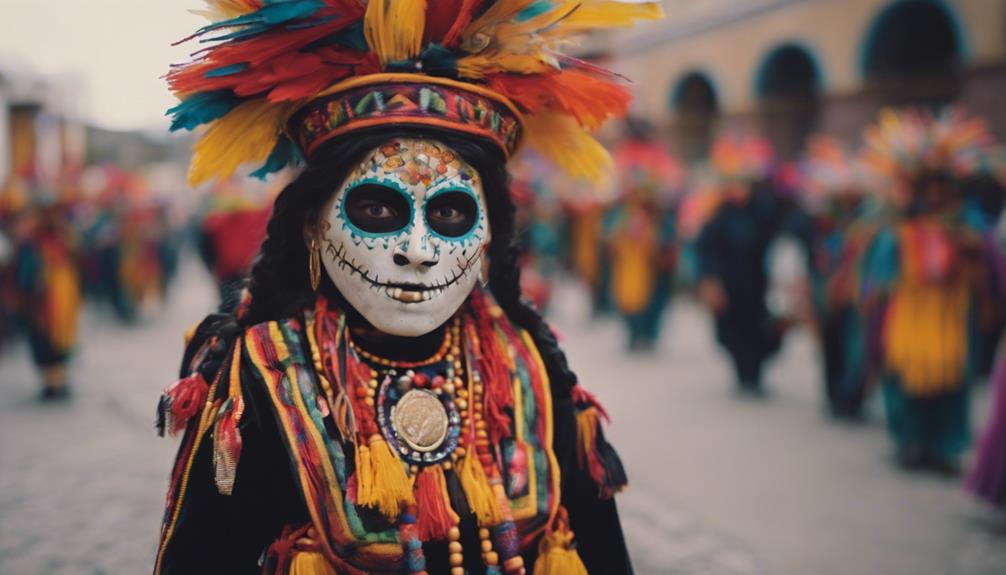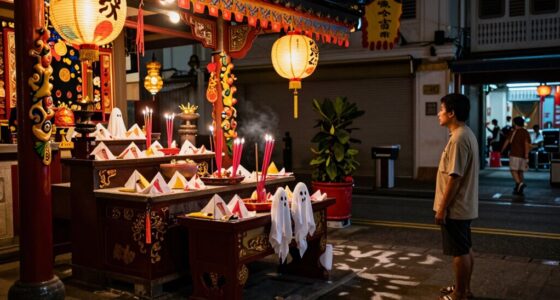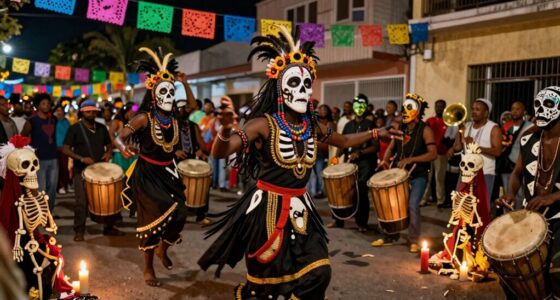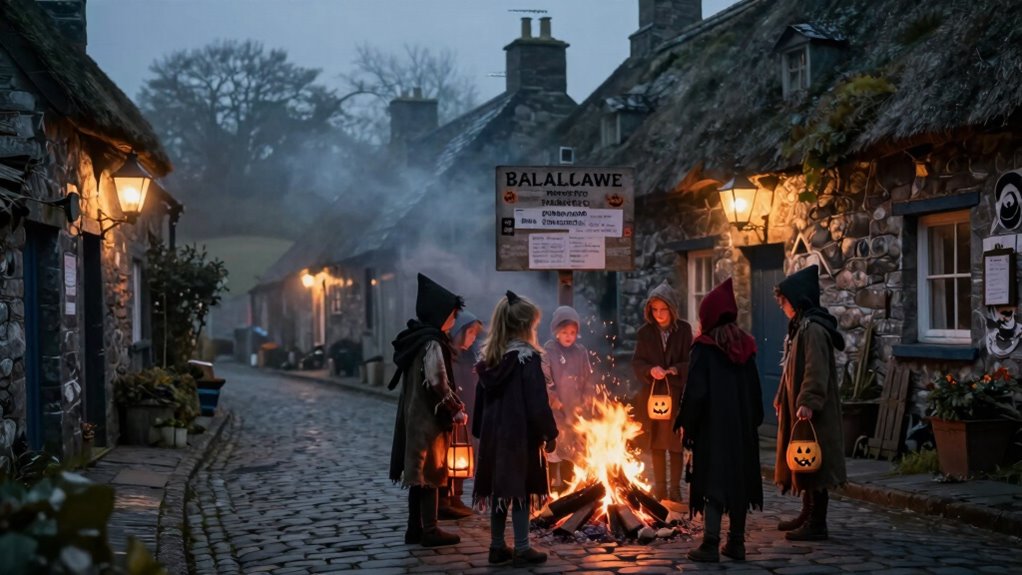

In Ireland’s past, Halloween bans might seem bizarre today. People avoided looking into mirrors after dark to prevent spirits from appearing, and they believed staying outside after sunset was dangerous. Customs included hanging garlic and salt around homes to ward off ghosts and giving out “soul cakes” for protection. These traditions showed how deeply superstitions influenced daily life and community safety. If you continue exploring, you’ll discover even more intriguing customs from Ireland’s spooky history.

Get decor and gifts delivered free with Prime
- Fast, free delivery on millions of items
- Prime Video, Amazon Music and more included
- Member-only deals all year
Key Takeaways
- Old Irish Halloween bans included prohibitions on sweeping or washing clothes after dark to prevent spirits from entering homes.
- Leaving food or drink outside on Halloween night was forbidden to avoid attracting or appeasing wandering spirits.
- Wearing masks or disguises was mandated to confuse or ward off ghosts and malicious spirits.
- Restrictions on staying outside after sunset, especially alone, aimed to prevent encounters with malevolent spirits.
- Certain hours or days during Halloween were considered more superstitious, leading to ritual bans on specific activities.
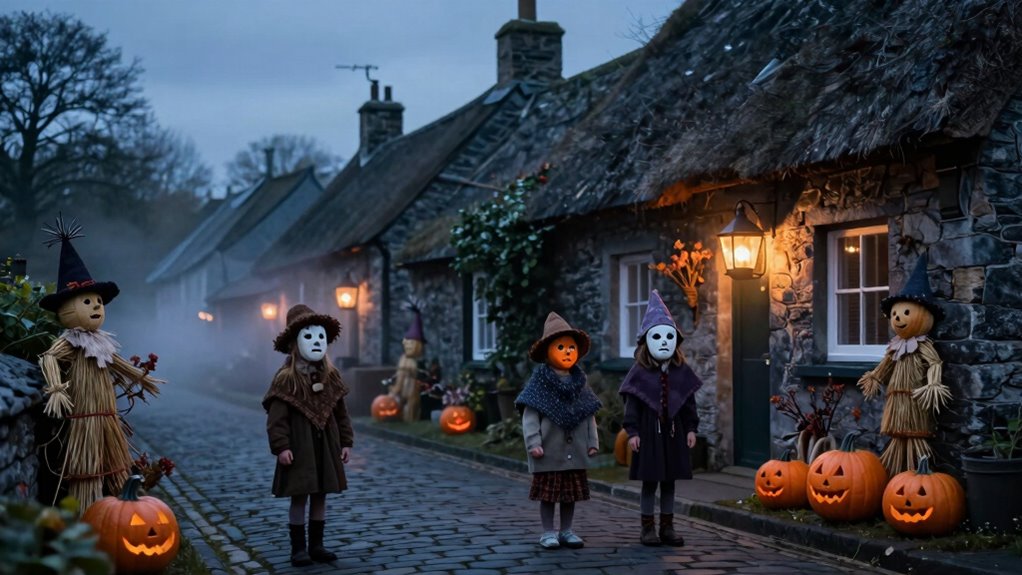
Have you ever wondered if Halloween traditions in Ireland once involved more than just costumes and candy? Long before trick-or-treating became a worldwide phenomenon, the Irish celebrated the holiday with superstitions and traditional customs that seem bizarre today. These old rules weren’t just playful beliefs—they were deeply rooted in the Irish worldview, shaping how people approached the supernatural and their everyday lives. Many of these customs aimed to ward off evil spirits or predict the future, making Halloween a night filled with caution and ritual.
One of the most notable old customs involved the idea that on October 31st, the boundary between the living and the dead was at its thinnest. People believed that spirits could walk among the living, so they took specific precautions. For example, it was customary to leave food and drink outside to appease wandering spirits or to wear disguises to confuse any lurking ghosts. These superstitions weren’t just about protection—they reflected a belief that the spirits had influence over the living, and respecting them was essential to avoid misfortune. The superstitions extended to the household, where certain objects or decorations were believed to ward off evil, like hanging garlic or placing salt around the home.
On October 31st, spirits walked among the living, so offerings and disguises helped ward off their influence.
Traditional customs also dictated how you should behave during these nights. For instance, children and adults alike might avoid looking into mirrors after dark, as it was thought that doing so could summon spirits or cause a soul to be taken. Another strange rule involved “soul cakes,” small treats given out to neighbors, which was a way of offering kindness to wandering spirits in exchange for their protection. These customs weren’t just about celebrating; they were about ensuring safety through ritual, blending superstition with community traditions that reinforced social bonds. In some areas, it was also believed that certain objects could act as protective charms, which helped to ward off malevolent spirits. Interestingly, some communities believed that specific days or times were more superstitious than others, further emphasizing the importance of timing in these beliefs.
In some areas, it was considered dangerous to stay outside after sunset, especially if you were alone. There were bans on certain activities believed to attract spirits or invite bad luck, like sweeping the floor or washing clothes after dark. Such bans seem odd now, but they stemmed from a fear of disturbing the spirits or unleashing curses. Even the timing of certain activities was dictated by superstition, with specific hours seen as more perilous than others. Additionally, the importance of superstitions in maintaining social cohesion helped communities navigate the unknown with shared beliefs and practices.
Today, these old bans and customs might seem strange or superstitious, but they reveal how deeply Irish society once intertwined daily life with beliefs in the supernatural. The old rules weren’t just about superstition—they were traditional customs that helped communities cope with the unknown, bringing a sense of control in a world that was often unpredictable. Though many of these customs have faded, they still echo in Ireland’s rich Halloween history, reminding us how differently people once approached the supernatural.
Irish Halloween protective charms
As an affiliate, we earn on qualifying purchases.
As an affiliate, we earn on qualifying purchases.
Frequently Asked Questions
When Did These Old Halloween Bans Originate in Ireland?
You’ll find that these old Halloween bans in Ireland originated in the 19th century, during a time of strong religious and cultural influences. The historical context involved efforts to suppress pagan customs and align festivities with Christian beliefs. These bans had a significant cultural impact, shaping how Halloween was celebrated and gradually leading to modern traditions. Today, understanding this history helps you appreciate how Irish Halloween customs evolved from these early restrictions.
Were There Any Punishments for Breaking These Halloween Rules?
If you broke Ireland’s old Halloween rules, you’d face punishments like fines or even social penalties. These regulations included strict costume regulations and prank prohibitions, especially targeting mischievous behaviors. For instance, if you ignored costume regulations or played pranks that were prohibited, authorities or community members could impose punishments. Such rules aimed to keep Halloween festivities safe and orderly, even though they seem bizarre today.
Did These Bans Apply to All Regions in Ireland Equally?
You’ll find that these bans didn’t apply equally across all regions in Ireland. There were notable regional differences, influenced by local customs and cultural variations. Some areas strictly enforced the rules, while others were more relaxed or even ignored them. This variation reflected Ireland’s diverse traditions and communities, making the old Halloween bans a complex part of cultural history rather than a uniform national policy.
How Did Irish Communities React to These Old Halloween Restrictions?
You feel the tension as old Halloween restrictions take hold, stirring mixed reactions. Communities cling to their traditions, secretly sneaking costumes and festivities, resisting the bans’ shadow. The cultural impact ripples through generations, fueling whispers of rebellion and defiance. Some embrace the restrictions, fearing repercussions, while others rally, preserving their community spirit. This clash of old rules versus cherished customs sparks a quiet, enduring resilience that shapes Ireland’s cultural fabric.
Are Any of These Old Rules Still Enforced Today?
You’ll be surprised to learn that most old Halloween superstitions and bans from Irish folklore are no longer enforced today. While some traditions, like dressing up or lighting bonfires, persist, others, such as restrictions on certain activities, have faded away. Modern Ireland embraces Halloween as a festive celebration rooted in Irish folklore, and people now enjoy these customs freely, blending ancient superstitions with contemporary festivities without fear of bans.
Conclusion
Today, these old Halloween bans might seem as strange as a fairy tale gone wrong, but they reveal Ireland’s unique history and cultural fears. Just like a ghost lurking in a forgotten corner, these rules remind us how traditions evolve and society’s values shift over time. While we now enjoy a more playful and open holiday, understanding these bans helps you appreciate how deeply rooted Halloween is in Ireland’s rich, sometimes bizarre, past.
Fall Picks
fall essentials
As an affiliate, we earn on qualifying purchases.