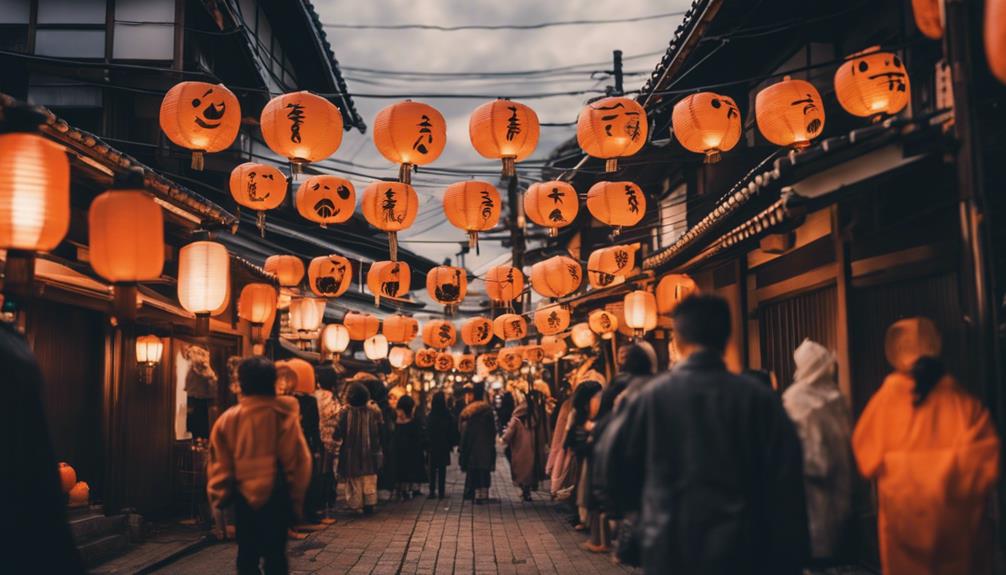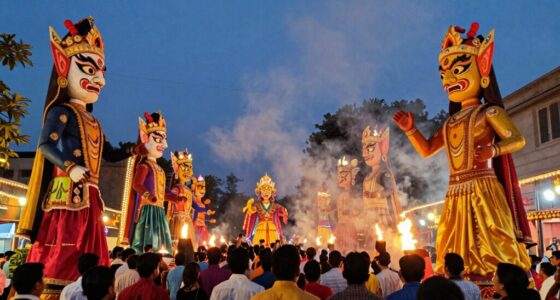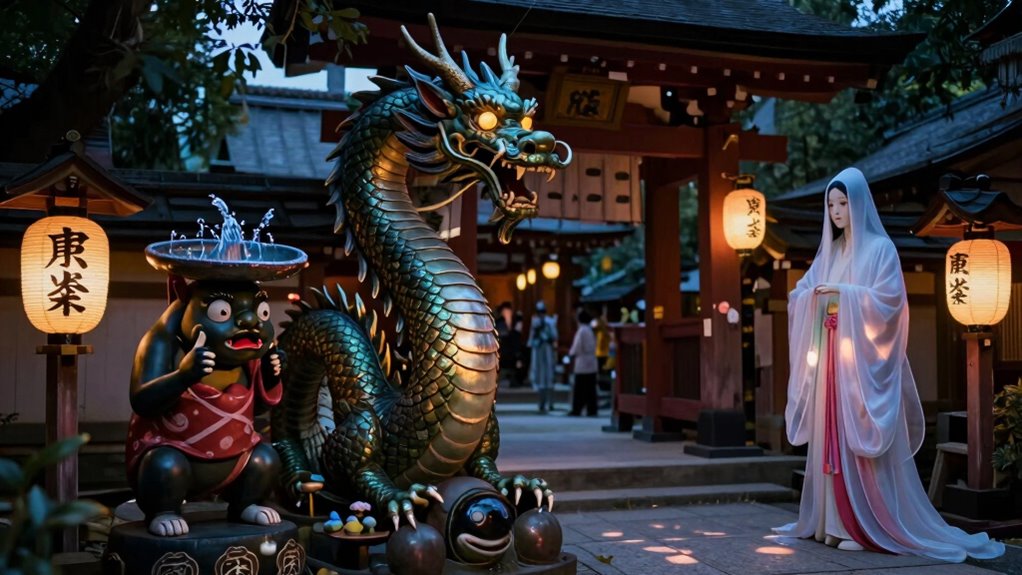

You’re exploring Japan’s rich folklore culture through yōkai, mysterious beings that have evolved from frightening legends to playful icons. These creatures reflect human fears, morals, and hopes, appearing in stories, festivals, and modern media like anime and games. Their unique traits range from mischievous foxes to sinister demons, symbolizing Japan’s historical beliefs. Want to uncover the stories behind these enthralling spirits? Keep going to discover more about their fascinating world.

Get decor and gifts delivered free with Prime
- Fast, free delivery on millions of items
- Prime Video, Amazon Music and more included
- Member-only deals all year
Key Takeaways
- Yōkai are traditional Japanese spirits and monsters rooted in folklore, often used to explain strange phenomena and morals.
- Their portrayal evolved from frightening beings to playful, approachable characters in modern media like anime and games.
- There are various types of yōkai, from mischievous kitsune to sinister tengu, each symbolizing different cultural themes.
- They serve as cultural symbols connecting Japan’s ancient beliefs with contemporary pop culture and festivals.
- Modern depictions humanize yōkai with cute or humorous styles, keeping them relevant and engaging for new generations.
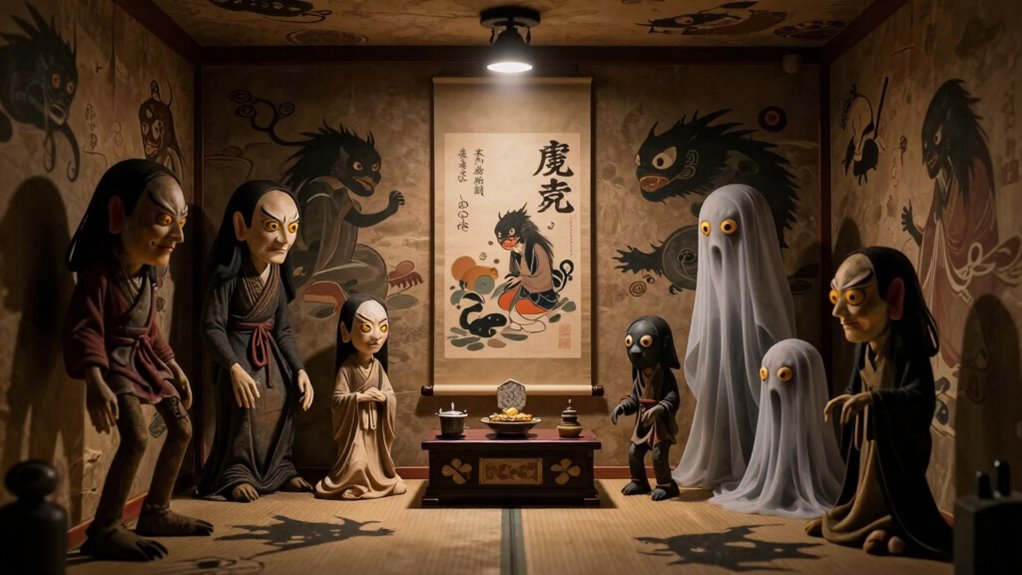
Ever wondered what yōkai are and why they hold such a fascination in Japanese folklore? These supernatural creatures are deeply rooted in traditional folklore, where they serve as both cautionary tales and reflections of cultural beliefs. Historically, yōkai appeared in stories to explain strange phenomena, warn people about moral failings, or simply entertain. Over time, they evolved from mysterious, often frightening figures into more playful or whimsical beings, but their core essence remains tied to the rich tapestry of Japan’s history. Today, they continue to be an essential part of Japanese culture, appearing in everything from literature and art to modern media. Their presence in traditional folklore is the foundation, but what’s truly fascinating is how yōkai have been adapted into modern adaptations. These reinterpretations keep yōkai relevant and accessible, allowing new generations to connect with these mythic entities in contemporary ways. For example, popular anime, manga, and video games often feature yōkai characters, blending ancient legends with modern storytelling. This fusion helps preserve the folklore while also broadening their appeal. You might find yourself amazed at the range of yōkai—some are mischievous tricksters, like the Kitsune, a fox spirit capable of shape-shifting, while others are more sinister, such as the terrifying Tengu, a bird-like demon. Despite their differences, each yōkai embodies unique traits that mirror human fears, hopes, or morals. In traditional stories, they can be both helpful and harmful, depending on their mood or circumstances, which adds layers of complexity to their characterizations. Today’s adaptations often humanize or comic-ify them, making these creatures more relatable and less frightening for modern audiences. You might see a cute, chibi-style version of a Yōkai in a smartphone game or a horror film that taps into ancient legends but with a fresh twist. This ongoing evolution ensures that yōkai remain a lively part of Japan’s cultural landscape. Whether as part of a traditional festival, a spooky story told around a campfire, or a character in a contemporary cartoon, yōkai continue to embody the mysterious, unpredictable spirit of Japanese folklore. Their ability to adapt and resonate across generations is what keeps yōkai captivating. They serve as a bridge, connecting Japan’s ancient beliefs with today’s pop culture, making them timeless symbols of the country’s imagination. Additionally, understanding cultural symbolism associated with yōkai enhances their significance in both historical and modern contexts. Exploring folklore origins can deepen appreciation for their role in shaping cultural narratives and moral lessons.
As an affiliate, we earn on qualifying purchases.
Frequently Asked Questions
Are YōKai Always Malevolent or Can They Be Friendly?
Yōkai aren’t always malevolent; many can be friendly and even helpful during friendly encounters. They often symbolize cultural themes and moral lessons in Japanese folklore. Some yōkai act as protectors or bring good fortune, reflecting positive aspects of tradition. Your interactions with them depend on the story or context. Not all yōkai are scary monsters; many embody cultural symbolism of kindness, wisdom, and harmony within Japanese mythology.
How Have YōKai Influenced Modern Japanese Pop Culture?
Yōkai influence modern Japanese pop culture through Yōkai symbolism and modern yōkai adaptations, inspiring anime, manga, and video games. You see them as characters representing fears, folklore, or humor. Creators reimagine traditional yōkai with contemporary twists, making them relatable and entertaining. These adaptations preserve cultural roots while appealing to new audiences, blending history and modernity, and ensuring that yōkai remain a vibrant part of Japan’s cultural landscape.
Do YōKai Originate From Specific Regions in Japan?
You might think yōkai are found everywhere, but their roots lie deeply embedded in specific regional folklore and geographic origins across Japan. These supernatural beings often emerge from local stories, traditions, and landscapes, giving each area its unique monsters. As you explore Japan, you’ll discover that certain yōkai are closely tied to particular regions, revealing the mysterious connection between geography and the cultural fabric that shapes these legendary creatures.
Are There Any Real-World Sightings or Evidence of YōKai?
There are no verified sightings or concrete evidence of yōkai, as they are rooted in folklore origins and mythical transformations passed down through stories. You might hear tales of strange encounters or sightings, but these are generally considered cultural myths rather than actual proof. Yōkai serve more as symbols of traditional beliefs and fears, blending imagination with cultural identity rather than representing real, observable entities.
How Do YōKai Compare to Western Mythical Creatures?
You’ll find that yōkai differ from Western mythical creatures in their deep cultural symbolism and variety. While Western legends often depict singular, heroic beings, yōkai embody complex symbolism tied to Japanese folklore and societal fears. They serve as cultural symbols, representing moral lessons or natural phenomena. Unlike Western mythic creatures, yōkai often have ambiguous, sometimes humorous qualities, reflecting Japan’s unique worldview and rich tradition of folklore storytelling.
Conclusion
As you step back from this glimpse into Japan’s mysterious world, remember that yōkai are like whimsical shadows dancing just beyond reach—neither entirely good nor bad. They remind us that sometimes, life’s oddities and fears can hold a certain charm, inviting curiosity rather than dread. Embrace these stories as gentle whispers from the unknown, encouraging you to see the world’s quirks with a curious heart and an open mind.
Fall Picks
fall essentials
As an affiliate, we earn on qualifying purchases.