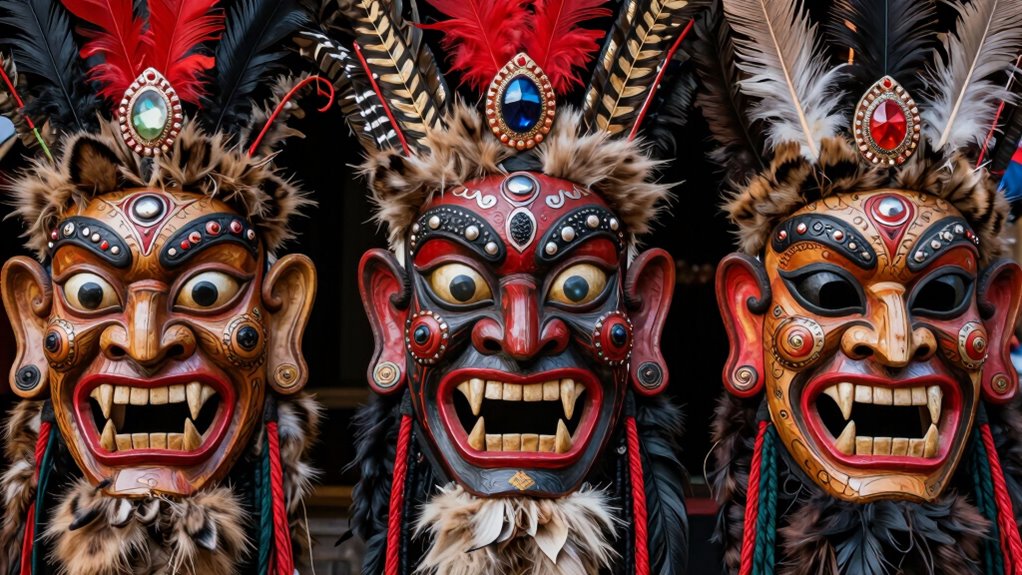

Bulgaria’s Kukeri masks are truly haunting, with exaggerated features like bulging eyes, sharp teeth, twisted horns, and vivid colors that evoke awe and fear. Designed to scare away evil spirits, these masks embody primal protection and cultural symbolism. Crafted with skill and devotion, they connect you to Bulgaria’s rich folklore and history. If you keep exploring, you’ll uncover even more fascinating stories behind these striking symbols of tradition.

Get decor and gifts delivered free with Prime
- Fast, free delivery on millions of items
- Prime Video, Amazon Music and more included
- Member-only deals all year
Key Takeaways
- Kukeri masks feature exaggerated, fearsome elements like bulging eyes, sharp teeth, and twisted horns to evoke awe and primal fear.
- Their vivid colors and intricate decorations enhance their striking, nightmare-like visual impact.
- Designed to scare away evil spirits, these masks embody powerful, intimidating symbolism rooted in Bulgarian folklore.
- Crafted with remarkable skill, Kukeri masks serve as both spiritual talismans and cultural masterpieces.
- Their terrifying yet captivating appearance connects communities to ancient traditions and collective beliefs.
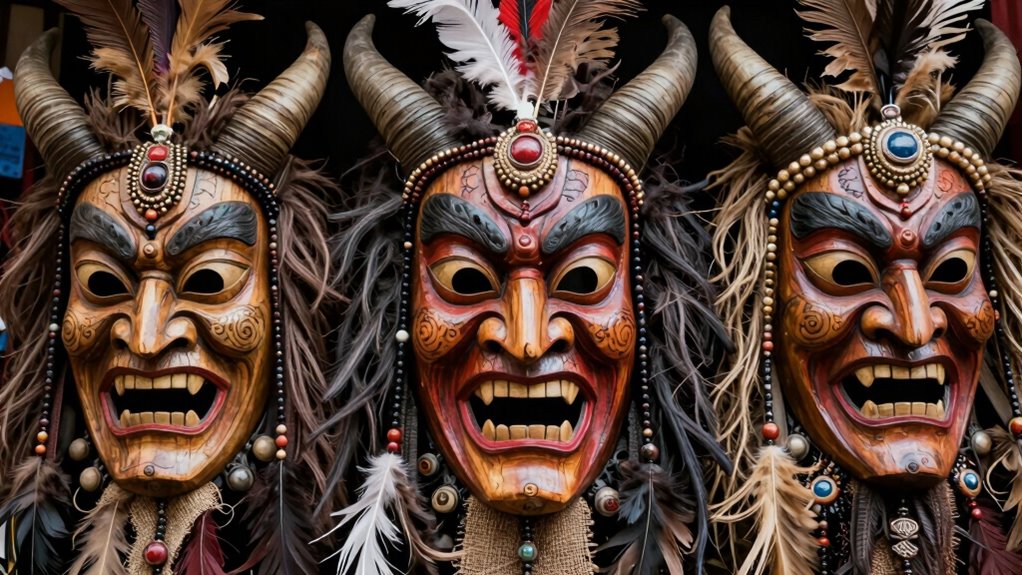
The masks’ visual impact is striking, designed to evoke awe and sometimes even fear. But behind their fierce appearances lies a spiritual purpose: to scare away evil spirits and negative energies that threaten communities. As you observe their exaggerated features—bulging eyes, sharp teeth, twisted horns—you realize they embody a primal force, a powerful symbol of protection. It’s this blend of artistry and symbolism that makes Kukeri masks so enthralling. They serve as a tangible connection to Bulgaria’s cultural roots, embodying collective hopes for prosperity and well-being. You might notice how each region has its own distinct style, reflecting local customs and stories, yet all share the common goal of spiritual cleansing. These masks’ exaggerated features are carefully crafted to provoke strong emotional responses, reinforcing their role as warding talismans. The craftsmanship involved is often a labor of love, passed down through generations, showcasing remarkable dedication and skill.
Wearing these masks during the Kukeri festival transforms ordinary men into mythic entities, bringing to life age-old stories and beliefs. The masks’ vivid colors and intricate decorations are meant to attract attention and invoke a sense of awe. When you’re surrounded by performers in these costumes, you can’t help but feel the powerful energy they radiate—an energy rooted in tradition and cultural symbolism. Every movement and dance performed in these masks reinforces the community’s shared identity and collective hopes. These traditions, grounded in craftsmanship and symbolism, help keep Bulgaria’s cultural heritage alive, connecting past and present in a vibrant display of folklore. Recognizing the cultural significance of these masks deepens appreciation for their role in preserving Bulgaria’s unique history. Furthermore, the craftsmanship involved demonstrates a remarkable level of skill and dedication that has been passed down through generations.
The symbolic meaning of the masks extends beyond their visual impact, representing a complex set of beliefs about life, death, and spiritual protection. Ultimately, the Kukeri masks aren’t just frightening sights; they’re cultural artifacts that embody Bulgaria’s rich history and spiritual worldview. Their craftsmanship is a tribute to the dedication of artisans who see their work as a sacred duty. When you witness these masks in action, you’re experiencing a centuries-old ritual that celebrates life, warding off evil, and welcoming prosperity—all through the vivid, powerful language of traditional craftsmanship and cultural symbolism.
As an affiliate, we earn on qualifying purchases.
Frequently Asked Questions
How Long Does It Take to Make a Traditional Kukeri Mask?
It takes several weeks to craft a traditional kukeri mask, depending on its complexity. You’ll see that the process involves meticulous artistic craftsmanship, blending intricate designs with lively details that hold deep historical significance. You, as a maker, carefully select materials and hand-paint every feature to preserve cultural traditions. This time investment guarantees each mask embodies the rich history and vibrant spirit of Bulgaria’s Kukeri rituals.
Are Kukeri Masks Reused or Custom-Made Each Year?
Think of kukeri masks as living legends—some are reused year after year, treasured like family heirlooms, while others are carefully crafted anew to keep their cultural significance alive. You realize that mask preservation is key to maintaining their power and tradition. Reusing masks connects communities, honoring history, and keeping the magic intact. Whether old or new, each mask carries the spirit of Bulgaria’s vibrant festival, embodying centuries of folklore.
What Materials Are Commonly Used in Creating Kukeri Masks?
You’ll find that kukeri masks are crafted from a mix of traditional craftsmanship and cultural symbolism. Common materials include wood, leather, and wool, which are meticulously carved and decorated. Sometimes, artisans add feathers, beads, and bells to enhance their symbolic meaning. Each mask is uniquely made, often reused annually or customized to reflect specific rituals, preserving cultural heritage while embodying the vibrant spirit of the kukeri tradition.
Do Kukeri Masks Have Specific Symbolic Meanings?
You’ll find that kukeri masks carry powerful mythical symbolism and deep cultural significance. They’re designed to ward off evil spirits, bring good luck, and guarantee a fruitful year. Each mask’s features often represent mythological creatures or spirits, embodying themes of protection, fertility, and renewal. Wearing these masks during rituals connects you to ancient traditions, making them more than just striking costumes—they’re meaningful symbols of community beliefs and cultural identity.
How Do Kukeri Masks Influence Local Community Festivals?
You might stumble upon a festival where Kukeri masks ignite community participation and cultural significance. These striking masks, with their wild designs, serve as symbols of tradition, warding off evil spirits. Their presence fosters unity, inviting locals to join in dances and rituals that preserve heritage. The coincidence of their eerie appearance and festive joy keeps traditions alive, making these festivals a powerful celebration of culture and collective identity.
Conclusion
As you marvel at Bulgaria’s Kukeri masks, you realize there’s more lurking beneath their haunting façades. These masks aren’t just costumes—they’re gateways to ancient mysteries and rituals, each with stories waiting to be uncovered. You can’t help but wonder what secrets these nightmare fuel creations hold and what legends they’ve whispered through generations. Keep exploring, and perhaps, one day, you’ll step into their world, where tradition and myth collide in the most enthralling way.
Halloween Picks
halloween
As an affiliate, we earn on qualifying purchases.