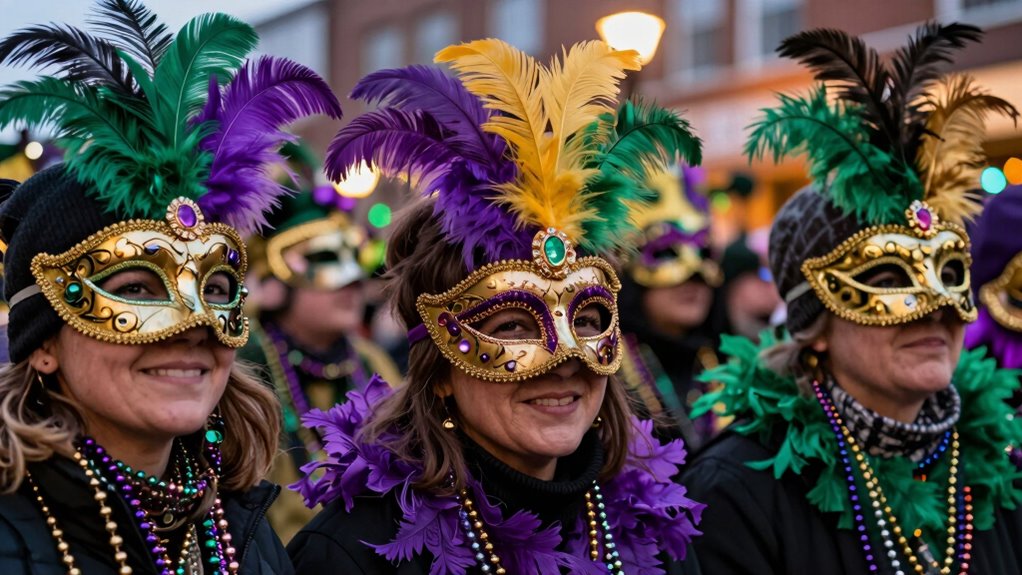

Mardi Gras isn’t just about beads and parties; it’s deeply rooted in mask traditions that date back centuries. Wearing masks lets you embrace anonymity, express creativity, and break down social barriers. These masks symbolize mystery, transformation, and cultural heritage, often handcrafted with vibrant colors, feathers, and intricate details. They remind us that Mardi Gras celebrates artistry, community, and self-expression. Keep exploring to uncover the fascinating history and craftsmanship behind these iconic symbols.
Key Takeaways
- Masks enable anonymity and playfulness, fostering equality and freedom during Mardi Gras celebrations.
- Historically, masks broke social barriers, allowing different classes to mingle and celebrate together.
- They are handcrafted with vibrant colors, embellishments, and intricate details, reflecting cultural artistry.
- Masks symbolize mystery, transformation, and self-expression, encouraging revelers to adopt new personas.
- Wearing masks connects participants to Mardi Gras’s rich cultural heritage and community traditions.
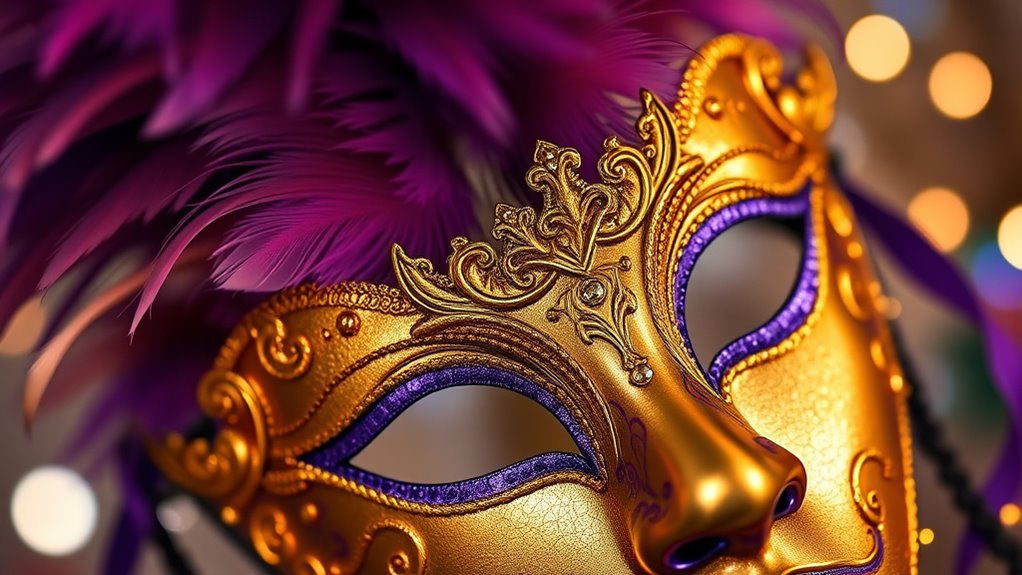
Mardi Gras masks are a vibrant and essential part of the celebration, allowing participants to embrace anonymity and playfulness. These masks aren’t just decorative accessories; they carry a rich history significance that dates back centuries. Originally, masks were used to break down social barriers, enabling people from different classes to mingle without the constraints of their social status. This tradition fostered a sense of equality and freedom, which remains a core element of Mardi Gras today. Over time, masks became symbols of mystery and transformation, encouraging revelers to shed their everyday identities and embrace new personas during the festivities.
The craftsmanship techniques behind these masks are as diverse as the designs themselves. Many masks are handcrafted with meticulous attention to detail, often involving multiple steps to achieve their vibrant look. Artists typically start with a base made of papier-mâché, plaster, or lightweight plastic, shaping it into the desired form. Once the base dries, it’s painted with bold colors—bright reds, blues, golds, and greens—that symbolize the lively spirit of Mardi Gras. Techniques like gilding, where gold leaf is carefully applied, add an element of opulence and tradition. Embellishments such as feathers, beads, sequins, and rhinestones are then carefully attached to enhance the mask’s visual appeal. Some masks feature intricate carvings or embossing, showcasing the craftsmanship and artistry involved. Whether simple or elaborate, each mask reflects a cultural heritage that celebrates creativity and artistry. Additionally, many masks are handmade by skilled artisans, ensuring each piece is unique and imbued with cultural significance.
These masks aren’t mass-produced; they’re often handmade by skilled artisans whose techniques have been passed down through generations. The process requires patience and precision, ensuring each piece is unique. This dedication to craftsmanship helps preserve the cultural significance of masks while also making each one a wearable work of art. Wearing a mask during Mardi Gras isn’t just about concealment; it’s about participating in a tradition rooted in history and craftsmanship. It’s about embracing the playful, transformative spirit of the event and recognizing the skill and cultural heritage that go into every mask. When you wear one, you’re not just partaking in a colorful tradition—you’re connecting with centuries of history, artistry, and community. The masks serve as a reminder that Mardi Gras is more than just beads and parades; it’s a celebration of history, creativity, and the enduring human desire for joy and self-expression.
Top picks for "mardi gras bead"
Open Amazon search results for this keyword.
As an affiliate, we earn on qualifying purchases.
Frequently Asked Questions
How Did Mask Wearing Originate in Mardi Gras Celebrations?
You might not know that mask-wearing in Mardi Gras traces back to history origins in 18th-century Europe, where masks allowed revelers to escape social constraints. The cultural significance grew as people embraced anonymity, encouraging free expression and equality among all participants. When this tradition reached New Orleans, it became a core part of Mardi Gras celebrations, symbolizing mystery, transformation, and shared community spirit that still thrives today.
Are There Specific Masks Associated With Different Mardi Gras Traditions?
You’ll find that specific masks at Mardi Gras symbolize more than just fun—they’re bursting with cultural symbolism and regional flair. The Jester mask, for example, embodies humor and revelry, while the Harlequin showcases theatrical tradition. Different regions have their own iconic styles, making each celebration uniquely colorful. These masks aren’t just costumes; they’re powerful symbols that honor history, tradition, and local identity in an explosion of vibrant expression.
What Materials Are Traditionally Used to Make Mardi Gras Masks?
You’ll find Mardi Gras masks are traditionally made from materials like paper mâché, leather, or fabric, chosen for their material durability and ease of decoration. You can add vibrant mask decoration with feathers, beads, sequins, and glitter to make them stand out. These materials allow you to craft masks that are both sturdy enough to wear all night and beautifully elaborate, capturing the festive spirit of Mardi Gras.
How Do Masks Influence Social Interactions During Mardi Gras?
During Mardi Gras, masks boost your social anonymity, encouraging you to mingle freely without judgment. They play a key role in costume design, allowing you to adopt different personas and break down social barriers. This sense of anonymity makes interactions more playful and spontaneous, letting you connect with others based on personality rather than status. Ultimately, masks create an atmosphere where everyone feels free to express themselves, enhancing the festive experience.
Are There Any Cultural or Historical Symbols Embedded in Mardi Gras Masks?
Yes, Mardi Gras masks often feature cultural symbolism and hold historical significance. You’ll notice designs inspired by European traditions, like Venetian elegance, or symbols representing local heritage. These masks serve as a reflection of cultural identity, allowing you to connect with history and express creativity. By wearing these masks, you participate in a tradition rich with symbolism that honors centuries-old customs and adds depth to the celebration.
Conclusion
As you’ve seen, Mardi Gras masks aren’t just about celebration—they carry centuries of mystery and tradition. Every mask you see hides a story, a secret, waiting to be uncovered. So next time you witness the vibrant festivities, remember there’s more beneath the surface. What other hidden meanings and histories lie behind these colorful disguises? The deeper you look, the more secrets you might discover—if you’re willing to uncover them.