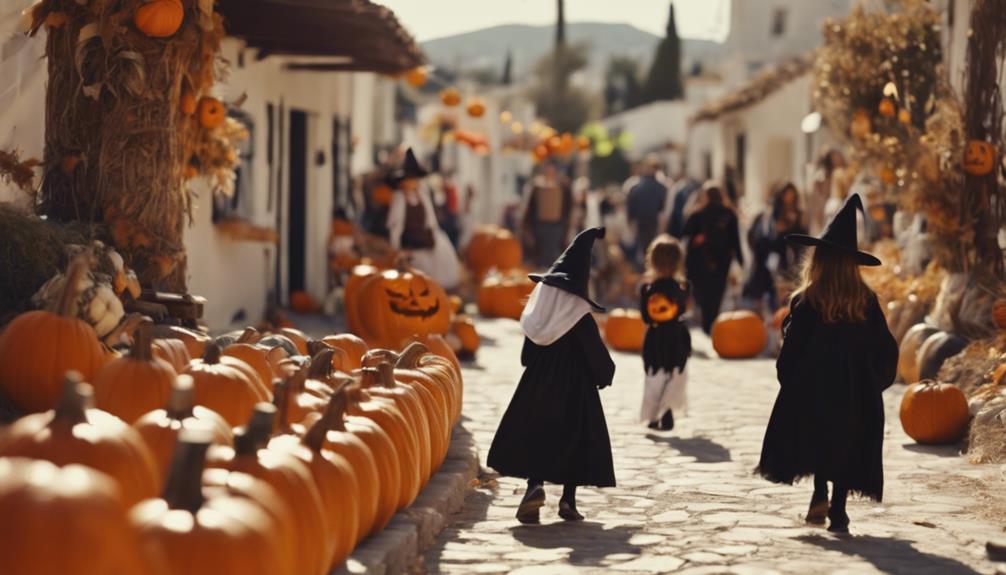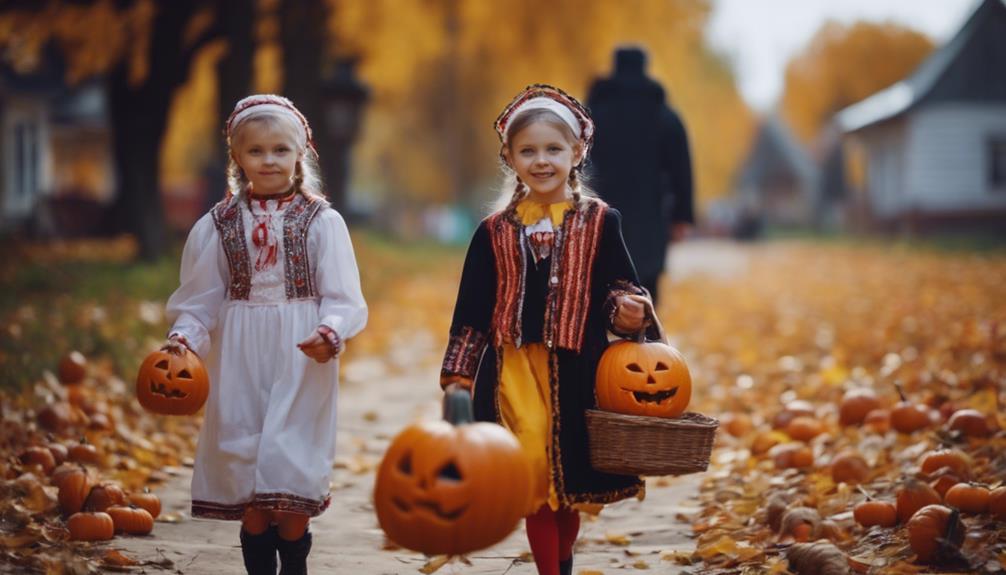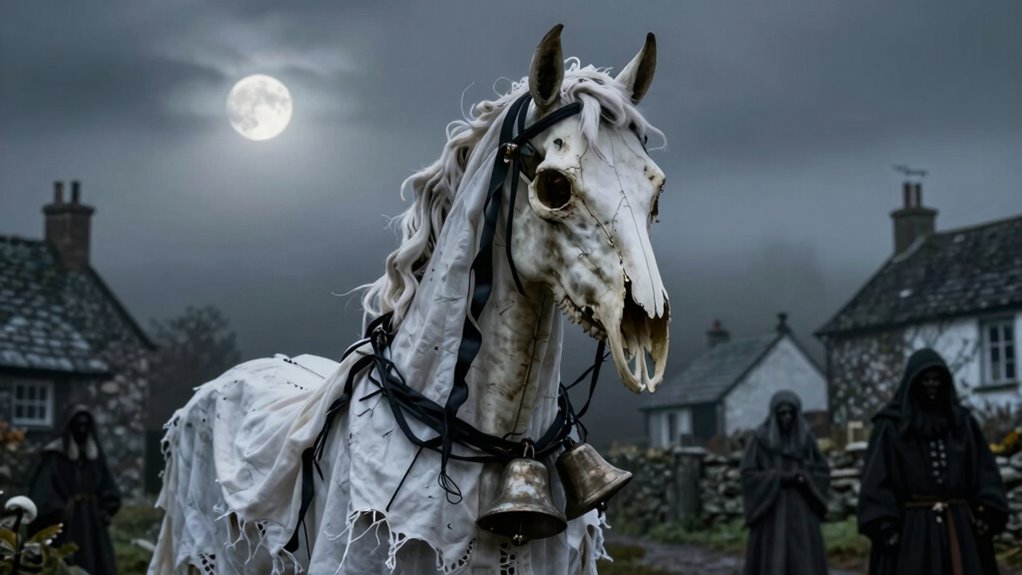

The Mari Lwyd is a spooky Welsh tradition where a decorated horse skull, mounted on a pole and covered with a white cloth, is carried around during winter festivities. People use it to engage in lively banter, singing, and riddles, blending storytelling with playful mischief. Its eerie, mask-like appearance can feel like Halloween, but it’s rooted in celebrating community, hope, and renewal amid winter’s gloom. Curious? You’ll discover more about this haunting yet lively custom below.
Key Takeaways
- The Mari Lwyd is a Welsh folk tradition featuring a decorated horse skull used during winter festivities.
- It involves lively singing, riddles, and playful banter, creating a festive and mischievous atmosphere similar to Halloween.
- The creepy, skull-based figure symbolizes fertility, renewal, and protection, echoing themes of hope amid winter darkness.
- Participants engage in community storytelling and musical chants, fostering cultural bonds and resilience.
- Its spooky appearance and playful interactions make it feel like a traditional, folkloric version of Halloween.
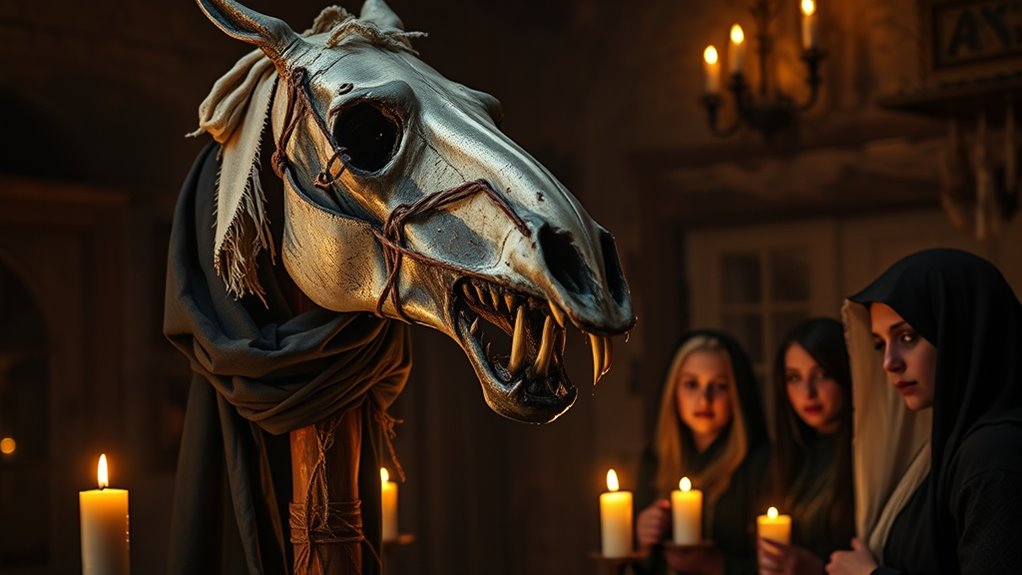
The Mari Lwyd is a traditional Welsh folk custom that combines storytelling, music, and lively festivities during the winter months. As you learn about this intriguing tradition, you’ll see how it embodies folk symbolism and plays a crucial role in winter festivals across Wales. The Mari Lwyd, which translates to “Grey Mare,” involves a decorated horse skull mounted on a pole, covered with a white cloth, and carried by a person hidden underneath. This haunting figure becomes the centerpiece of celebrations, often appearing in towns and villages during the darkest days of winter. Its eerie appearance and lively singing are not just for entertainment—they’re rooted deeply in folk symbolism. The horse skull represents fertility, renewal, and protection against evil spirits, which are common themes in winter festivals worldwide. You’ll notice that the tradition is more than just a quirky custom; it’s a symbolic act meant to chase away the darkness and usher in the coming light of spring.
During the festivities, your experience would typically involve groups of performers, known as “pontos,” who approach houses or gather in communal spaces. They engage in witty banter, singing, and rhythmic exchanges, challenging local residents with riddles or playful threats. The interaction often ends with the host inviting the Mari Lwyd group inside, where more singing and storytelling unfold. This lively exchange is a hallmark of folk traditions, emphasizing communal bonds and shared cultural identity. The ritual’s roots stretch back centuries, blending storytelling with musical chants that echo through winter festivals. These acts serve to reinforce community cohesion and celebrate the changing seasons, making the Mari Lwyd an emblem of resilience against the hardships of winter. Additionally, the use of folk symbolism in the tradition highlights its significance in cultural storytelling and community resilience.
You’ll also recognize how the imagery associated with the Mari Lwyd connects to broader themes seen in winter festivals around the world. The decorated horse skull, the singing contests, and the festive atmosphere all symbolize hope and renewal, helping communities cope with the cold, dark months. The custom’s lively, sometimes mischievous spirit reflects a desire to dispel fears and welcome brighter days. As you observe or participate in these celebrations, you’ll understand that the Mari Lwyd isn’t just a spooky figure; it’s a vibrant symbol of Welsh heritage and an enduring tradition that transforms winter’s gloom into a lively, meaningful feast. Its folk symbolism continues to resonate today, reminding us of the importance of community, storytelling, and hope during the darkest time of the year.
Frequently Asked Questions
How Did the Mari Lwyd Tradition Originate Historically?
You might find that the Mari Lwyd tradition has Celtic origins, dating back to ancient pagan rituals celebrating winter solstice. Medieval influences shaped its evolution, blending Christian customs with local folklore. During winter, communities would carry the Mari Lwyd, a decorated horse skull, as a symbol of protection and good luck. This haunting practice, rooted in Celtic and medieval traditions, transformed into the spooky, festive celebration we see today.
Are There Regional Variations of the Mari Lwyd in Wales?
Think of the Mari Lwyd as a chameleon, adapting to different Welsh regions. You’ll find variations in regional costumes and folklore, like the painted skulls of North Wales versus the decorated horse figures in the South. These differences reflect local traditions, stories, and communities. So, as you explore, you see how each area crafts its own version of the Mari Lwyd, making it a unique, living part of Welsh cultural tapestry.
What Symbols or Meanings Are Associated With the Mari Lwyd?
You might notice that the Mari Lwyd features symbols like the horse skull, ribbons, and a white sheet, which hold deep cultural significance. These symbols represent themes like protection, community bonding, and good fortune. The horse skull’s symbolic meanings include strength and warding off evil, while the ribbons and white sheet emphasize unity and celebration. Together, these elements reflect the tradition’s rich cultural importance in Welsh communities.
Is the Mari Lwyd Tradition Still Practiced Today?
Back in the 21st century, you’ll find the Mari Lwyd tradition still alive, especially during Welsh festivals, where modern adaptations keep it vibrant. Its spooky charm maintains popularity today, blending old customs with contemporary celebrations. You might see people singing and parading with the decorated horse skull, ensuring this eerie tradition remains a lively part of Welsh culture, even as it evolves with new festival trends.
How Does the Community Participate in Mari Lwyd Celebrations?
You actively participate in Mari Lwyd celebrations through community involvement, where everyone joins in the festive customs. People gather to sing traditional songs, carry the decorated horse figure, and visit homes, requesting entry with playful rhymes. This lively tradition strengthens community bonds, creating an exciting, communal atmosphere. Your participation keeps these festive customs alive, ensuring the cultural heritage continues to thrive and bring joy to all involved during this unique Welsh celebration.
Conclusion
Now that you’ve uncovered the mystery of Mari Lwyd, it’s like stepping into a ghostly dance that’s been spinning through Welsh history for centuries. This tradition isn’t just a spooky costume; it’s a living tapestry of community, folklore, and ancient customs. As you leave this story behind, remember that Mari Lwyd is the candle flickering in the dark, guiding you through a mysterious world where the past and present entwine like shadows in the night.