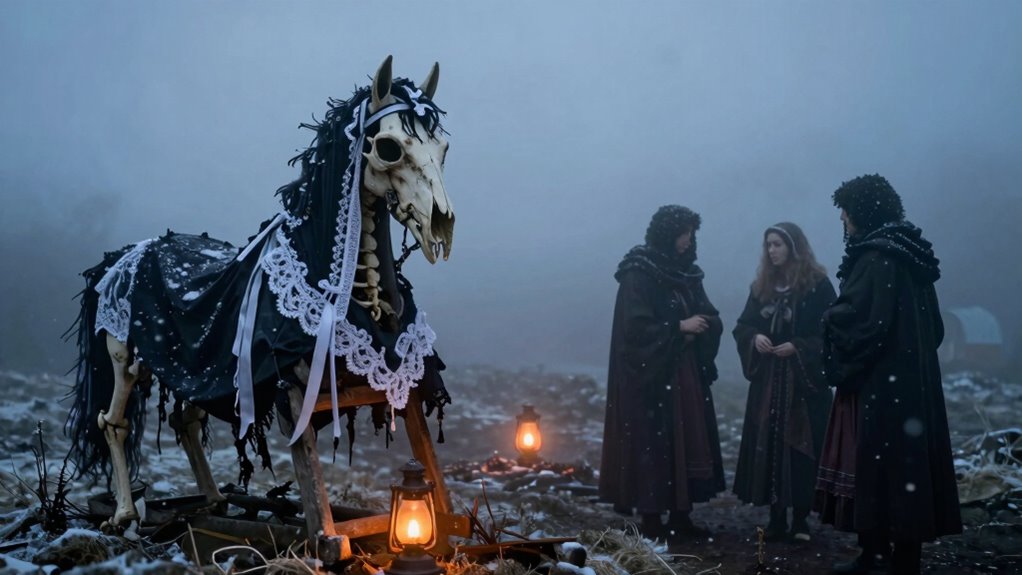

You’ve never heard of Mari Lwyd, a spooky Welsh winter tradition that’s both eerie and fascinating. Imagine a decorated horse’s skull carried through villages, accompanied by singing, storytelling, and playful singing contests. Originally rooted in Celtic customs to ward off evil spirits and bring blessings, it’s now a lively community celebration blending ritual and fun. If you keep exploring, you’ll discover how this haunting tradition has evolved and continues to captivate and connect people today.

Get decor and gifts delivered free with Prime
- Fast, free delivery on millions of items
- Prime Video, Amazon Music and more included
- Member-only deals all year
Key Takeaways
- Mari Lwyd features a decorated horse skull, creating a spooky, macabre atmosphere during winter celebrations.
- Originating from Celtic Welsh customs, it was believed to ward off evil spirits and invoke blessings.
- The tradition involves singing contests and storytelling, adding a lively, eerie element to community festivities.
- Modern festivals preserve its creepy charm with theatrical costumes and elaborate performances.
- Its ancient roots and haunting symbolism make Mari Lwyd one of the most eerie winter traditions.
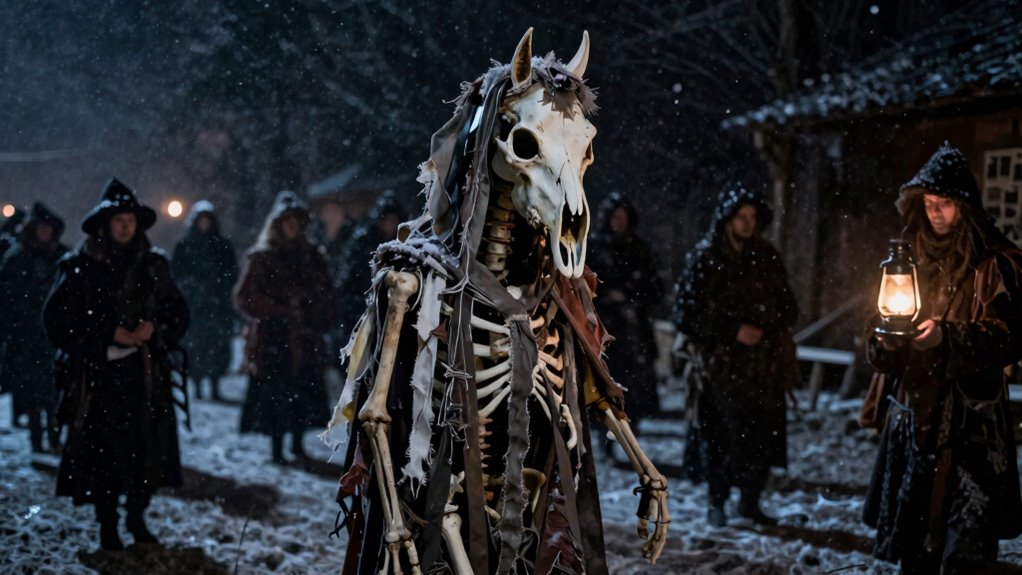
During the cold, dark winter months, a peculiar Welsh tradition called Mari Lwyd emerges from the shadows, bringing with it an eerie sense of celebration that’s rarely seen elsewhere. You might find it unsettling at first—an old custom where a decorated horse’s skull, mounted on a pole, is carried through villages, accompanied by singing and storytelling. The origins of Mari Lwyd trace back centuries, rooted in Celtic and pre-Christian Welsh customs. Historians believe it started as a way to ward off evil spirits during the darkest days of winter or to invoke blessings for a successful year ahead. Over time, it evolved into a lively, if somewhat spooky, form of community entertainment, blending ritual with merriment, often involving groups of revelers who challenge neighbors to a singing contest. The tradition’s historical origins are shrouded in mystery, but it’s clear that Mari Lwyd served both as a symbolic protector and a social activity that reinforced community bonds during bleak months. Additionally, some scholars see it as an expression of winter solstice celebrations that mark the longest night of the year. Today, you’ll see modern adaptations of Mari Lwyd popping up in festivals and cultural events across Wales. While the core elements—the horse’s skull, the singing, and the playful confrontations—remain intact, contemporary celebrations often add new twists. For example, some groups incorporate theatrical performances or elaborate costumes, turning the tradition into a lively spectacle meant to attract tourists and preserve Welsh heritage. Local communities might also host community workshops, teaching younger generations how to create their own Mari Lwyd figures or sing traditional songs, ensuring the custom’s survival amidst modern life. Despite these adaptations, the essence remains the same: a spirited night of communal fun wrapped in a slightly macabre package that celebrates Welsh history and folklore. You can appreciate how traditions like Mari Lwyd adapt over time, blending ancient beliefs with contemporary festivities to keep the spirit alive.
decorated horse skull for festivals
As an affiliate, we earn on qualifying purchases.
As an affiliate, we earn on qualifying purchases.
Frequently Asked Questions
What Is the Origin of the Mari Lwyd Tradition?
You learn that the Mari Lwyd tradition has mythical origins rooted in Welsh folklore, dating back centuries. It involves a decorated horse skull carried by a person under a cloth, symbolizing seasonal change and community spirit. Its cultural significance lies in encouraging good luck and warding off evil spirits during winter. You might find it both eerie and fascinating, as it reflects ancient beliefs and communal bonding in Welsh tradition.
How Is the Mari Lwyd Tradition Performed Today?
Like a ghostly song echoing through time, the Mari Lwyd tradition continues today with lively performances. You’ll see performers donning elaborate costumes crafted with skillful costume craftsmanship, blending tradition with modern adaptations. They carry the decorated horse’s skull, engaging communities in singing and banter. This vibrant display keeps the haunting spirit alive, transforming an ancient custom into a festive winter celebration that still captivates and unites people today.
Are There Specific Regions Where Mari Lwyd Is More Popular?
You’ll find Mari Lwyd more popular in specific regions of Wales, especially in the south and mid-Wales areas. These regional variations are influenced by local cultural traditions and folklore, which shape how communities celebrate the tradition. Cultural influences from neighboring areas also play a role, making each Mari Lwyd performance unique. If you visit these regions during winter, you might witness this haunting, yet fascinating, custom firsthand.
What Materials Are Used to Create the Mari Lwyd’s Head?
You use craft materials to create the Mari Lwyd’s head, typically combining a large animal skull—often a horse skull—with a festive costume. People paint and decorate the skull with bright colors, fabric, and paper, turning it into a striking, eerie centerpiece. These craft materials help give the Mari Lwyd its spooky yet lively appearance, making it a memorable part of Welsh winter traditions.
How Do Communities Celebrate or Mark the End of the Tradition?
You might think the Mari Lwyd tradition ends with the festivities, but communities often mark its conclusion through lively gatherings, singing, and storytelling. Today, many embrace modern adaptations, incorporating community involvement like local events or social media celebrations, helping keep the tradition alive. This spirited farewell fosters unity and preserves cultural heritage, showing that even the spookiest customs can evolve into joyful communal experiences.
Conclusion
You might think Mari Lwyd sounds too eerie or strange to enjoy, but its spooky charm is part of what makes it so mesmerizing. Embracing this quirky tradition invites you into a centuries-old Welsh celebration filled with mystery and community spirit. So, next winter, don’t dismiss the creepy—it’s an experience that’ll leave you with stories to tell and a new appreciation for unique cultural rituals. Give it a try—you might just find yourself enchanted.
Columbus Day / Indigenous Peoples' Day Picks
long weekend sales
As an affiliate, we earn on qualifying purchases.