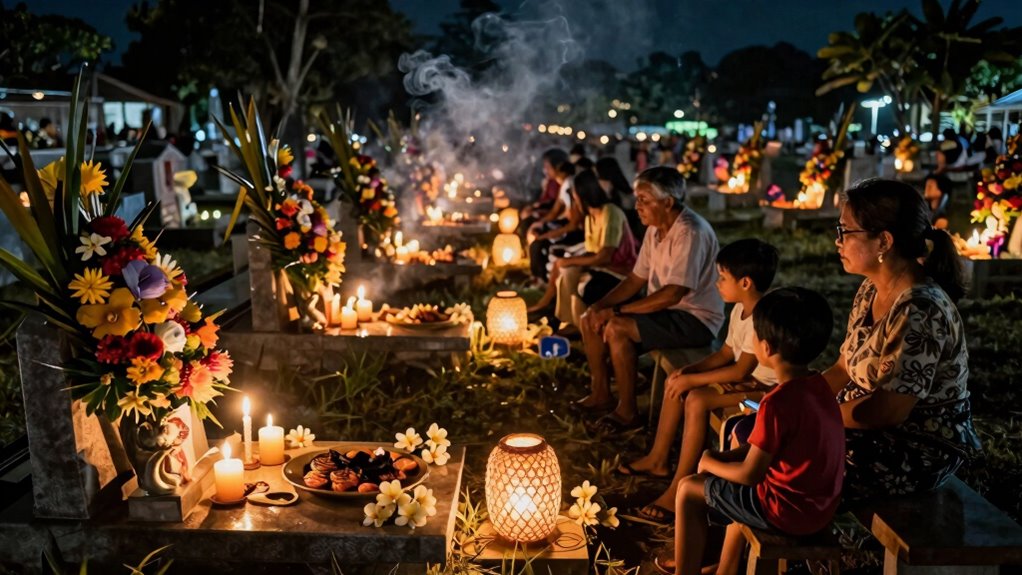

During Undas in the Philippines, families spend the night at cemeteries to honor and remember loved ones through vibrant prayers, offerings, and cultural rituals. This practice transforms cemeteries into lively spaces of faith and remembrance, reinforcing bonds with ancestors and the community. It’s a way to keep spirits alive and celebrate life beyond death. If you keep exploring, you’ll discover more about the deep cultural meanings behind this heartfelt tradition.
Listen free for 30 days with Audible
Thousands of audiobooks and originals — cancel anytime.
As an affiliate, we earn on qualifying purchases.
Key Takeaways
- Families spend the night at cemeteries to keep vigil, honor, and remember their departed loved ones through prayers and offerings.
- It reflects Filipino cultural values of familial bonds, spiritual connection, and ancestral veneration during Undas.
- Night-long vigils foster communal support, shared grief, and collective expression of faith and hope.
- The practice emphasizes that loved ones are never truly gone, maintaining ongoing spiritual bonds.
- It serves as a meaningful tradition to reinforce social ties and cultural identity through collective remembrance.
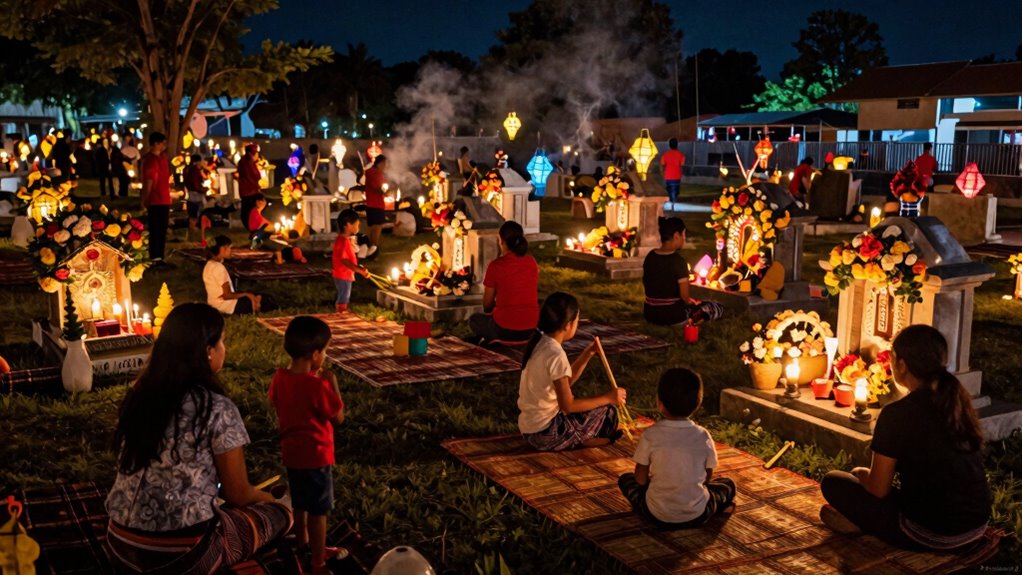
Every year in the Philippines, Undas transforms towns and cities into vibrant displays of remembrance and faith. During this time, families gather to honor their loved ones who have passed away, and you’ll notice that cemeteries come alive with activity. You might find yourself walking through rows of tombs adorned with flowers, candles flickering in the night. These scenes are part of the country’s rich funeral traditions, which hold deep cultural significance. They’re not just about mourning but about celebrating life and reaffirming bonds with those who are gone.
Undas in the Philippines transforms cemeteries into vibrant, heartfelt celebrations of life, faith, and enduring family bonds.
As you participate in these traditions, you’ll see how Filipinos view death as a natural part of life, intertwined with faith and community. Many families arrive early in the morning, bringing food, offerings, and mementos to place on graves. It’s common to set up makeshift altars with pictures, candles, and flowers, creating a space of remembrance. The act of spending the night at cemeteries is rooted in centuries-old customs, reflecting a tradition of keeping vigil and asserting the ongoing connection between the living and the departed. It’s a way to keep the memory alive and to demonstrate that loved ones are never truly gone.
The cultural significance of this night-long vigil goes beyond just remembering. It’s a collective expression of faith, hope, and familial ties. You’ll notice that families often prepare special meals to share at the cemetery, turning the vigil into a communal event. It’s about more than just visiting graves; it’s about bonding over shared memories, prayers, and stories. The night is filled with singing, prayer, and sometimes even cultural performances, all aimed at honoring the dead and ensuring their spirits find peace. This practice also emphasizes the importance of ancestral veneration, which is a key aspect of Filipino funeral traditions. Additionally, the act of offering food and prayers deepens the spiritual connection during this observance. Moreover, this tradition fosters a sense of collective identity that strengthens community bonds. The practice of communal mourning further highlights the importance of shared grief and support during this period.
Spending the night at cemeteries during Undas also reflects the Filipino value of “pakikiramay,” or communal sympathy. It’s a time when people come together to support each other emotionally, reinforcing social ties. This practice underscores the importance of family and community in navigating grief. Additionally, this tradition highlights the cultural significance of honoring ancestors and keeping their spirits alive through heartfelt funeral practices. For you, experiencing this tradition firsthand offers insight into a culture that sees death not as an end but as a continuation—something to be remembered and celebrated with warmth, faith, and togetherness. It’s a moving reminder of how Filipinos honor their ancestors and keep their spirits alive through these heartfelt funeral traditions.
As an affiliate, we earn on qualifying purchases.
Frequently Asked Questions
How Do Families Prepare for Overnight Cemetery Visits During Undas?
You prepare for overnight cemetery visits during Undas by packing traditional food like rice cakes and snacks to share. You also bring candles, flowers, and family photos to honor loved ones. You participate in family rituals such as prayer and lighting candles, creating a meaningful connection. Setting up a comfortable space, you settle in for the night, ensuring respect and remembrance while enjoying the company of family and preserving cultural traditions.
Are There Specific Traditions or Rituals Observed During Undas in the Philippines?
During Undas, you observe specific traditions like offering ancestral offerings and saying traditional prayers to honor your loved ones. You might light candles, bring flowers, and prepare food as acts of remembrance. Families often gather around tombstones, reciting prayers or singing hymns, creating a sacred space for reflection and connection. These rituals help you pay respects, keep traditions alive, and foster a sense of community and spiritual bonding with your ancestors.
What Safety Precautions Do Families Take While Spending the Night at Cemeteries?
You stay alert, knowing safety’s essential during the night at cemeteries. You bring flashlights, secure your valuables, and stay with your group. The cultural significance and historical context remind you that honoring loved ones isn’t just about remembrance, but also about respecting traditions. By following these precautions, you guarantee a meaningful and safe experience, where the spirits of the past and your loved ones remain protected through the night.
How Do Local Communities Organize and Manage Large Crowds During Undas?
During Undas, you’ll notice local communities organize large crowds through community volunteerism, where volunteers guide visitors and provide assistance. They implement crowd control measures like designated pathways, entry and exit points, and clear signage to prevent chaos. These efforts help guarantee safety and order, allowing families to pay respects peacefully. Your participation in respecting these measures further supports a smooth, respectful commemoration during this solemn occasion.
What Are the Environmental Impacts of the Annual Cemetery Visits in the Philippines?
They say, “We do not inherit the earth from our ancestors, we borrow it from our children.” During Undas, your cemetery visits contribute to pollution and waste management issues, as discarded flowers, food wrappers, and candles pile up. This environmental impact stresses local ecosystems and strains waste disposal systems. You can help by reducing waste, using eco-friendly materials, and practicing responsible cleanup, ensuring future generations can also honor their loved ones without harming the environment.
Conclusion
As you walk among the silent stones, remember that Undas isn’t just about mourning—it’s about reconnecting with loved ones who still whisper in the wind. The flickering candles symbolize hope lighting the darkness, guiding spirits back home. By spending the night in these hallowed grounds, you embrace the enduring bond that death can’t sever, turning the cemetery into a sanctuary of love, remembrance, and eternal togetherness.
NFL season / tailgating Picks
team gear
As an affiliate, we earn on qualifying purchases.