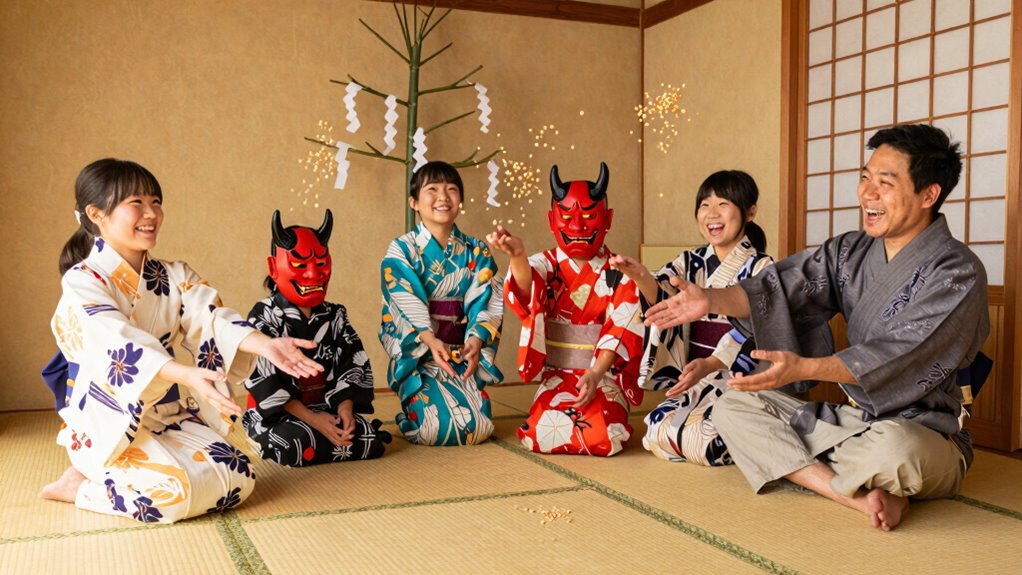

During Setsubun, you participate in a lively tradition to chase away evil spirits and invite good luck. Families throw roasted soybeans, shouting “Demons out! Luck in!” as they do so, often wearing demon masks and facing the year’s lucky direction while eating special sushi rolls called *eho-maki*. Modern celebrations include community events and school ceremonies, blending old customs with new. Keep exploring to discover more about how these vibrant rituals keep Japan’s culture alive.

Get decor and gifts delivered free with Prime
- Fast, free delivery on millions of items
- Prime Video, Amazon Music and more included
- Member-only deals all year
Key Takeaways
- During Setsubun, families throw roasted soybeans (*mamemaki*) to drive away evil spirits and invite good luck.
- Masks representing demons are worn by family members or actors to symbolize evil entities being expelled.
- The ritual involves shouting “Demons out! Luck in!” to reinforce the cleansing and protective effects.
- Beans are thrown at the doorway, symbolizing the act of chasing away negativity from the household.
- Additional customs like eating *eho-maki* and decorating entrances enhance the theme of purification and renewal.
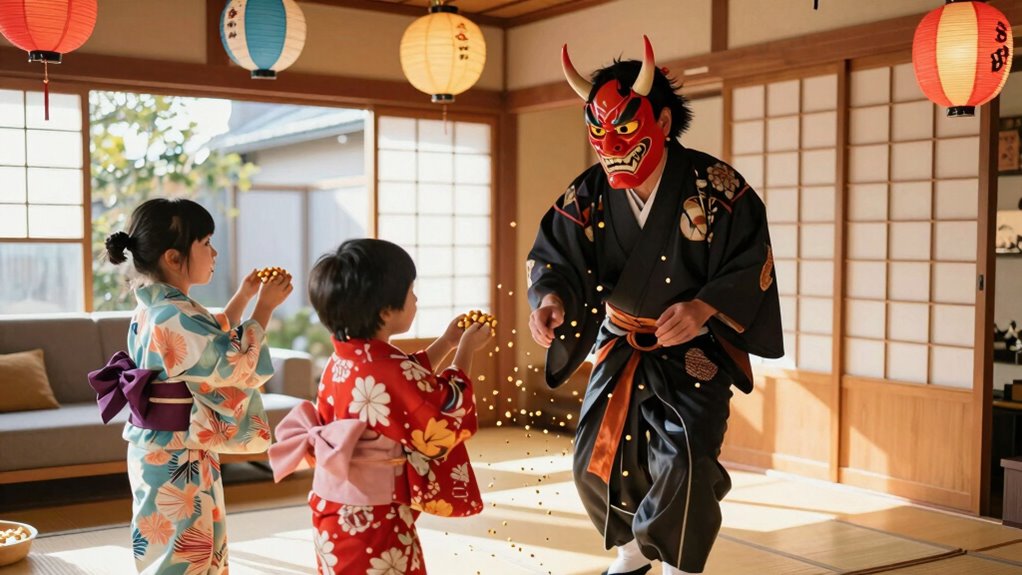
Have you ever wondered why Japan throws roasted soybeans out of their houses at the start of February? It’s all part of Setsubun, a lively tradition that marks the beginning of spring according to the lunar calendar. During this annual event, families gather to perform traditional rituals meant to chase away evil spirits and invite good fortune. The act of tossing roasted soybeans, called *mamemaki*, is the centerpiece of these rituals. You’ll see family members, often dressed in masks representing demons, standing at the doorway and tossing beans while shouting, “Demons out! Luck in!” This simple act is believed to clear the house of negative energies and bring prosperity for the year ahead.
During Setsubun, families toss roasted soybeans to chase away evil spirits and welcome good luck for the year.
While Setsubun has deep roots in traditional rituals, it’s also evolved into a modern celebration embraced across Japan. You might find local communities organizing bean-throwing events in parks or shopping centers, where everyone joins in the fun. Some companies and schools hold their own bean-throwing ceremonies, turning the event into a lively communal activity. In recent years, the custom has gained popularity through media and pop culture, making it accessible for younger generations. This blending of old and new keeps the tradition alive and relevant, showing how Japan respects its heritage while adapting to contemporary life. Cultural evolution plays a key role in preserving and spreading these customs beyond traditional settings.
In addition to tossing beans, you’ll notice other customs surrounding Setsubun. People often eat *eho-maki*, a special long sushi roll, which is believed to bring good luck if eaten in silence while facing the year’s lucky direction. Many households decorate their entrances with sardine heads and holly branches, further warding off evil spirits. These rituals reinforce the theme of purification and renewal that underpins Setsubun. It’s not just about celebrating – it’s about actively engaging in practices that protect and bless your household.
Whether you participate in traditional rituals or enjoy the modern festivities, you’ll see that Setsubun is an energetic and communal event. It’s a vivid example of how Japan balances respect for age-old customs with the enthusiasm for new ways to celebrate. The act of chasing demons out of houses with roasted soybeans remains a powerful symbol of renewal, hope, and good luck. It’s a lively reminder that, in Japan, the fight against negativity is both a serious tradition and a joyful, shared experience that continues to evolve with time. Additionally, the traditional rituals serve to connect communities and reinforce cultural identity across generations.
As an affiliate, we earn on qualifying purchases.
Frequently Asked Questions
When Did the Tradition of Setsubun Originate?
You might find that the tradition of Setsubun dates back over a thousand years, rooted in Japan’s historical origins. Its mythological significance ties to ancient beliefs about cleansing evil spirits and welcoming spring. During the Heian period, people began celebrating this day with rituals like throwing roasted soybeans. This practice symbolized purifying the home and warding off demons, blending myth and history to create a meaningful seasonal event still celebrated today.
Are There Regional Variations in Setsubun Celebrations?
Yes, you’ll find regional variations in setsubun celebrations across Japan. In some areas, local demon myths influence customs, like specific rituals to banish evil spirits. Regional food customs also differ; for instance, some regions enjoy unique soy bean dishes or special decorations. These variations make each place’s celebration distinct, reflecting local traditions and beliefs, which add richness and diversity to the nationwide setsubun festivities.
What Foods Are Traditionally Eaten During Setsubun?
During Setsubun, you typically eat roasted soybeans, symbolizing the superstitions behind beans that ward off evil spirits. The act of throwing beans represents driving away demons, and the masks you wear have a symbolic meaning—masking your face to hide from evil. This tradition emphasizes cleansing bad luck and welcoming good fortune, making the foods and masks integral to the celebration’s spiritual significance.
How Has Modern Culture Influenced Setsubun Practices?
Modern pop culture and social media profoundly shape your Setsubun experience today. You might share lively videos, lively hashtags, or playful photos online, making the tradition more interactive and inspiring. Influencers and digital platforms introduce new twists, trends, and treats, turning the age-old practice into a modern festivity. You embrace the excitement, blending tradition with technology, and spreading the spirited seasonal celebration far and wide across screens and social spaces.
Is Setsubun Celebrated Outside Japan?
You might find some international participation in Setsubun celebrations, especially where Japanese communities exist. While it’s primarily a Japanese tradition, cultural adaptations have led to it being celebrated in parts of the world like Hawaii and Brazil. People outside Japan often embrace it as a fun way to connect with Japanese culture, organizing events that mirror the traditional practices, even if they adapt some elements to suit local customs.
Conclusion
As you participate in Setsubun, you’re not just tossing beans—you’re inviting good fortune and warding off life’s little shadows. With each throw, you help clear the way for brighter days ahead, turning tradition into a joyful dance of renewal. Embrace this playful ritual, knowing it’s a gentle way to chase away the old and welcome the new. In doing so, you become part of a timeless dance that keeps the spirit of renewal alive.
Halloween Picks
halloween
As an affiliate, we earn on qualifying purchases.