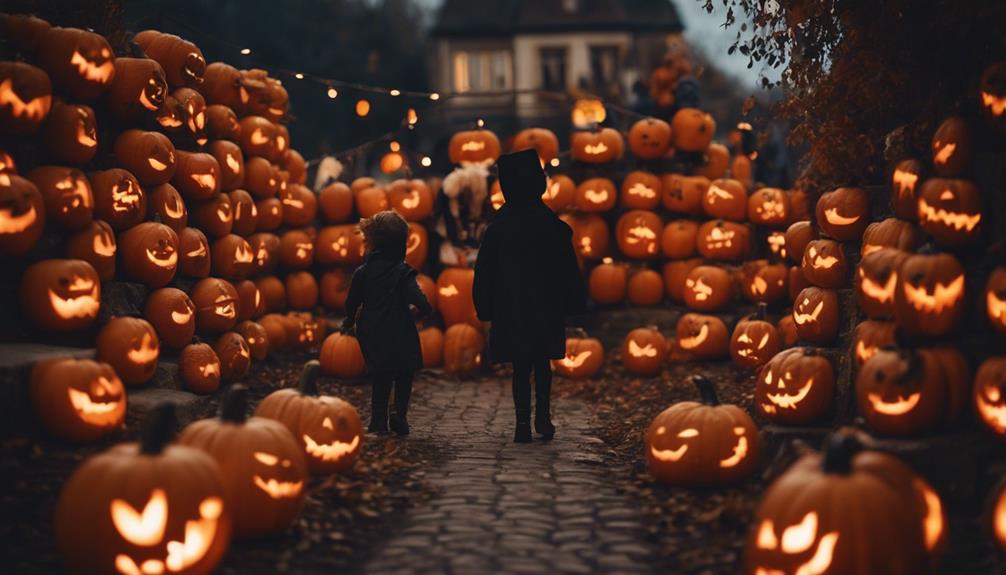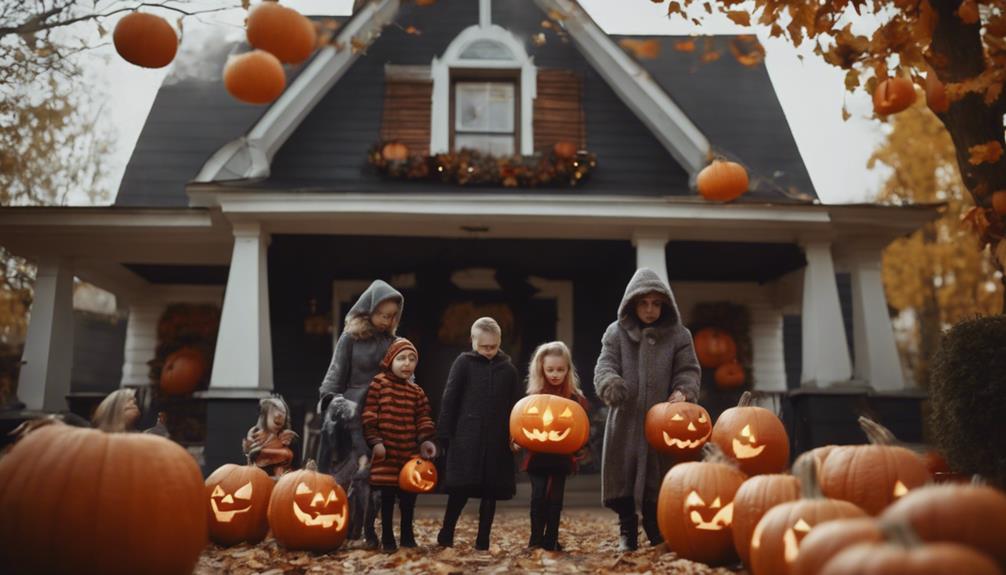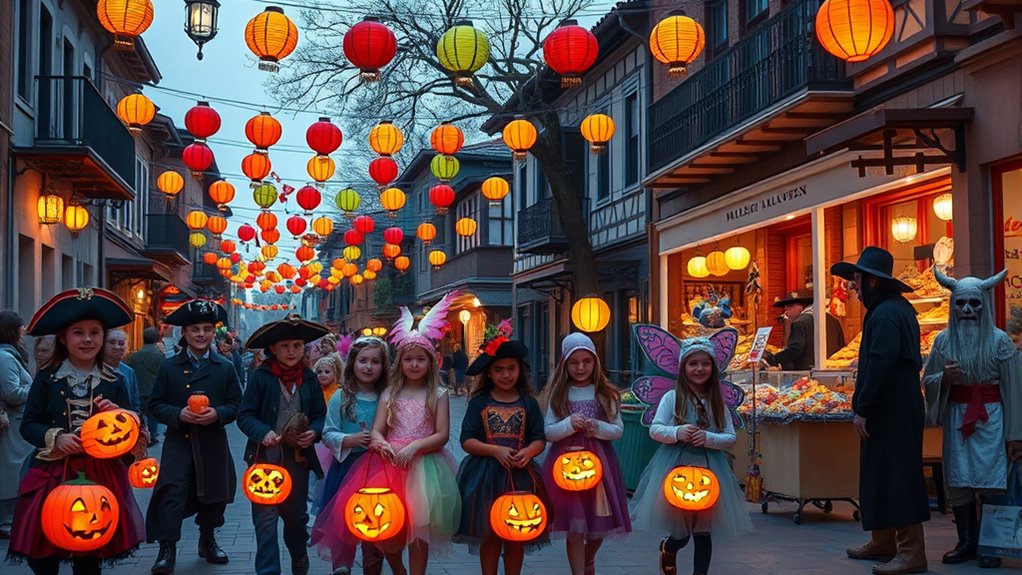

Around the world, trick-or-treating customs vary a lot. In the US, kids go door-to-door asking for candy in costumes. In Mexico, it blends with Day of the Dead traditions, with visits to altars and parades. In Ireland and the UK, kids perform songs or tricks for treats. Japan is adopting trick-or-treating in shopping districts, often inspired by anime and pop culture. If you keep exploring, you’ll discover how these traditions shape local celebrations.

Get decor and gifts delivered free with Prime
- Fast, free delivery on millions of items
- Prime Video, Amazon Music and more included
- Member-only deals all year
Key Takeaways
- In Mexico, trick-or-treating is combined with Day of the Dead traditions, featuring altars, skeleton decorations, and parades honoring ancestors.
- Ireland and the UK practice “guising,” where children perform songs or acts to earn treats, emphasizing community interaction.
- Japan’s Halloween involves themed districts and costume events with a focus on pop culture, driven by commercial influences.
- European countries often hold neighborhood parties and festivals with costume contests, highlighting social bonding over door-to-door treats.
- Variations worldwide reflect local customs, with some cultures prioritizing performances, community rituals, or safety measures in celebrations.

Every Halloween, children around the world dress up in costumes and go door-to-door, but the traditions behind trick-or-treating vary widely from country to country. In many places, this festive activity has evolved through cultural adaptations that reflect local customs and beliefs. For example, in the United States, kids often don spooky or humorous costumes, from ghosts and witches to superheroes, following long-standing costume traditions that emphasize fun and creativity. These costume traditions have become a core part of Halloween’s identity, encouraging children to express themselves and embrace the spooky spirit of the holiday. The act of dressing up also ties into historical roots, where disguises were believed to ward off spirits or appease them, but today, it’s mostly about entertainment and community engagement.
Children worldwide dress up and go door-to-door, celebrating Halloween through cultural customs and creative costumes.
In contrast, some countries have unique twists on trick-or-treating that highlight their cultural adaptations. In Mexico, for instance, children participate in the Day of the Dead celebrations, where costumes often include skeletons and marigolds, blending Halloween with local ancestral traditions. Instead of just requesting treats, kids might visit altars or participate in parades that honor loved ones who have passed. Similarly, in Ireland and the UK, the tradition of “guising” involves children dressing up and going door-to-door, but it often includes singing or performing small acts in exchange for treats—an adaptation that emphasizes community interaction and entertainment rather than just receiving candy.
In Japan, trick-or-treating is a relatively new practice, but it’s gaining popularity, particularly in themed zones and shopping districts. Costume traditions there are often influenced by anime, manga, and pop culture characters, making the costumes vibrant and imaginative. Rather than a nationwide custom, it’s more of an event driven by commercial interests and cultural exchanges, showcasing how local tastes influence Halloween practices. Meanwhile, in some parts of Europe, especially in Germany and France, children often participate in neighborhood parties or festivals that include costume contests and themed games, emphasizing social bonding through costume traditions rather than door-to-door treats. Additionally, the security measures associated with Halloween festivities vary by country, impacting how children participate in trick-or-treating safely.
Across the globe, these cultural adaptations show how trick-or-treating is not a one-size-fits-all activity. Instead, it morphs to fit local customs, beliefs, and social norms, creating a rich tapestry of Halloween celebrations worldwide. Whether it’s about honoring ancestors, engaging in community performances, or simply having fun with creative costumes, the essence remains the same: kids love the thrill of dressing up and the joy of sharing in a festive tradition that’s uniquely shaped by each culture.
Halloween costume ideas for kids
As an affiliate, we earn on qualifying purchases.
As an affiliate, we earn on qualifying purchases.
Frequently Asked Questions
How Did Trick-Or-Treating Originate Globally?
You might wonder about the historical origins of trick-or-treating and its cultural variations worldwide. It began centuries ago with ancient Celtic festivals like Samhain, where people offered treats to spirits. Over time, it evolved through medieval practices like “souling” in Europe, where poor folk begged for food. Today, many countries have adapted these customs, blending local traditions with modern celebrations, showing how trick-or-treating reflects diverse cultural variations across the globe.
Are There Any Countries Where Trick-Or-Treating Is Illegal?
They say “rules are made to be broken,” but in some countries, cultural restrictions and legal prohibitions keep trick-or-treating illegal. You might find that certain nations, due to religious or cultural reasons, prohibit Halloween festivities altogether. In these places, authorities enforce these laws strictly, making participation illegal and punishable. So, yes, some countries have banned trick-or-treating to maintain cultural integrity and social order.
What Are Common Non-Candy Treats Given Worldwide?
You might wonder about common non-candy treats given during Halloween. In many countries, alternative treats like small toys, stickers, or coins are popular, reflecting cultural variations in celebrating the holiday. These treats offer a fun twist for kids and often respect local customs. You’ll find that while candy is typical, these non-candy options add diversity to Halloween traditions worldwide, making the experience unique in each culture.
How Do Different Cultures Celebrate Halloween Beyond Trick-Or-Treating?
Imagine Halloween as a vibrant mosaic, each culture adding its unique colors. Beyond trick-or-treating, you might experience costume traditions like elaborate masks in Mexico’s Día de los Muertos or spooky parades in Ireland. Festival foods such as roasted chestnuts in Japan or sweet potato treats in Ghana create a festive atmosphere. You’re invited to partake in these diverse customs, celebrating the season’s spirit and history worldwide.
Are There Safety Tips for Children Trick-Or-Treating Internationally?
When trick-or-treating internationally, you should prioritize costume safety by choosing bright, reflective clothing and avoiding masks that block vision. Practice neighborhood vigilance by staying in familiar areas, checking candy for tampering, and going with a trusted adult. Make sure children carry flashlights and know their neighbors. These safety tips help guarantee a fun, secure experience, no matter where in the world you celebrate Halloween.
Conclusion
No matter where you go, trick-or-treating is like stepping into a whirlwind of spooky, sweet, and wildly wonderful traditions. From costumes that could turn heads to candies that seem to multiply overnight, you’re about to experience a night of epic proportions. So, gear up, embrace the chaos, and get ready for a Halloween adventure so unforgettable, it’ll make every other night look dull in comparison. Trick-or-treating isn’t just a tradition—it’s an unstoppable, jaw-dropping celebration!
Columbus Day / Indigenous Peoples' Day Picks
long weekend sales
As an affiliate, we earn on qualifying purchases.