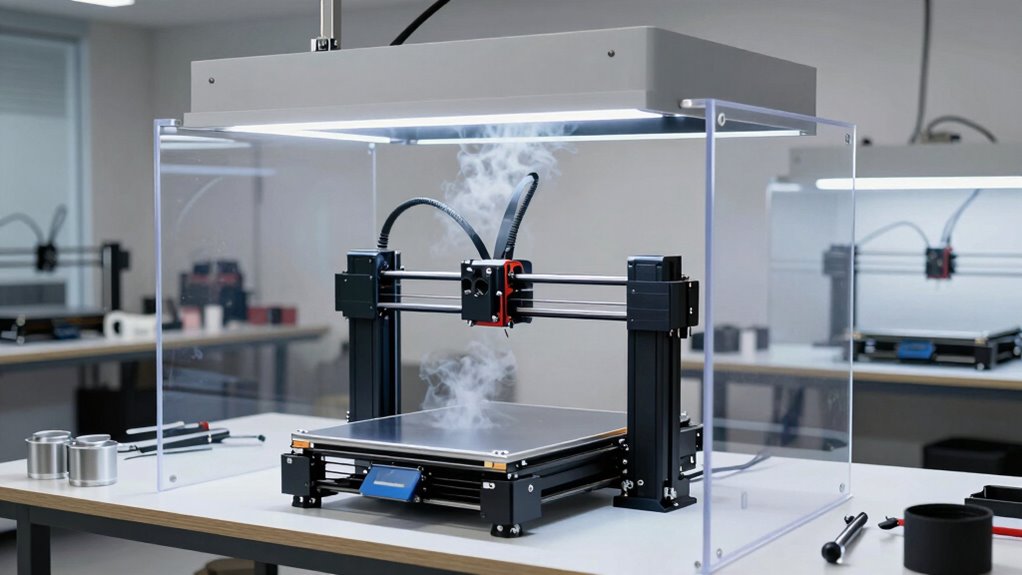

To print props safely, set up a ventilation system that captures fumes and particles at the source. Use enclosures connected to high-quality HEPA filters to trap fine particles and activated carbon filters to neutralize fumes. Keep your space well-ventilated and inspect filters regularly to maintain efficiency. Choice of materials also matters; opt for safer options like PLA when possible. Staying informed on safety practices guarantees your workspace remains healthy—discover more essential tips below.

Get decor and gifts delivered free — and shop member deals
- Fast, free delivery on millions of items
- Access to Prime Big Deal Days deals on October 6–7
- Prime Video, Amazon Music and more included
Key Takeaways
- Capture fumes directly at the source using enclosures connected to efficient HEPA and activated carbon filters.
- Position printers in well-ventilated areas or within dedicated filtration enclosures for optimal airflow.
- Regularly inspect and replace filters to maintain effective removal of airborne particles and fumes.
- Prioritize materials with lower emission profiles, like PLA, and handle hazardous materials with enhanced ventilation.
- Incorporate proper airflow design to ensure continuous circulation and removal of airborne contaminants during printing.
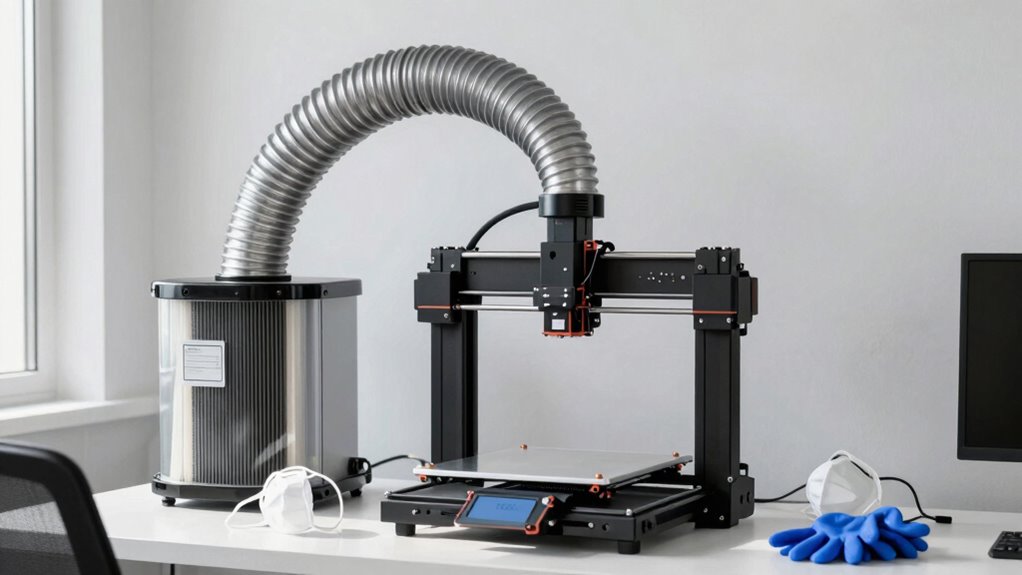
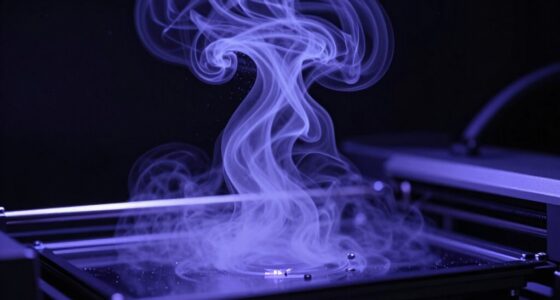
3D printing has revolutionized how props are created, making it easier and more affordable to produce detailed, custom designs. But as you explore printing, understanding proper ventilation setup is vital to keep your workspace safe. One of the most important aspects is ensuring good air filtration. During printing, tiny particles and fumes can be released into the air, especially if you’re working with certain plastics like ABS or resin-based materials. Without proper air filtration, these airborne particles can linger, posing health risks over time. Investing in a high-quality HEPA filter or an activated carbon filter can greatly reduce airborne contaminants, capturing fine particles and neutralizing fumes before they spread through your workspace. This way, you protect yourself from inhaling potentially harmful particles and fumes, which is especially important if you print frequently or in a confined space. Additionally, understanding air quality management can help you optimize your setup for maximum safety and efficiency. Ensuring proper airflow not only improves filtration effectiveness but also helps keep your entire workspace comfortable and safe.
Equally important is prioritizing material safety. Not all filaments are created equal, and some pose more health risks than others. For example, while PLA is generally considered safer because it’s made from biodegradable materials, it still releases ultrafine particles during printing. On the other hand, materials like ABS or resin can emit more hazardous fumes, making proper ventilation even more necessary. You should always read the safety data sheets (SDS) for your specific materials and follow recommended handling procedures. When setting up your ventilation system, make sure that your printer is placed near or within an enclosure that is connected to your air filtration system, allowing fumes and particles to be captured at the source. Additionally, consider wearing a mask, especially when handling raw materials or post-processing finished parts, to further reduce inhalation risks. Ensuring proper airflow and air filtration is essential to ensure safe printing conditions. Regularly inspecting and replacing filters also helps maintain optimal performance and safety.
Creating a safe printing environment isn’t complicated, but it does require intentional effort. A properly set up ventilation system with effective air filtration will keep airborne particles under control and protect your health. Remember to regularly maintain and replace filters to keep the system functioning at its best. Always choose materials with safety in mind, and handle them in well-ventilated areas. When combined, good air filtration and a focus on material safety form the foundation of a responsible 3D printing practice. This way, you can enjoy crafting impressive props without compromising your health or safety.
HEPA air purifier for 3D printer fumes
As an affiliate, we earn on qualifying purchases.
As an affiliate, we earn on qualifying purchases.
Frequently Asked Questions
What Types of Ventilators Are Best for Small Home 3D Printing Setups?
For small home 3D printing setups, HEPA-filtered ventilators are your best choice. They guarantee high filtration efficiency, capturing harmful particles and VOCs effectively. Look for units with adjustable airflow to optimize ventilation without disturbing your workspace. These ventilators improve air quality, making your environment safer and more comfortable. Prioritize models that balance filtration efficiency and airflow optimization to maintain a healthy, well-ventilated area during your printing sessions.
How Often Should I Replace or Clean My Ventilation Filters?
You should replace or clean your ventilation filters every 1 to 3 months, depending on usage. Did you know that poor air filter maintenance can reduce filtration efficiency by up to 50%? Regularly checking and replacing filters guarantees maximum odor control techniques and air quality. It’s essential to maintain these filters to prevent fumes from lingering and to keep your workspace safe and fresh, especially during frequent or long printing sessions.
Are There Specific Ventilation Accessories Recommended for Different 3D Printer Models?
Yes, certain ventilation accessories are recommended for different 3D printer models to enhance filtration efficiency and airflow enhancement. You should choose filters and exhaust systems specifically designed for your printer’s size and material emissions. For example, activated carbon filters work well for odor control, while HEPA filters improve particle removal. Always guarantee accessories fit your model properly, maintaining ideal airflow and filtration to keep your workspace safe and well-ventilated.
What Are Common Signs of Ventilation System Failure During Printing?
When your ventilation system falters, you’ll notice poor airflow optimization and lingering odors, even during long prints. Unusual noises, increased fumes, or a sudden drop in airflow indicate failure. You might also see visible smoke or smell strong chemical odors, showing your system isn’t controlling odors effectively. Address issues promptly to maintain a safe environment, ensuring your ventilation keeps fumes out and airflow optimized for consistent, safe 3D printing.
Can I Use Natural Ventilation Instead of Mechanical Systems?
You can use natural airflow as a DIY solution, but it’s not always reliable for safe ventilation during 3D printing. Natural ventilation depends on weather conditions and room layout, which can fluctuate. If you choose this option, make sure you have open windows and good airflow, but consider supplementing it with mechanical systems for consistent, effective removal of fumes and particles. Prioritize safety over convenience in your setup.
Conclusion
As you set up your ventilation, remember that safety isn’t just about equipment—it’s about the little moments you might overlook. Sometimes, a simple change in your room’s airflow coincides with a smoother print or a clearer workspace. It’s almost as if the universe nudges you toward better habits, proving that even in 3D printing, the smallest adjustments can make a big difference. Keep your setup mindful, and watch your creations—and safety—rise together.
Fall Picks
fall essentials
As an affiliate, we earn on qualifying purchases.