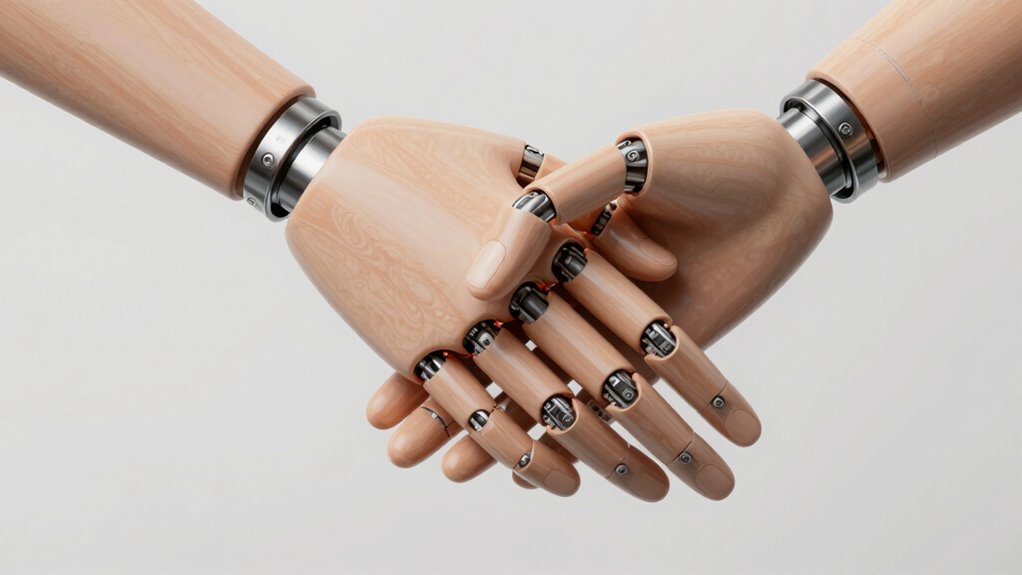

To make your animatronic arms look more natural without rebuilding, focus on smoothing out your movement techniques by fine-tuning servo timing and acceleration, ensuring fluid, lifelike gestures. Incorporate flexible materials like silicone or soft plastics at key joints to mimic real tissue and reduce mechanical stiffness. Adjust mechanical components for smoother motion and add responsive feedback systems to refine interaction. Keep refining these details, and you’ll discover simple ways to elevate realism without major modifications.

Get decor and gifts delivered free with Prime
- Fast, free delivery on millions of items
- Prime Video, Amazon Music and more included
- Member-only deals all year
Key Takeaways
- Fine-tune servo timing and speed to create smooth, fluid arm movements that mimic natural gestures.
- Use flexible materials or overlays at joints to enhance visual realism and reduce mechanical stiffness.
- Adjust movement ranges and acceleration to avoid rigidity or exaggerated gestures, ensuring more natural motion.
- Incorporate sensor feedback to dynamically respond to environmental cues, improving interaction authenticity.
- Focus on the articulation and biomechanics of joints for more accurate, lifelike arm behavior without structural modifications.
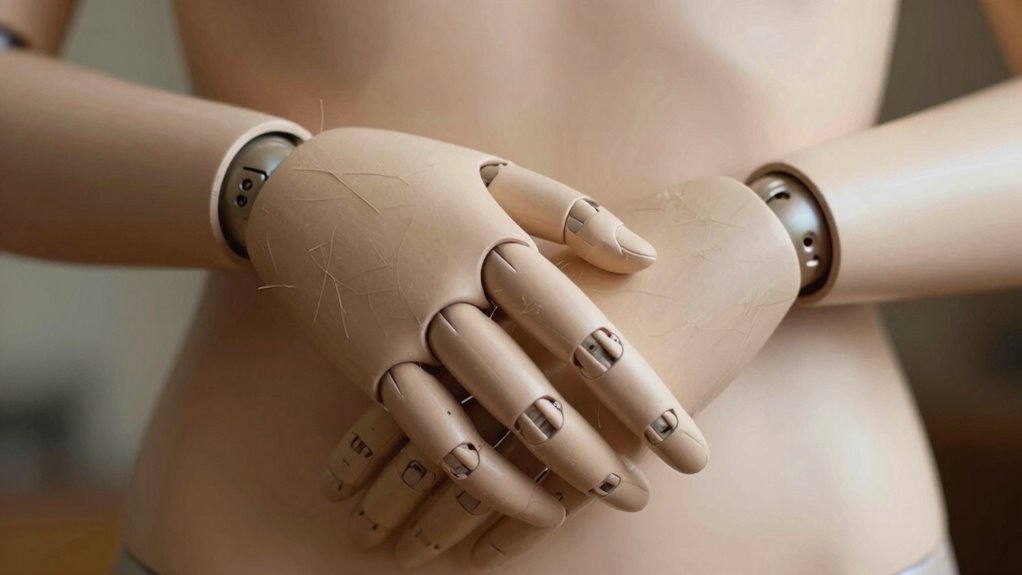
Making animatronic arms look natural can considerably enhance the realism of your robotic characters. When you focus on improving robot movement and material flexibility, you make your creations more convincing and lifelike. You can also consider sensor feedback to fine-tune the responsiveness of the movements, adding an extra layer of realism. You don’t need to rebuild the entire arm to achieve this—small adjustments and smart choices can make a big difference.
Start by examining how the robot moves. Smooth, fluid motion is key to mimicking real arms. If your current setup feels stiff or jerky, consider fine-tuning the servos or actuators controlling the joints. Use high-quality, responsive motors that can replicate nuanced movements like wrist rotation or elbow bending. Fine-tuning the timing and acceleration of these motors helps create more natural gestures, making the arm appear less mechanical. Pay attention to the speed and range of motion; overly rigid or exaggerated movements break the illusion of realism. Instead, aim for subtle, controlled motions that mirror human behavior.
Refine servo timing and speed for more natural, human-like robotic arm movements.
Material flexibility is another essential factor. If you’re using rigid components, the arm might look stiff and artificial. Incorporate flexible or softer materials at key points, such as the joints or surface layers. Silicone, flexible plastics, or even fabric overlays can give the illusion of soft tissue or muscle underneath. This not only improves visual authenticity but also reduces the mechanical feel of the arm. When you combine flexible materials with precise robot movement, you create a more believable arm that reacts naturally to interactions. For example, adding a bit of give at the wrist joint can simulate tendons or muscles shifting during movement, making gestures more organic. Additionally, integrating articulated joints that mimic natural anatomy can significantly enhance the overall realism. Paying attention to biomechanical principles helps ensure that the movements and materials align with how real arms function, further increasing authenticity. Incorporating adaptive control systems can also help the arm respond more naturally to environmental changes and user interactions.
Popular right now

iRobot Roomba 105 Vac Robot Vacuum

eufy E25 Robot Vacuum and Mop Combo with HydroJet Roller Mop

Breville Bambino Espresso Machine, Brushed Stainless Steel
As an affiliate, we earn on qualifying purchases.
Frequently Asked Questions
How Can I Improve the Realism of Animatronic Arm Movements?
To improve the realism of your animatronic arm movements, focus on enhancing robotic articulation and implementing motion smoothing techniques. Fine-tune the joints for more natural, fluid motion, avoiding stiff or jerky actions. Use precise timing and gradual shifts between movements to mimic real muscle and joint behavior. Additionally, incorporate subtle pauses and slight variations, which add authenticity and make the movements feel more lifelike and less mechanical.
What Materials Are Best for Adding Natural Skin-Like Texture?
For a natural skin-like texture, you should use synthetic silicone or latex skin. These materials mimic real skin’s flexibility, softness, and appearance, making movements look more lifelike. Synthetic silicone offers durability and a realistic feel, while latex skin provides an affordable, versatile option. Both materials can be painted and textured to match skin tones, adding depth, realism, and seamless integration with your animatronic arms for a convincing, natural look.
How Do I Hide Mechanical Joints to Make Arms Look Seamless?
To hide mechanical joints and make your animatronic arms seamless, focus on joint masking techniques. Use flexible, skin-like materials around the joints, such as silicone or latex, to create a natural look. Apply surface blending with paint or textured finishes that match the skin tone, ensuring smooth progressions. Carefully sculpt and paint the joint areas to disguise mechanical parts, achieving a more realistic, seamless appearance without rebuilding the entire arm.
Can Lighting Affect the Natural Appearance of Animatronic Arms?
Ever notice how lighting can make or break the realism? Yes, lighting definitely affects the natural appearance of animatronic arms. You should focus on LED placement to highlight the arms subtly, avoiding harsh shadows. Also, choose a color temperature that matches the environment—warm tones for cozy scenes, cool for clinical ones. Proper lighting minimizes mechanical look, blending the arms seamlessly into their surroundings for a more convincing illusion.
What Maintenance Is Needed to Keep Arms Looking Realistic Over Time?
To keep your animatronic arms looking realistic over time, you should regularly perform paint touch-ups to fix any chips or fading that occur. Additionally, check and maintain the batteries to guarantee smooth, consistent movement. Clean the arms gently to remove dust and debris that can dull their appearance. With consistent maintenance, your animatronic arms will stay vibrant and natural-looking, enhancing their overall realism and durability.
Conclusion
You might think you need to rebuild your animatronic arms for a natural look, but small tweaks can make a big difference. By refining joint movements and adding subtle imperfections, you can create a more lifelike appearance without starting from scratch. Interestingly, some experts believe that imperfections actually make machines seem more real—so don’t aim for perfection, embrace the quirks. With just a few adjustments, your animatronic arms can convincingly mimic real motion and feel more genuine.