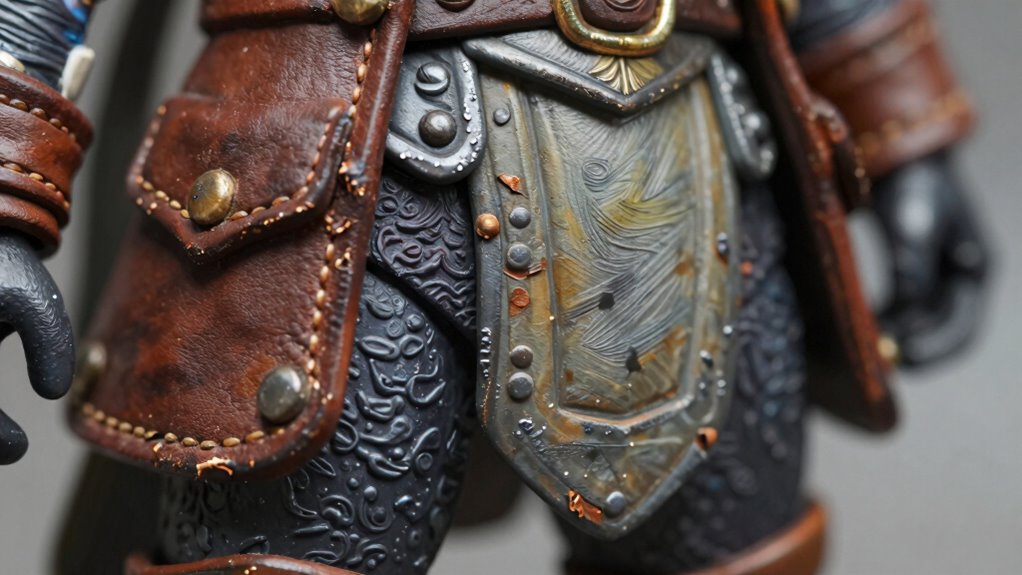

To avoid a plastic toy look in your DIY props, use weathering techniques like dry-brushing darker shades on edges and adding washes of browns or blacks to create dirt, grime, and natural wear. Incorporate color blending to soften shifts and add subtle variation, making surfaces appear aged and realistic. Layer effects gradually, evaluating as you go, and finish with matte or satin coats to prevent shine. Keep experimenting, and you’ll discover more ways to achieve authentic results.
Key Takeaways
- Use multiple thin, layered coats with weathering techniques like dry-brushing and washes to add depth and realism.
- Incorporate subtle color variations and blending to mimic natural imperfections and aging.
- Avoid overly glossy finishes; opt for matte or satin coatings to reduce plastic shine.
- Add dirt, grime, or rust effects selectively to create a more authentic, worn appearance.
- Use textured painting tools such as sponges or rags to create surface details and prevent flat, uniform coloring.

Creating your own props can be a rewarding and budget-friendly way to bring your projects to life. One of the biggest challenges in DIY prop painting is avoiding that flat, plastic toy appearance that makes everything look cheap. To do this effectively, you need to master a few key techniques, especially weathering and color blending. These methods help add depth, realism, and dimension, transforming plain surfaces into convincing, textured props.
Start by understanding that weathering techniques are your best tool for breaking up uniformity. They allow you to mimic the wear and tear found in real-world objects. Lightly dry-brushing darker shades over raised edges creates the illusion of dirt, grime, or natural aging. Use sponges, brushes, or even rags to gently dab on washes of diluted paint in browns, blacks, or metallics, depending on the material you’re replicating. The goal is to introduce subtle variations that suggest age and use without overwhelming your base color. Layering these effects gradually builds up a convincing, layered look that adds authenticity to your prop.
Weathering techniques break up uniformity, adding realistic aging with dry-brushing and washes.
Color blending is equally vital. Instead of applying flat, solid colors, aim for smooth transitions between shades. This requires mixing your paints carefully to avoid stark lines. For example, if you’re painting a stone wall, blend different shades of gray, beige, and mossy green to create a natural, mottled appearance. Use a soft brush or sponge to gently feather the edges where colors meet, softening the transitions. This technique mimics the natural imperfections and color variations found in real materials, making your props appear more three-dimensional and realistic. Don’t be afraid to experiment with blending techniques, such as stippling or glazing, to achieve different textures and effects.
Another tip is to work in layers—starting with a base coat, then gradually adding weathered effects and blending on top. This approach allows you to control the intensity and realism of each element. Remember to step back periodically and assess your work from a distance; this helps you see where additional weathering or blending might be needed. Using matte or satin finishes can also help reduce any unwanted shine that makes props look plasticky. Additionally, understanding the quality assessment of your materials can help you select the best paints and finishes for durability and realistic appearance.
Frequently Asked Questions
What Are the Best Brushes for Detailed Prop Painting?
For detailed prop painting, you want brush selection that offers precision and control. Opt for fine-tipped brushes like round detail brushes or miniature brushes, which help you master delicate detail techniques. Synthetic brushes work well for acrylics, providing smooth strokes without streaks. Use smaller sizes, such as 00 or 000, to add intricate highlights or shadows. Proper brush choice guarantees clean lines and realistic textures, elevating your prop’s overall look.
How Long Does DIY Prop Painting Typically Take?
They say patience is a virtue, and in DIY prop painting, it’s especially true. Usually, it takes anywhere from a few hours to a couple of days, depending on the complexity. You’ll need to account for prepping surfaces, applying multiple coats, and paint drying time. Rushing can ruin your effort, so take your time, let each layer dry thoroughly, and enjoy the process of transforming your prop into a masterpiece.
Can I Use Household Paints for Prop Painting?
You can use household paints for prop painting, but keep in mind, they often lack the paint durability needed for long-lasting results. Plus, matching colors precisely can be tricky since household paints aren’t formulated for detailed projects. If you choose this route, seal your work with a clear coat to improve durability and color retention. For the best results, consider using paints designed specifically for props or crafts.
How Do I Prevent Paint Chipping Over Time?
Imagine your prop as a timeless masterpiece. To prevent paint chipping, start with thorough surface prep—clean and sand for better adhesion. After painting, apply a good paint sealant to lock in your work and add durability. Avoid shortcuts, like skipping sealants, which lead to chipping over time. Properly sealing and prepping your surface keeps your prop looking fresh, vibrant, and intact, no matter how many adventures it endures.
Are There Eco-Friendly Paint Options for Props?
Yes, you can find environmentally friendly, non-toxic paints for your props. Look for brands that emphasize eco-friendly ingredients and low VOC content, which are safer for both you and the environment. These paints often have fewer harmful chemicals, making them ideal for creative projects. By choosing non-toxic, eco-friendly options, you guarantee your props are safe to handle and sustainable, all while achieving vibrant, professional-looking finishes.
Conclusion
By blending bold brushes and careful coatings, you’ll banish the bland and bring your props to life. Don’t dodge details—dive deep into highlights and shadows to add dimension and dynamism. With patience and practice, your paintwork will transform from flat to fantastic, avoiding that plastic toy look. Remember, the magic lies in meticulous mixing and mindful layering. Master these methods, and your masterpiece will mesmerize, making your prop perfectly polished and impressively realistic.