Pros use off-season cold-weather testing to guarantee products and vehicles perform reliably in freezing conditions before winter hits. You’ll find they simulate freezing environments to test gear’s insulation, waterproofing, and durability, and evaluate vehicle performance like engine starts and tire traction. This proactive approach helps identify issues early, so you get trustworthy gear and safer vehicles when cold weather arrives. Stick around to discover how this smart trick keeps your winter experience smooth and secure.
Key Takeaways
- Off-season testing allows producers to evaluate winter gear and vehicles in controlled cold environments without peak season pressure.
- It helps identify and fix potential failures early, ensuring reliability during actual winter conditions.
- Simulating freezing temperatures during off-season testing improves product durability and performance in cold weather.
- Cold-weather testing during off-peak times reduces risks of breakdowns and safety issues during winter.
- Pros use off-season testing to optimize product features, ensuring winter readiness before demand peaks.
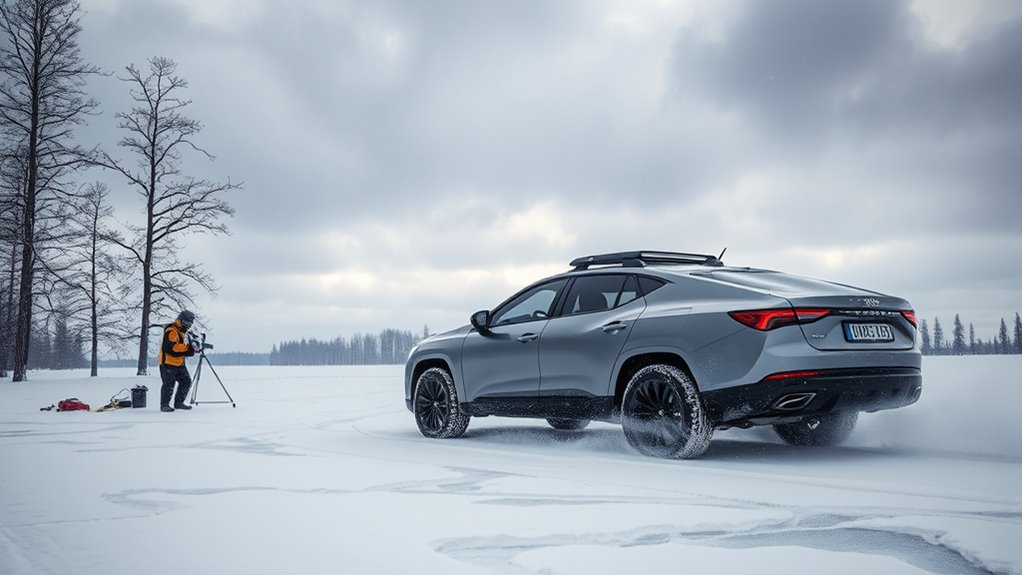
Cold-weather testing is fundamental to guarantee that products and systems perform reliably under low temperatures. When the cold sets in, every detail matters, especially for winter gear and vehicle performance. If you’re preparing for winter conditions, understanding how testing during the off-season plays a key role can help you stay safe and confident on the road or in the outdoors.
Manufacturers put winter gear through rigorous cold-weather testing long before winter arrives. They simulate freezing conditions to see how fabrics, insulation, and waterproof layers hold up against the cold. By doing this off-season, they guarantee that jackets, gloves, and boots will keep you warm and dry when the temperature drops. This proactive approach helps identify weaknesses early, so improvements can be made before the gear hits the shelves. When you invest in winter gear that’s been properly tested, you’re getting products that are reliable, durable, and ready for harsh weather.
Proper off-season testing ensures winter gear is reliable, durable, and ready for harsh weather conditions.
Vehicle performance is just as essential during cold-weather testing. Automakers conduct off-season testing to evaluate how engines, batteries, and other key components operate in freezing temperatures. Cold starts are a major concern, so they simulate conditions to see how quickly vehicles start and whether their systems can handle the chill. This testing also includes assessing tire traction, braking efficiency, and fluid flow under low temperatures, all of which are critical for safe driving during winter. By performing these tests during the off-season, engineers can fine-tune vehicles to perform consistently, reducing the risk of breakdowns and accidents when real winter hits.
The advantage of off-season testing is that it allows engineers and manufacturers to identify issues without the pressure of peak season demands. It’s easier to analyze data, implement updates, and verify improvements when the testing environment isn’t rushed or limited by weather constraints. For you, this means the winter gear you rely on and the vehicle you drive are both optimized, making winter safer and more manageable. You won’t have to worry about gear losing its insulating properties or your vehicle faltering at the worst possible moment since these products and systems are proven to withstand the cold.
In addition, advancements in projector technology, such as higher refresh rates and HDR support, further improve winter entertainment experiences indoors. In essence, off-season cold-weather testing isn’t just a behind-the-scenes process; it’s a critical step that directly impacts your winter experience. Whether it’s ensuring your winter gear keeps you warm or that your vehicle performs reliably in icy conditions, this testing guarantees that you’re prepared when winter arrives. By prioritizing these tests during the off-season, manufacturers and engineers help you face cold weather with confidence, knowing your gear and vehicle are built to weather the chill.
Frequently Asked Questions
How Do Cold Temperatures Affect Vehicle Battery Performance?
Cold temperatures reduce your vehicle battery’s performance because they slow chemical reactions inside, leading to decreased power output. You might notice difficulty starting your car or reduced battery life. To combat this, proper thermal management helps maintain ideal battery temperatures, preventing rapid battery degradation. Keep your battery insulated and ensure your vehicle’s heating systems are working efficiently, so cold weather doesn’t leave you stranded or accelerate battery wear.
What Gear Is Essential for Safe Cold-Weather Testing?
You need thermal gear like insulated gloves, thermal hats, and layered clothing to stay warm during cold-weather testing. Shelter solutions such as portable tents or heated cabins are essential to protect you from harsh elements and maintain a controlled environment. Make sure your gear is durable and easy to access so you can quickly adapt to changing conditions, ensuring safety and efficiency during your testing sessions.
How Do Tire Pressures Change in Low Temperatures?
Tire pressure tends to plummet in low temperatures due to tire pressure fluctuations caused by temperature effects on tires. As temperatures drop, air contracts, leading to decreased pressure inside your tires. You’ll notice that your tires become softer and less responsive. To keep things safe and steady, regularly check and adjust your tire pressures before and after cold-weather testing, ensuring ideal grip and performance despite the chilly changes.
What Precautions Prevent Frostbite During Outdoor Testing?
To prevent frostbite during outdoor testing, always wear thermal gloves to keep your hands warm and protected. Be aware of frostbite signs like numbness, tingling, or skin discoloration. If you notice any symptoms, immediately move to a warmer area and remove wet clothing. Regularly check your extremities, and don’t ignore early warning signs—acting quickly helps prevent serious tissue damage.
How Does Cold Weather Impact Engine Oil Viscosity?
When temperatures drop, cold weather causes engine oil viscosity to increase, making it thicker and reducing oil flow. For example, in a winter engine test, thicker oil struggled to circulate smoothly, risking engine damage. This impacts viscosity stability, so you need to use a lower-viscosity oil designed for cold conditions. Proper oil selection guarantees ideal engine performance and protection during cold weather testing, preventing wear and maintaining reliable operation.
Conclusion
So, next time you’re freezing your tail off during cold-weather testing, just remember—you’re basically a pro. Who needs warm weather when you’ve got the thrill of shivering and the glory of mastering icy conditions? Embrace the frostbite-inspired challenge, and maybe, just maybe, you’ll outshine those fair-weather testers. After all, if you can survive the cold, you can conquer anything. Stay chilly, my friend—you’re officially part of the elite “cold-weather testing” club.