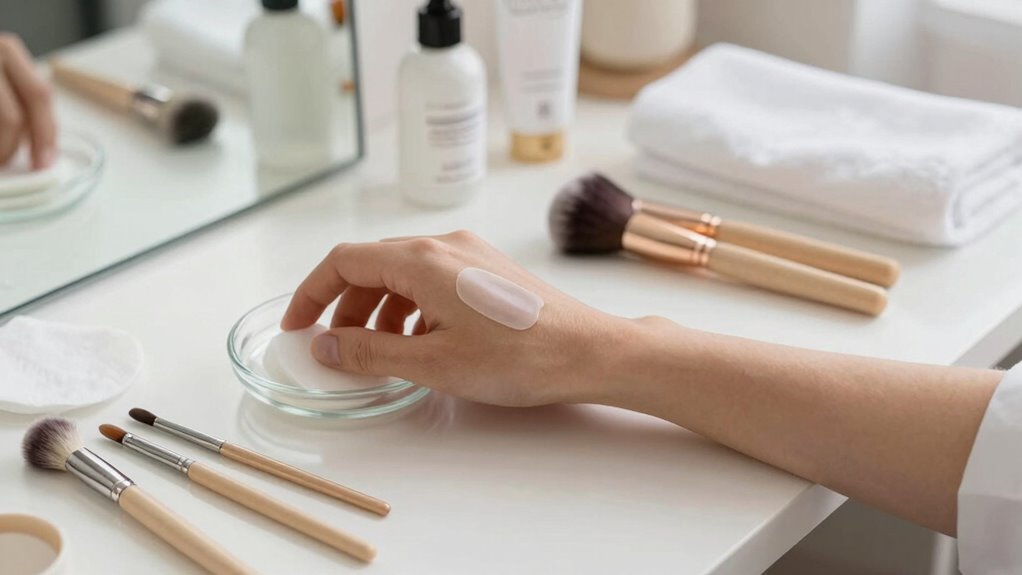

To practice safe DIY makeup, start with patch tests by applying a small amount of product behind your ear or on your wrist for 24-48 hours to check for reactions. Always keep your tools clean by washing brushes and sponges regularly and sanitizing shared items. Be thorough when removing makeup with suitable removers, followed by gentle cleansing and patting skin dry. Keep practicing these steps, and you’ll discover even more tips to protect your skin health.
Key Takeaways
- Always perform a patch test 24-48 hours before full makeup application to check for allergic reactions.
- Use clean brushes, sponges, and applicators, and sanitize shared tools regularly to prevent bacteria buildup.
- Choose suitable makeup removers based on skin type and thoroughly cleanse the face, especially around sensitive areas.
- Wash hands thoroughly before applying makeup to minimize contamination risks.
- Track skin reactions and adjust products or routines accordingly to maintain skin health and safety.
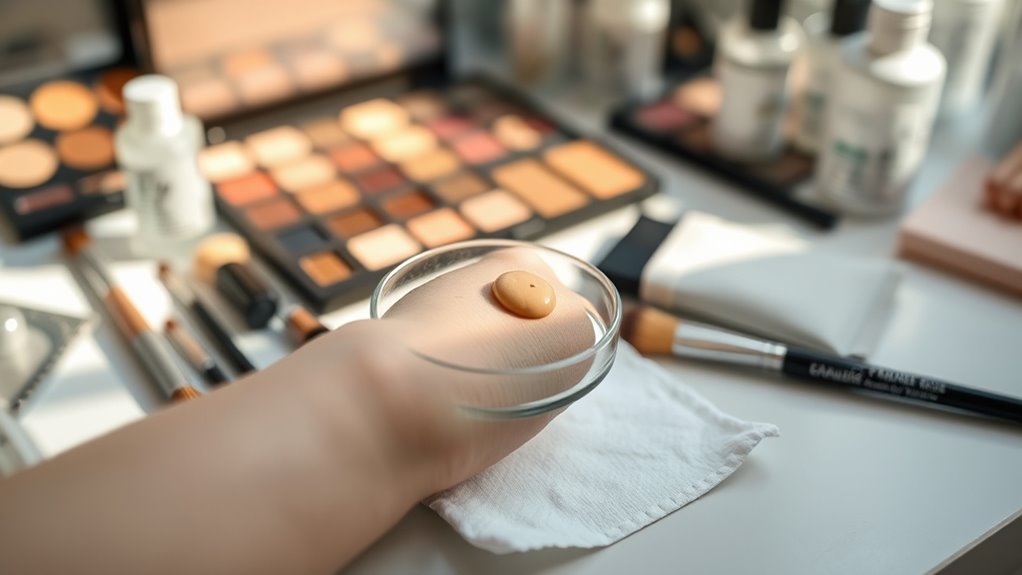
Have you ever wondered how to practice makeup safely at home? It’s essential to protect your skin while exploring new looks and experimenting with different products. One of the first steps is choosing hypoallergenic products. These are formulated to minimize the risk of allergic reactions, especially if you have sensitive skin or are prone to allergies. Always look for products labeled as hypoallergenic, and keep in mind that even these can cause reactions in some individuals. That’s why allergy testing is crucial before fully incorporating new makeup into your routine.
Choosing hypoallergenic makeup and testing first helps protect sensitive skin from reactions.
To perform an allergy test, select a small amount of the product and apply it to a discreet area, like behind your ear or on your inner wrist. Leave it on for 24-48 hours and watch for any signs of redness, itching, or swelling. If you notice any adverse reactions, avoid using that product altogether. This simple step can save you from uncomfortable skin issues and long-term sensitivities. It’s especially important with products you plan to wear close to your eyes or on your face regularly.
Sanitation is another vital aspect of safe makeup practice. Always wash your hands thoroughly before applying makeup to prevent bacteria transfer. Use clean brushes, applicators, and sponges, and wash them frequently with gentle soap or brush cleaner to eliminate buildup and germs. If you’re sharing makeup or tools with others, ensure they’re sanitized beforehand. Never reuse or share used applicators or products that have been open for a long time, as bacteria can thrive in these environments. Proper sanitation helps reduce the risk of breakouts, infections, or other skin issues.
In addition, understanding the importance of data analytics can help you track your skin’s reactions to different products and routines, allowing you to make more informed choices over time. When it’s time to remove makeup, don’t skimp on this step. Proper removal prevents clogged pores, irritation, and allows your skin to breathe. Use a gentle, effective makeup remover suited for your skin type—whether oil-based, micellar water, or a cleansing balm. Be thorough, especially around the eyes and in creases where makeup can accumulate. Follow up with a gentle cleanser to ensure all residue is gone. After cleansing, use a soft towel or tissue to pat your skin dry, avoiding harsh rubbing. Incorporate a skincare routine that includes moisturizing afterward, as clean skin is more receptive to hydration and less prone to irritation.
Practicing safe makeup at home isn’t complicated, but it requires attention to detail and a commitment to your skin’s health. By selecting hypoallergenic products, performing allergy testing, maintaining clean tools, and thoroughly removing makeup, you safeguard your skin while still enjoying the creative process. Your skin will thank you for the extra care, and you’ll be able to experiment confidently, knowing you’re protecting your health every step of the way.
Frequently Asked Questions
How Long Should I Wait to See a Reaction After a Patch Test?
You should wait 24 to 48 hours after a patch test to see allergy symptoms or a reaction. Keep an eye out for redness, itchiness, swelling, or rash during this reaction timeline. If you notice any signs of irritation, avoid using the product immediately. Remember, some reactions can be delayed, so monitoring for up to 72 hours is a good idea to ensure you’re safe before applying makeup more broadly.
Can I Reuse Makeup Tools Safely?
You shouldn’t reuse makeup tools without proper hygiene, as it risks bacteria buildup and skin infections. Regular cleaning extends the tool’s longevity and keeps your skin safe. Use gentle cleansers or alcohol wipes after each use, and replace sponges and brushes periodically. Maintaining good makeup hygiene isn’t just about tool longevity; it’s essential for healthy skin. Always prioritize cleanliness to prevent breakouts and ensure your makeup looks flawless every time.
What Are Natural Alternatives to Commercial Makeup Removers?
You can use natural oils like coconut or jojoba as effective makeup removers, gently breaking down makeup without harsh chemicals. Herbal removers, such as chamomile or calendula infusions, also work well for cleansing your skin naturally. Simply apply these oils or herbal solutions to a cotton pad, gently wipe away your makeup, and rinse with water. These alternatives are gentle, eco-friendly, and perfect for maintaining healthy skin while avoiding commercial chemicals.
How Often Should I Sanitize My Makeup Brushes?
You should sanitize your makeup brushes at least once a week to maintain proper hygiene frequency. Regular brush cleaning removes bacteria, dirt, and product buildup, reducing the risk of breakouts and infections. If you have sensitive skin or use your brushes daily, consider cleaning them more often, like every 3-4 days. Proper brush cleaning practices keep your tools safe and your skin healthy, making your makeup routine more effective and hygienic.
Is It Safe to Share Makeup Products With Friends?
Sharing makeup products with friends isn’t safe because of sharing hygiene risks, such as bacteria and infections. Peer influence might make you feel tempted, but it’s better to avoid sharing items like lip gloss, mascara, or brushes. Instead, encourage your friends to use their own products. This reduces the chance of spreading germs, keeping everyone healthier and safer while still enjoying makeup together.
Conclusion
By following these simple steps, you’re already ahead in safe makeup practice. But here’s the thing—skipping even one patch test or sanitation step could lead to unexpected reactions or skin issues. Are you willing to risk your skin’s health for the sake of convenience? Stay vigilant, stay safe, and remember—sometimes the smallest precautions make the biggest difference. Your skin’s health depends on what you do next. Will you take that extra step today?