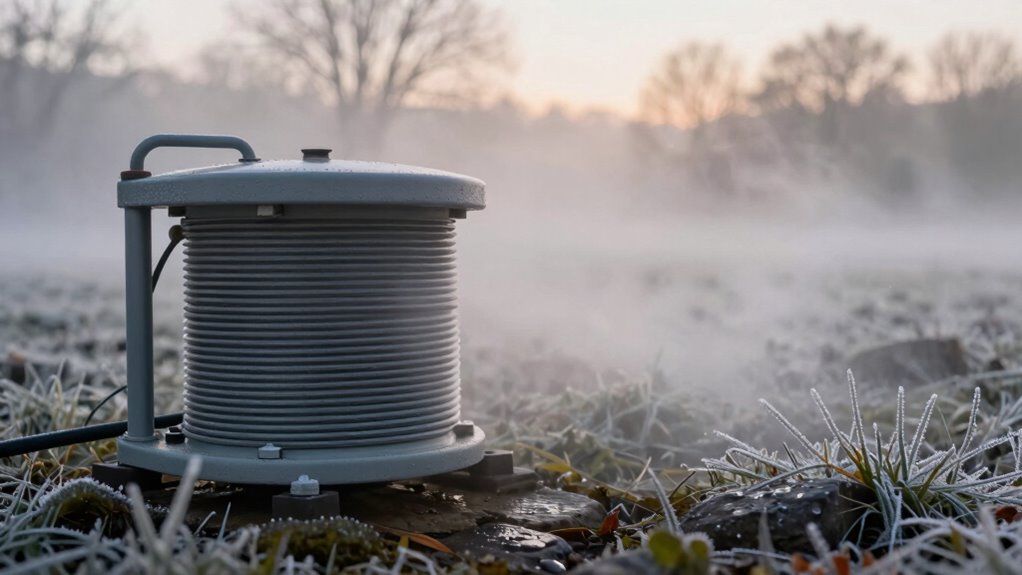

To keep ground fog low, you should focus on properly setting up your fog chiller. Cool the fog fluid before it’s released, which helps keep the fog close to the ground and prevents it from rising. Adjust the chilling temperature and control airflow with fans or open windows. Monitoring humidity and indoor temperatures also help maintain the fog’s low position. If you want to master this setup, there’s more to discover below.

Get decor and gifts delivered free with Prime
- Fast, free delivery on millions of items
- Prime Video, Amazon Music and more included
- Member-only deals all year
Key Takeaways
- Properly adjust the fog chiller’s temperature settings to ensure the fog remains cool and stays close to the ground.
- Use sufficient airflow, such as fans or open windows, to keep the fog low without dispersing it upward.
- Ensure the fog fluid is chilled before release to create dense, low-lying fog effects.
- Limit room ventilation and humidity levels to prevent fog from rising or dissipating quickly.
- Position the fog output near the floor and optimize chiller settings for maximum ground-hugging effect.
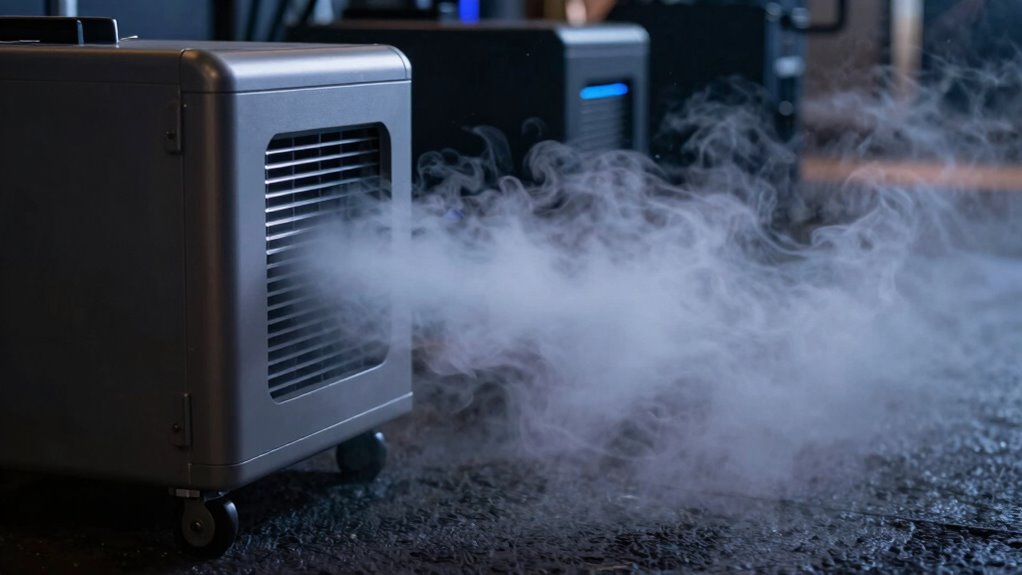
Fog chillers are essential tools for creating dramatic fog effects in various events and productions. When you’re aiming for ground-hugging fog that adds atmosphere and mystery, a fog chiller becomes your best friend. It cools the fog fluid before it’s released, causing the fog to stay low to the ground instead of rising and dispersing into the air. This is especially important for indoor applications where you want the fog to stay contained and impactful. Without a fog chiller, the fog might ascend quickly, losing that low-lying effect you’re after. By properly setting up and using a fog chiller, you guarantee your fog stays where it’s supposed to—close to the ground, creating that eerie, immersive environment you envision. Proper equipment setup and understanding of the fog’s behavior are crucial for achieving the desired effect. Additionally, understanding how environmental factors such as airflow impact fog behavior can help you better control the effect and prevent unintended dispersal.
Fog chillers keep fog low and impactful, perfect for creating atmospheric, ground-hugging effects indoors.
Indoor environments demand careful attention to environmental considerations when using fog chillers. Unlike outdoor settings, indoor spaces have limited airflow and ventilation, which means the fog’s behavior is more predictable but also more sensitive. You need to think about factors like room size, ceiling height, and ventilation systems. For example, a small, enclosed room with poor airflow might trap fog longer, so adjusting your fog production and chilling settings becomes vital. If the environment isn’t properly managed, you risk thick fog lingering in undesired areas, affecting visibility or safety. To avoid this, you might open windows or turn on fans to help circulate the air, ensuring the fog stays low and disperses evenly. It’s also wise to monitor humidity levels, as high humidity can cause fog to cling and linger longer, disrupting your desired effect. Furthermore, understanding the metaphysical significance of fog can help you create more immersive and meaningful atmospheres.
Using a fog chiller indoors also involves managing the temperature of the environment. Cold air tends to hold fog better, so maintaining a cooler indoor climate can help preserve that low-lying fog effect. If the room is too warm, the fog might rise quickly or dissipate faster than intended. In some cases, you might need to adjust the chilling unit’s temperature settings or increase airflow to keep everything in check. Safety is another key consideration—make sure your fog machine and chiller are set up in well-ventilated areas to prevent any buildup of fog fluid fumes, which could affect breathing or cause discomfort. Proper ventilation ensures safe operation and maintains the desired fog effect without compromising health.
In all, the right indoor application setup with a focus on environmental considerations guarantees your ground fog stays low, creating the perfect atmospheric effect. When you understand how to optimize your fog chiller’s settings and manage your space’s environment, you’ll get the most dramatic, immersive results that elevate your production or event.
As an affiliate, we earn on qualifying purchases.
Frequently Asked Questions
How Do Fog Chillers Differ From Traditional Fog Machines?
Fog chillers differ from traditional fog machines by using liquid cooling and air circulation to produce and sustain ground fog effectively. While traditional machines generate fog with heat, chillers cool the fog to keep it low to the ground, preventing it from rising. This cooling process, combined with continuous air circulation, guarantees the fog stays low and dense longer, making it ideal for theatrical or outdoor effects where ground-hugging fog is essential.
What Maintenance Is Required for Fog Chillers?
You might worry maintenance is complicated, but it’s straightforward if you focus on water quality and system calibration. Regularly change and filter the water to prevent buildup and guarantee clear fog. Also, calibrate your system periodically to keep it running efficiently and consistently. Clean the unit’s components as recommended by the manufacturer, and check for any blockages or leaks. Proper maintenance keeps your fog chiller performing reliably and prolongs its lifespan.
Can Fog Chillers Be Used Outdoors in All Weather Conditions?
Yes, you can use fog chillers outdoors in various weather conditions, but outdoor safety and rain resistance are key considerations. Make certain your fog chiller is rated for outdoor use and is weatherproof to withstand rain and humidity. Proper placement and protective coverings help prevent damage. Keep in mind that extreme weather, like heavy rain or freezing temperatures, can affect performance, so monitor conditions and maintain safety protocols for ideal fog effects.
What Is the Typical Lifespan of a Fog Chiller?
A fog chiller typically lasts between 3 to 7 years, depending on usage and maintenance. You can expect good fog longevity if you regularly service the unit and keep it protected from harsh weather. Its durability depends on the build quality and environmental conditions. Proper care guarantees your fog chiller remains reliable, providing consistent low-lying fog effects for years to come. Regular checks help maximize its lifespan and performance.
Are Fog Chillers Energy-Efficient for Long-Term Use?
Fog chillers are quite energy-efficient for long-term use, helping you save on operating costs. They typically have lower energy consumption compared to traditional fog-making methods, with some models consuming as little as 1-2 kWh per hour. This makes them a cost-efficient choice, especially for continuous or frequent use. By choosing an energy-efficient fog chiller, you guarantee reliable ground fog effects without skyrocketing energy bills.
Conclusion
Think of fog chillers as the steady captain steering a ship through a foggy night. With the right setup, they keep the ground fog low and consistent, like a lighthouse guiding sailors safely ashore. Without this essential step, the fog drifts aimlessly, losing its shape and purpose. When you set up your fog chiller properly, you’re anchoring that lighthouse, ensuring your ground fog stays in place, creating the perfect atmosphere for any event or scene.
Fall Picks
fall essentials
As an affiliate, we earn on qualifying purchases.