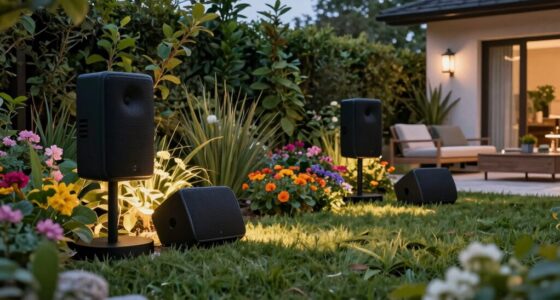

To make fog beams visible, aim your lights roughly 30 to 45 degrees above the ground. This angle maximizes how light scatters with fog particles, creating striking, ghostly rays. Proper alignment prevents light from dissipating into haze, making beams more prominent. Adjusting the angle based on fog density and humidity can enhance the effect. If you want to learn how atmospheric conditions influence this setup, keep exploring this topic further.

Get decor and gifts delivered free with Prime
- Fast, free delivery on millions of items
- Prime Video, Amazon Music and more included
- Member-only deals all year
Key Takeaways
- Aim lights at about 30 to 45 degrees above ground for optimal beam visibility in fog.
- Proper beam alignment causes light to scatter back, enhancing its visibility through fog particles.
- Adjust angles based on fog density; denser fog often requires more downward or shallow angles.
- Slight changes in light angle significantly improve or diminish the visual impact of beams.
- Cooler, humid conditions increase fog density, influencing the ideal lighting angle for striking effects.

When fog rolls in, it often obscures everything around you, but with the right lighting angle, those beams can become strikingly visible. This phenomenon depends heavily on how you position your light source in relation to the fog and the atmospheric conditions. Beam alignment plays a crucial role here—if the beams hit the fog at just the right angle, they scatter light back to your eyes, creating those dramatic, visible rays. When atmospheric conditions are dense and moist, the fog particles are plentiful, making the importance of proper beam alignment even more evident. You need to aim your lights at an angle that allows the beams to pierce through the fog without being lost in the haze or diffused too much.
The key is understanding that the fog acts like a diffuser, scattering light in many directions. When you position your lighting to be low or at an angle that aligns with the fog’s density, you enhance the visibility of the beams. If you point your lights straight ahead or too high, the beams tend to dissipate into the fog, losing their intensity and effect. By angling your lights downward or at a shallow angle, you encourage the beams to interact with the particles directly, making them more prominent and striking. This technique is especially effective when atmospheric conditions are humid and thick, as the increased moisture amplifies the scattering effect. Additionally, the density of the fog can dramatically influence how well the beams are visible and may require adjustments in your lighting setup.
Another factor to consider is light scattering, which explains why certain angles work better than others in foggy conditions. Your goal is to find that sweet spot—an angle where the beams are neither too flat nor too steep. Typically, aiming your lights at about 30 to 45 degrees above the ground works well, but it can vary depending on the density of the fog and the environment. When you get the beam alignment right, the light doesn’t just illuminate your path; it creates those captivating visible rays that seem to cut through the mist like ghostly fingers of light. Additionally, understanding atmospheric conditions can help you anticipate how the fog will respond to different lighting angles and optimize your setup.
Being aware of humidity levels can also assist you in predicting fog density and adjusting your lighting accordingly. Pay attention to how atmospheric conditions change throughout the day or night. Cooler, damp air tends to produce denser fog, requiring you to adjust your lighting angle accordingly. Conversely, lighter fog may need less pronounced angles for optimal beam visibility. The interplay between beam alignment and atmospheric conditions is dynamic: small adjustments can dramatically improve or diminish the visual impact of your lighting. So, when you’re out in foggy conditions, experiment with your angles. Find that perfect alignment, and you’ll see your beams become much more than just illumination—they’ll turn into an ethereal display of light cutting through the haze.
As an affiliate, we earn on qualifying purchases.
Frequently Asked Questions
How Does Fog Density Affect Light Beam Visibility?
Fog density directly impacts light beam visibility by influencing ambient diffusion and beam distortion. As fog becomes denser, it scatters more light, making beams more apparent but often blurry or diffused. With lighter fog, beams appear sharper and more defined. You’ll notice that increased fog density enhances ambient diffusion, causing beams to spread out and become less focused, while also heightening beam distortion, which affects how clearly you see the light paths.
What Types of Lighting Are Best for Foggy Conditions?
You should use focused, low-beam headlights, like fog lights, in foggy conditions. They create specific fog patterns that cut through the haze without scattering, making your vehicle more visible. Lighting innovations, such as LED fog lights, enhance visibility and durability. Avoid high beams, as they reflect off the fog, reducing visibility. Opt for fog lights positioned low to the ground, ensuring clearer beams that help you see and be seen.
Can Fog and Lighting Techniques Improve Outdoor Safety?
Fog and lighting techniques can definitely improve outdoor safety by enhancing traffic navigation and emergency signaling. When you use well-placed, low-angle lights, your vehicle becomes more visible, helping you see and be seen in dense fog. Emergency signals, like flashing lights or reflective markers, alert others to your presence. Proper lighting reduces accidents and guarantees you can navigate safely through foggy conditions, providing peace of mind and better safety for everyone.
How Do Different Light Colors Influence Beam Clarity in Fog?
Different light colors influence beam clarity in fog through color contrast and spectral dispersion. You’ll notice that blue and green lights cut through fog better because they have less spectral dispersion, reducing scattering. Conversely, red and yellow lights tend to scatter more, diminishing clarity. Using colors with high contrast against the fog background enhances visibility, helping you see beams clearly and improving safety during foggy conditions.
Are There Specific Angles That Optimize Fog Lighting Effects?
You should position your lights at specific beam angles and adjust light positioning to optimize fog lighting effects. A lower angle, around 30 degrees, often enhances beam visibility by creating a more dramatic, visible path through the fog. Keep the light aimed downward or slightly outward to avoid glare and maximize beam clarity. Experimenting with different angles helps you find the best balance for striking, visible beams in foggy conditions.
Conclusion
Now that you know the secret angle, you can turn a simple beam of light into an intriguing display. When fog dances with your lighting at just the right tilt, it’s like revealing a hidden world full of mystery and magic. Don’t let this opportunity slip through your fingers—grab your camera, set your lights, and let the fog do its part. After all, sometimes a little angle is all it takes to make a scene truly come alive.
Halloween Picks
halloween
As an affiliate, we earn on qualifying purchases.