

To keep air comfortable for guests during haze, guarantee your ventilation system is well-maintained with clean filters and no leaks. Increase fresh air intake cautiously, and consider using air purifiers with HEPA filters to remove tiny particles. Modern, smart systems can automatically adjust based on outdoor air quality, helping you respond quickly to pollution spikes. Keep guests informed about your efforts to maintain air quality—they’ll appreciate your commitment to a safe, comfortable environment for all. If you want more tips, stay tuned.

Get decor and gifts delivered free with Prime
- Fast, free delivery on millions of items
- Prime Video, Amazon Music and more included
- Member-only deals all year
Key Takeaways
- Regularly inspect and replace filters to prevent dust buildup and maintain effective air purification.
- Use air purifiers with HEPA filters to trap tiny particles from outdoor haze.
- Adjust ventilation based on outdoor air quality, increasing it when air is cleaner and reducing during pollution spikes.
- Implement smart ventilation systems that automatically respond to real-time air quality data.
- Communicate with guests about air quality measures to reassure them of a safe, comfortable environment.
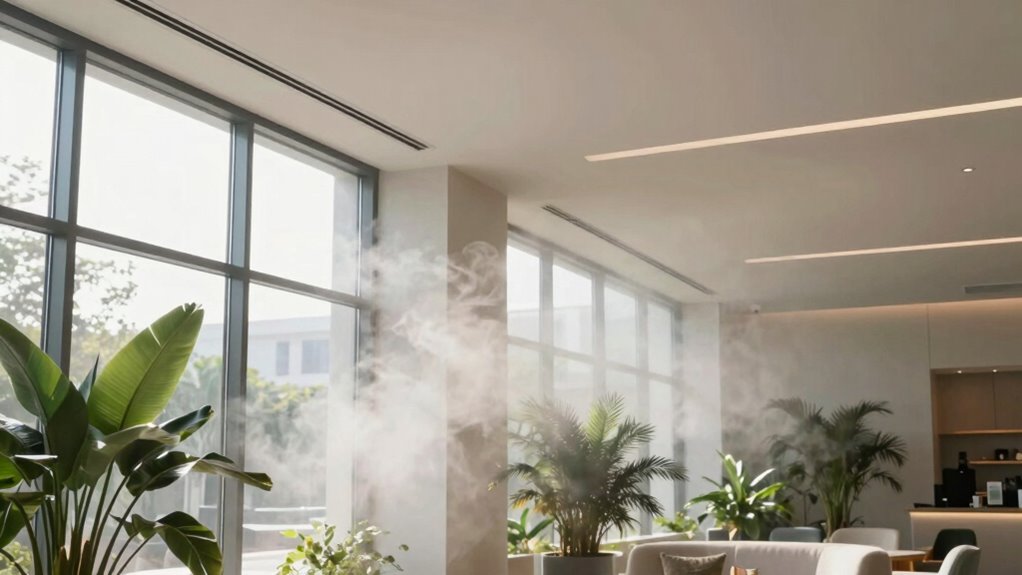
Have you ever wondered how buildings stay breathable during heavy haze? It’s a common question, especially when outdoor air quality drops significantly. The key lies in maintaining optimal indoor air quality, which depends heavily on a well-designed and properly maintained ventilation system. When haze clouds the air outside, it’s your job to ensure that indoor environments remain fresh, comfortable, and safe for your guests. Good ventilation doesn’t just improve comfort; it actively reduces pollutants, odors, and airborne particles that can cause health issues.
Proper ventilation maintains fresh, safe indoor air during haze by reducing pollutants and airborne particles.
To achieve this, regular ventilation system maintenance is critical. Over time, filters can become clogged with dust, pollutants, and particulates, reducing their effectiveness. When this happens, the system can’t adequately filter the incoming air, allowing outdoor haze to seep indoors or, worse, recirculating contaminated air within the building. By routinely inspecting and replacing filters, you keep the system running efficiently and prevent the buildup of harmful particles. It’s also essential to check for any duct leaks or blockages, which can compromise air quality and reduce airflow. Proper system maintenance is essential for sustaining indoor air quality, especially during pollution episodes.
During haze events, increasing ventilation can help dilute indoor pollutants and bring in cleaner air from outside, provided the outdoor air quality is acceptable. But you also need to be cautious—if outdoor air quality is poor, bringing in more outside air might worsen indoor air quality. In such cases, relying on high-efficiency particulate air (HEPA) filters or air purifiers becomes vital. These devices can trap tiny particles, including those from haze, ensuring that indoor air stays healthier and more comfortable for your guests. Additionally, understanding how air quality monitoring works can help you make informed decisions about ventilation adjustments.
Investing in modern ventilation systems with smart controls allows you to adapt quickly to changing outdoor conditions. For example, some systems automatically adjust airflow based on real-time air quality data, reducing outdoor air intake when pollution levels spike. Regularly updating and servicing these systems ensures they operate at peak efficiency, maintaining indoor air quality even during haze episodes. Proper ventilation system maintenance also prevents the buildup of dust and pollutants that can hinder system performance. Additionally, understanding the importance of filter quality can help you select the most effective filtration options for your specific environment.
Finally, communicating with your guests about the measures you’re taking can reassure them that their comfort and safety are your priorities. Proper ventilation and diligent maintenance not only improve indoor air quality but also demonstrate your commitment to providing a healthy environment. In the face of haze, these practices are your best tools for keeping the air inside your building fresh, breathable, and welcoming for everyone.
As an affiliate, we earn on qualifying purchases.
Frequently Asked Questions
How Often Should Haze Ventilation Systems Be Serviced?
You should service your haze ventilation system at least every three to six months, depending on usage and environmental factors. Follow a regular maintenance schedule that includes cleaning and inspecting filters, and replacing them as needed to guarantee the best air quality. Regular maintenance helps prevent buildup and keeps your system running efficiently, providing a comfortable environment for your guests. Don’t forget, timely filter replacements are essential for maintaining good airflow and air cleanliness.
What Are the Best Ventilation Options for Small Indoor Spaces?
For small indoor spaces, you should prioritize airflow optimization through effective ventilation design. Using a combination of exhaust fans, portable air purifiers, and well-placed vents helps improve air circulation. Consider installing a small HVAC system or an air exchange unit to guarantee fresh air constantly replaces stale air. These options enhance comfort, reduce odors, and maintain healthy indoor air quality, creating a welcoming environment for your guests.
Can Haze Ventilation Reduce Airborne Allergens Effectively?
Like a revitalizing gust dispelling the fog, haze ventilation can markedly reduce airborne allergens, enhancing your space’s ventilation effectiveness. By continuously filtering and exchanging air, haze systems trap allergens like pollen and dust mites, preventing them from lingering. This process creates a cleaner, healthier environment for your guests, making your indoor space more comfortable and allergen-free. Proper haze ventilation is your secret weapon against airborne irritants.
Are There Eco-Friendly Haze Ventilation Alternatives?
Yes, there are eco-friendly haze ventilation alternatives. You can opt for sustainable ventilation systems that use eco-friendly filters made from biodegradable or recyclable materials. These systems reduce environmental impact while maintaining air quality. Look for options with energy-efficient fans and components designed for minimal waste. By choosing sustainable ventilation, you guarantee cleaner air for your guests and support eco-conscious practices, making your space healthier and more environmentally responsible.
How Does Outdoor Air Quality Affect Indoor Haze Ventilation?
Outdoor air quality substantially impacts indoor haze ventilation. When outdoor pollution levels are high, pollutants can seep indoors, making air less comfortable and potentially harmful. To counter this, you should use effective air filtration systems that trap outdoor pollutants and improve indoor air quality. Regularly monitoring outdoor pollution levels helps you decide when to enhance ventilation or activate filtration to keep your indoor environment safe and comfortable for guests.
Conclusion
Imagine your space as a gust of invigorating mountain air amid a foggy dawn. By implementing effective haze ventilation, you’re not just clearing the air—you’re creating a sanctuary where guests feel the warmth of comfort and clarity. Your efforts transform a hazy, uncertain environment into a crisp, inviting haven. With each well-placed vent and filter, you paint a picture of freshness that guests can see, breathe, and cherish—making every visit a breath of fresh air.
Fall Picks
fall essentials
As an affiliate, we earn on qualifying purchases.