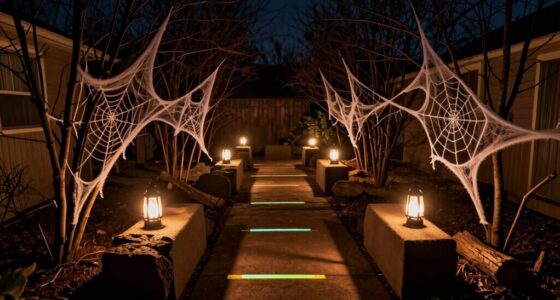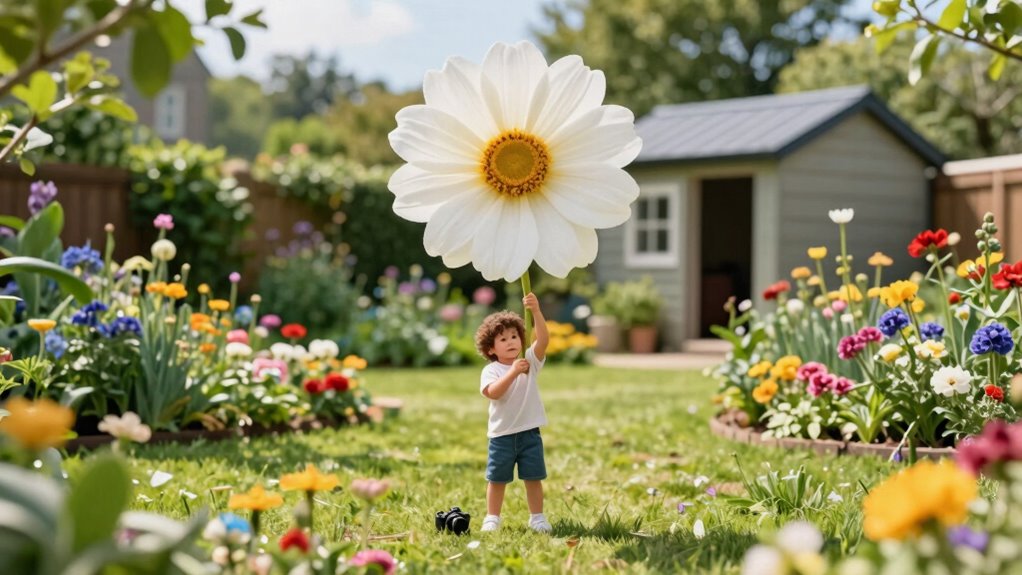

To create forced perspective in your yard scene, position small models close to the camera and background elements, like buildings or trees, farther away. Use camera angles that emphasize size differences, such as shooting from low or high viewpoints. Incorporate natural lines like pathways or garden borders to guide the eye and enhance the illusion. Proper lighting and consistent scaling are essential for realism. Keep experimenting with layout and angles to master this intriguing visual trick—there’s more to discover as you go.
Key Takeaways
- Position small objects close to the camera and larger background elements at a distance to create exaggerated size illusions.
- Use low camera angles and strategic framing to enhance perceived differences in scale.
- Incorporate natural yard features like pathways or lines to guide the viewer’s eye toward the focal point.
- Build or place detailed scale models that match the illusion’s intended size and ensure consistent scaling throughout.
- Adjust lighting and focus to emphasize depth, shadows, and key elements, making the forced perspective more convincing.
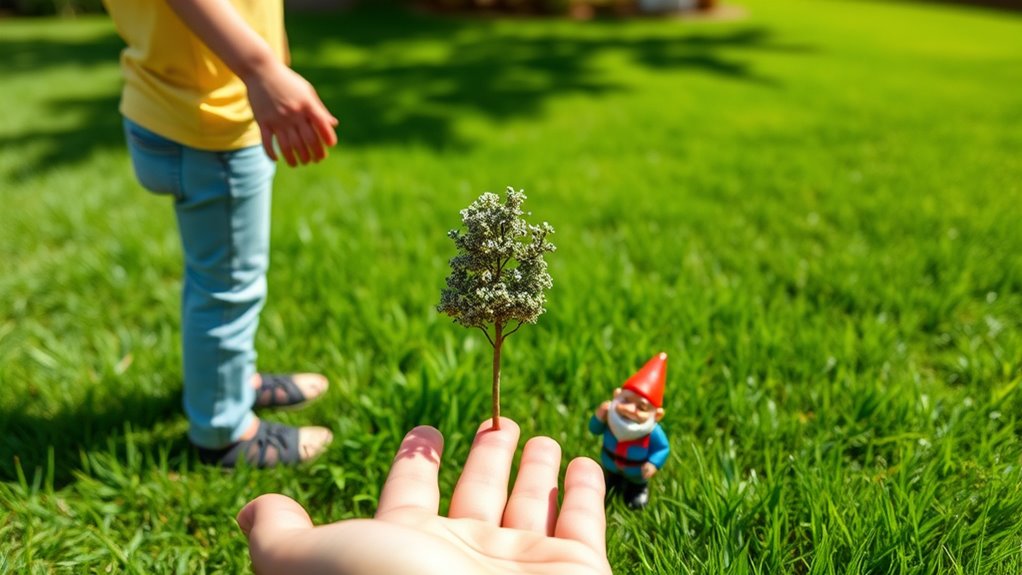
Creating forced perspective in a yard scene allows you to craft intriguing optical illusions that transform the way viewers perceive scale and distance. You’ll leverage techniques rooted in scale modeling to manipulate perceptions, making objects appear larger or smaller than they truly are. This method is perfect for creating fun, surprising visuals that captivate your audience and add a creative touch to your outdoor space.
Create captivating optical illusions in your yard with forced perspective and scale modeling techniques.
Start by choosing your focal point—the main object you want to appear larger or smaller. For example, if you want a tiny figurine to seem enormous compared to a distant building, position the figurine close to the camera while the building sits far away. The key here is understanding how perspective works; by reducing the distance between your camera and the small object, it appears more prominent, while distant objects seem smaller. This manipulation of perceived scale is the essence of optical illusion in forced perspective photography and scale modeling.
To enhance the illusion, pay attention to the layout of your yard. Use lines, pathways, or natural features like trees to guide the viewer’s eye toward your main subject. For instance, a narrow pathway can lead to a tiny model house, making it look like a full-sized home from a distance. You can also experiment with different angles and camera heights. Shooting from a low angle often exaggerates the size difference, emphasizing the illusion. Conversely, a high angle can diminish the perceived size of a nearby object, creating varied effects.
Materials and placement are essential. If you’re creating a miniature scene or diorama, build detailed scale models that fit your intended illusion. Use consistent scaling throughout your scene to prevent the illusion from breaking down. Position these models strategically relative to background elements, ensuring they align correctly with the perspective you want to establish. You may also consider adding foreground elements—like rocks, plants, or furniture—to anchor your scene and reinforce the illusion.
Lighting plays an important role as well. Proper shadows and highlights can emphasize the scale and depth of your scene, making the optical illusion more convincing. Bright, even lighting works well for day scenes, while dramatic shadows can add depth and mystery in the evening. Adjust your camera settings to capture the scene sharply, maintaining focus on the key elements that contribute to the illusion. Additionally, understanding how perception works can help you fine-tune the visual cues to make the illusion more believable.
In the end, creating forced perspective in your yard is about understanding and manipulating visual cues. Whether you’re designing a playful scene with tiny figures or a realistic miniature landscape, attention to detail, strategic placement, and camera work are what make the illusion believable. With some experimentation and patience, you’ll be able to craft captivating optical illusions that delight viewers and showcase your skill in scale modeling.
Frequently Asked Questions
What Are the Best Materials for Building Forced Perspective Props?
You should use lightweight materials like foam, cardboard, or balsa wood for building forced perspective props. These materials are easy to cut, shape, and transport, making them ideal for creating convincing scale models. You can also consider PVC pipes or plastic sheets for durability. By choosing lightweight, easily workable materials, you’ll craft props that blend seamlessly into your yard scene, enhancing the forced perspective effect without adding unnecessary weight or complexity.
How Long Does It Typically Take to Set up a Yard Scene?
Setting up a yard scene with scale models typically takes a few hours to a full day, depending on complexity. You’ll want to plan your construction timeline carefully, allowing extra time for positioning and adjustments. Start by assembling your props and scenery, then arrange everything to create the desired forced perspective. With patience and precision, you can complete a convincing scene in a day or less.
Can Forced Perspective Be Used for Outdoor Photography Besides Yard Scenes?
Think of forced perspective as a magic trick with scale illusions—yes, you can use it outdoors beyond yards. In urban applications, you can make buildings seem tiny or people appear giant, creating mesmerizing photos. This technique transforms ordinary scenes into extraordinary stories, whether in parks, city streets, or beaches. You just need to play with angles and distances, turning everyday environments into stages for your creative vision.
What Safety Precautions Should I Take During Construction?
When you’re working on construction, you should prioritize safety by hazard identification and wearing personal protective equipment. Always inspect your site for potential hazards like loose materials or unstable surfaces before starting. Wear appropriate PPE such as helmets, gloves, goggles, and steel-toed boots to protect yourself. Stay alert, follow safety protocols, and communicate with your team. These precautions help prevent accidents and guarantee a safe, efficient construction process.
How Do Lighting and Weather Affect Forced Perspective Effects?
Lighting influence is like the artist’s brush, shaping how your forced perspective pops or fades. Bright sunlight can wash out details, while soft shadows add depth. Weather impact, such as rain or fog, can blur your scene’s illusion, making objects seem closer or farther than they are. Cloudy days soften contrasts, while clear skies sharpen them. To maintain your effect, shoot during consistent weather and control lighting when possible.
Conclusion
By mastering forced perspective, you turn your yard into a playful world where reality bends like a dream. With a little creativity and strategic placement, you can make tiny objects seem enormous or distant scenes appear close enough to touch. Think of it as painting with your yard’s space—crafting illusions that delight and surprise. So go ahead, experiment and watch your outdoor space transform into a whimsical stage where imagination takes center stage.