
To light your giant props effectively, you need to focus on proper placement, angles, and color temperature. Use diffusers to soften harsh shadows and highlight textures, ensuring even illumination across large surfaces. Adjust your lights to create the desired mood—warm for a cozy feel or cool for a daylight effect. Balancing contrast and color can make your props stand out or blend seamlessly into their environment. Keep exploring these tips to truly transform your display.

Get decor and gifts delivered free with Prime
- Fast, free delivery on millions of items
- Prime Video, Amazon Music and more included
- Member-only deals all year
Key Takeaways
- Use appropriate color temperature to set the desired mood, whether warm for coziness or cool for realism.
- Diffuse light evenly with softboxes or diffusers to soften shadows and highlight textures on large props.
- Position lights strategically from different angles to create depth and minimize harsh shadows.
- Balance light placement and angles to enhance details while maintaining visual harmony.
- Incorporate color contrast and proper diffusion to make props stand out and integrate seamlessly into the environment.
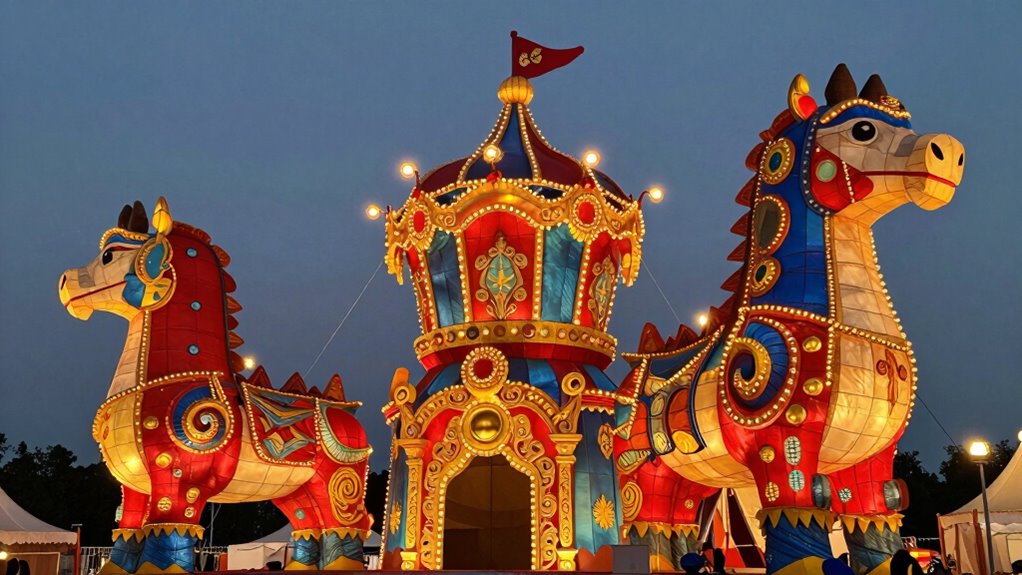
Lighting giant props effectively can make or break the visual impact of your display. Proper lighting enhances details, sets the mood, and draws attention exactly where you want it. When you’re working with large-scale props, it’s essential to understand how color temperature and light diffusion influence your results. Color temperature, measured in Kelvin, determines whether your lighting appears warm or cool. A warm tone (around 2700K to 3000K) creates a cozy, inviting feel, perfect for nostalgic or festive scenes. Conversely, cooler temperatures (5000K to 6500K) produce a crisp, daylight look that emphasizes clarity and sharpness, ideal for modern or dramatic displays. By choosing the right color temperature, you control the ambiance, making your giant props appear more realistic or stylized, depending on your goal.
Proper lighting with the right color temperature enhances large props’ details and mood, making displays more realistic and impactful.
Light diffusion is equally important. It softens the light, reducing harsh shadows and glare that can obscure details or create unflattering effects. When you diffuse light, you spread it evenly across your props, ensuring consistent illumination and highlighting their features without stark contrasts. This is especially significant with large props because uneven lighting can cause parts to be overly bright or too dark, detracting from the overall visual harmony. Using diffusers or softboxes helps achieve this effect, allowing you to control the spread of light precisely. The goal is to create a smooth, even glow that accentuates your props’ textures and shapes without overwhelming the viewer’s eye. Understanding the effects of light diffusion can help you fine-tune your setup for optimal results. Additionally, being aware of the impact of light placement can further refine how your props are perceived in the space. Properly assessing the light spread ensures your display is visually balanced and engaging. Moreover, testing different lighting angles before finalizing your setup can reveal how shadows and highlights enhance or diminish your props’ details.
Another key factor is color contrast, which can dramatically influence how your props stand out or blend into the background, adding depth or harmony to your display. You should also consider the placement and angle of your lights. Positioning lights correctly in relation to your giant props influences how shadows fall and how details are revealed. For example, illuminating from slightly above and at an angle can add depth, while front-facing lighting minimizes shadows for a cleaner look. Combining the right color temperature with effective light diffusion ensures your giant props are showcased in the best light—literally. It’s about balancing warmth and coolness with the softness of light to produce a compelling visual story.
In the end, how you light your giant props matters immensely. You have the power to transform an ordinary display into something striking and memorable by paying attention to color temperature and light diffusion. These elements work together to highlight details, create atmosphere, and guide viewers’ eyes exactly where you want them. When you master this, your display won’t just be seen; it’ll be felt. Proper lighting isn’t just an afterthought—it’s the foundation of a captivating visual experience.
As an affiliate, we earn on qualifying purchases.
Frequently Asked Questions
What Types of Lights Are Best for Giant Props?
You should use powerful, versatile lights like LED panels or Fresnel lights for giant props. Proper prop placement and light positioning are essential to highlight details without casting unwanted shadows. Adjust the angle and distance of your lights to evenly illuminate the prop, ensuring it looks dramatic and realistic. Using diffusers and reflectors can also help soften harsh light, making your giant props stand out effectively on camera or stage.
How Do I Prevent Damage to the Prop While Lighting?
Think of your prop as a delicate butterfly—you want to protect its wings. To prevent damage, guarantee prop stability by securely anchoring it and avoid placing lights too close. Use a reliable power supply, and check cords for fraying to ensure safety. Keep lights at a safe distance, and avoid hot bulbs touching the surface. These steps help preserve your giant prop’s integrity while lighting it beautifully.
What Color Temperature Creates a Realistic Effect?
To create a realistic effect, choose a color temperature around 5500K, which mimics natural daylight, ensuring good color accuracy. This temperature enhances your props’ true colors and prevents unnatural hues. If you want to set a specific mood, adjust the temperature slightly warmer or cooler. Warmer tones (around 3200K) evoke coziness, while cooler tones (around 6500K) add a more clinical or modern feel, all while supporting mood enhancement and authenticity.
How Do Weather Conditions Affect Outdoor Lighting?
Weather variations can unexpectedly turn your outdoor lighting into a drama. Rain, wind, or fog might seem minor, but they challenge your lighting’s durability and consistency. Ironically, harsh conditions can make your setup appear more authentic, but only if your lights withstand the elements. You’ll need weatherproof fixtures and strategic placement to keep things bright and reliable. Otherwise, Mother Nature might just steal the spotlight, leaving your scene in the dark.
What Safety Precautions Should I Follow?
You should always wear safety gear like gloves and goggles to protect yourself. Follow electrical safety rules by inspecting cords and connections for damage before wiring your giant props. Keep water away from electrical components, and make certain all power sources are turned off when adjusting or setting up. Use grounded outlets and avoid overloading circuits. Taking these precautions minimizes risks, keeps you safe, and guarantees your outdoor lighting setup works flawlessly.
Conclusion
When you light your giant props correctly, they become more than just scenery—they transform into mesmerizing focal points. It’s like giving life to a still object, turning static into dynamic. Without proper lighting, your set remains ordinary; with it, it commands attention and sparks imagination. So, don’t just set the scene—illuminate it. Because in the world of props, good lighting isn’t just an accessory—it’s the magic that makes everything truly stand out.
Columbus Day / Indigenous Peoples' Day Picks
long weekend sales
As an affiliate, we earn on qualifying purchases.