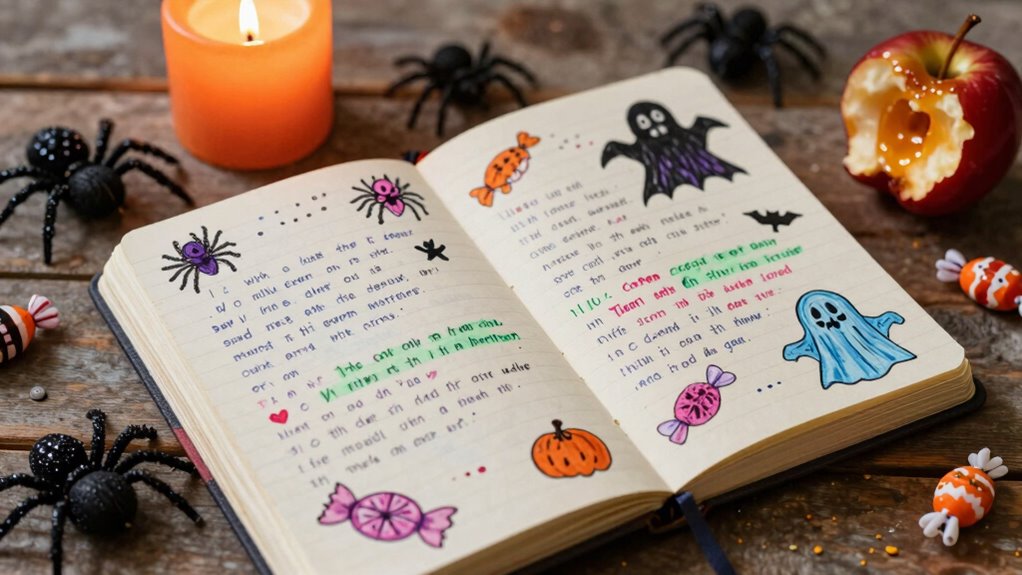

Create a Halloween Memory Bank by keeping a simple journal or digital notes. Record what costumes got the best reactions, which trick-or-treat routes were fun and safe, and activities that everyone enjoyed most. Note any challenges like crowded streets or costumes that fell apart. By tracking these details, you’ll plan better costumes and routes next year. Keep these insights handy—you’re about to discover how to make every Halloween even more enjoyable.
Key Takeaways
- Keep a detailed Halloween journal recording costumes, routes, activities, and encounters to identify successful strategies and areas needing improvement.
- Use checklists and ratings to evaluate costume comfort, safety, and crowd levels at different neighborhoods.
- Document memorable moments and feedback to refine future costume choices and activity plans.
- Analyze trick-or-treat routes to prioritize safe, enjoyable neighborhoods and avoid confusing or poorly lit areas.
- Review past challenges to develop a strategic plan that enhances fun and safety for future Halloween celebrations.
As Halloween approaches, many people find themselves reminiscing about past costumes, spooky adventures, and festive traditions. It’s a time when memories flood back—whether it’s that clever costume idea you had last year, an unexpected scare during trick-or-treating, or a route that turned out to be more fun than you expected. Building a Halloween memory bank means actively tracking what worked and what didn’t so you can make each year more enjoyable. Start by jotting down your favorite costume ideas from previous years. Did that DIY robot costume turn heads? Was that spooky ghost costume too warm or too cumbersome? Noting these details helps you refine your choices, ensuring your next costume is even better. Equally important is reviewing your trick or treat routes. Maybe you discovered a neighborhood with generous houses and friendly neighbors, or perhaps a route that was too long or poorly lit. Mark these routes, along with any memorable encounters, so you can plan smarter for next year. You might find that a certain route is perfect for young kids but less suitable for teens seeking a little more adventure. When you keep track of these details, you learn which neighborhoods are hotspots and which ones to skip, making your night smoother and more fun. Besides costumes and routes, pay attention to the activities that added to your enjoyment. Did you attend a community Halloween event or host a haunted house? Keep notes on what made these experiences special and how you can enhance them next year. If a particular game or treat was a hit, record that too. The more you write down, the more you build a personalized Halloween playbook. Another useful tip is to reflect on what didn’t work—costumes that didn’t hold up, routes that were too crowded or confusing, or activities that fell flat. Learning from these missteps prevents you from repeating the same mistakes, saving time and frustration. Additionally, incorporating tanning trends into your routine—such as using broad-spectrum sunscreen or exfoliating skin beforehand—can help keep your skin healthy and radiant during the festive season. Over time, your Halloween memory bank becomes a valuable resource, helping you plan ahead with confidence. It’s about creating a treasure trove of insights that make each October 31st easier and more exciting. Whether you’re tweaking a costume idea that was a hit or choosing a trick or treat route with best safety and fun, tracking your experiences empowers you to craft better Halloween nights every year. With a little organization and reflection, you’ll turn fleeting memories into a strategic plan that ensures your next Halloween is even more memorable.
Frequently Asked Questions
How Can I Involve Kids in Tracking Halloween Memories?
You can involve kids in tracking Halloween memories by encouraging creative journaling and making photo collages together. Have them write or draw their favorite costumes, candy counts, or fun moments from the night. Collect photos and help them create collages that capture the event’s highlights. This hands-on approach makes memory-keeping engaging, fosters their creativity, and creates a special keepsake they’ll enjoy flipping through for years.
What Tools Are Best for Organizing Halloween Experiences?
You should use decorative organizers and digital apps to keep your Halloween experiences well-organized. Decorate a dedicated box or folder for costumes, treats, and photos, making it fun for kids to add their own touches. Digital apps like photo journals or event planners help you track activities and memories easily. These tools keep everything accessible, fun, and organized, so you can relive your favorite Halloween moments whenever you want.
How Often Should I Review and Update My Halloween Memory Bank?
You should review and update your Halloween memory bank after each holiday, just like you’d tweak your trick-or-treat planning based on last year’s haul. Reflect on what costume ideas worked best and which went over like a ghost at dawn. This keeps your plans fresh and effective, ensuring next year’s Halloween is even more fun. Regular updates help you build a spooky collection of proven tricks and treats.
Can I Include Non-Traditional Halloween Activities?
Yes, you can definitely include non-traditional Halloween activities in your memory bank. Incorporate alternative activities and creative ideas like escape rooms, themed movie nights, or DIY crafts. Tracking how these unique experiences resonate with your group helps you identify what stands out. By noting their popularity, you’ll refine your celebration with fresh, engaging options next year, making your Halloween memorable and personalized.
How Do I Use Past Memories to Plan Better Next Year?
You can use past memories by reviewing your Halloween experiences, focusing on memory triggers like specific decorations or activities that sparked joy. Reflect on emotional responses to different elements, noting what felt special or fell flat. These reflections help you identify successful ideas and areas for improvement. By connecting feelings to specific moments, you’ll craft a more memorable, enjoyable plan for next year, making every Halloween better than the last.
Conclusion
By building your Halloween Memory Bank, you’ll learn what tricks and treats delight your guests most. Did you know that 78% of hosts say tracking their past Halloween successes helps them plan better for next year? So, keep note of what worked—and what didn’t. With every spooky season, you’ll improve your haunted house or costume game, making each year more memorable. Start your memory bank today, and watch your Halloween celebrations become even more enchanting!