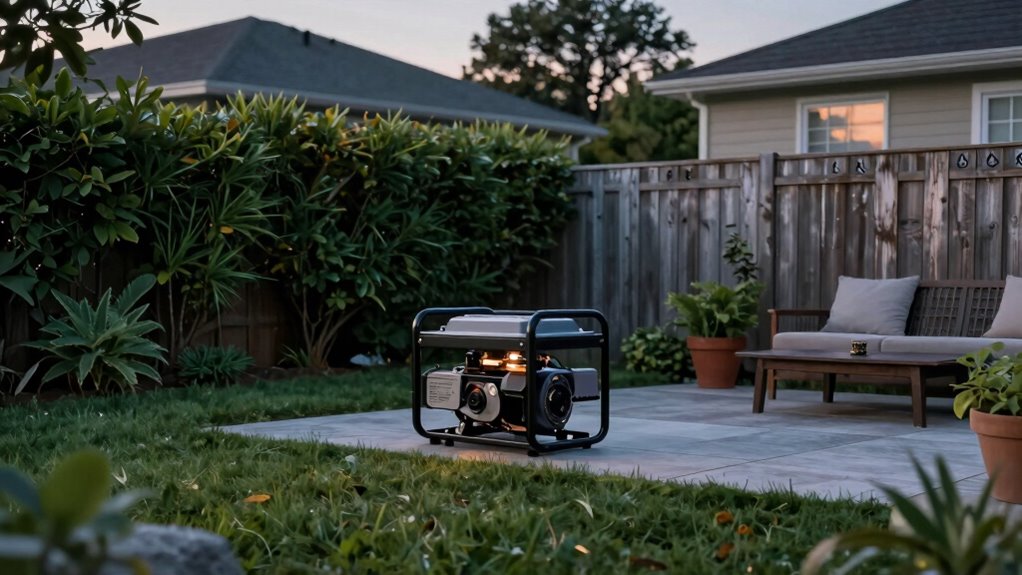

To avoid annoying your neighbors with a generator, choose a quiet model designed for low noise levels and position it far from homes, using natural barriers like trees or fences to absorb sound. Running it during daytime and at lower loads helps reduce disturbance, while soundproof enclosures and vibration-absorbing pads substantially cut noise. Communicating your plans can foster good relations, and exploring additional sound dampening tips will help you keep power running smoothly without causing disruptions.
Key Takeaways
- Select the quietest generator models with lower decibel ratings and soundproof features to minimize noise output.
- Position the generator far from neighbors, using natural barriers like trees or fences to block sound transmission.
- Operate the generator during daytime and at low loads to reduce disturbance, avoiding nighttime use when possible.
- Install soundproof enclosures, vibration pads, and insulation to dampen noise and vibrations effectively.
- Communicate with neighbors about power needs and planned generator use to foster understanding and reduce complaints.
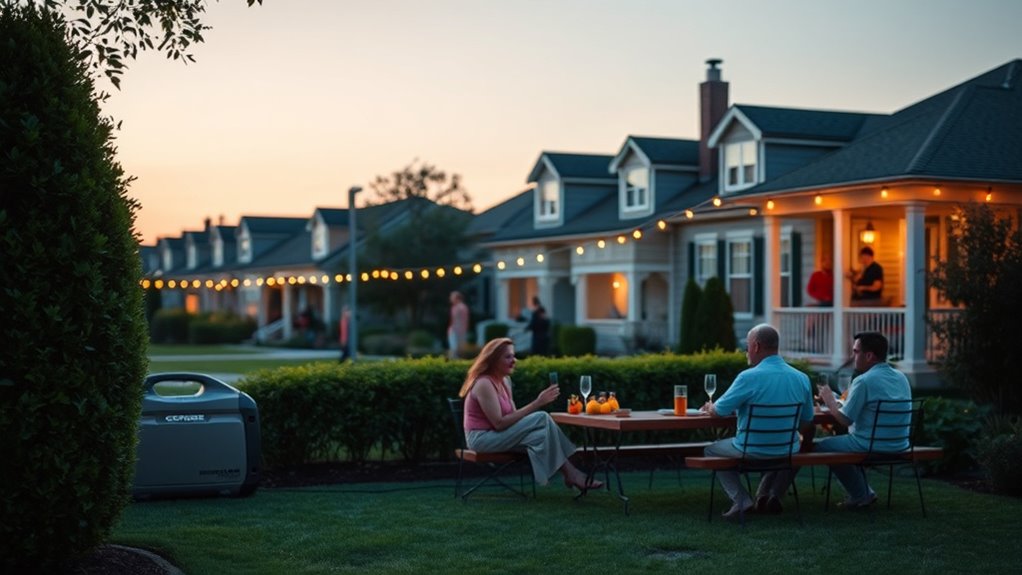
If you’ve ever tried to use a generator quietly, you know that achieving low noise levels can be surprisingly challenging. Generators are inherently noisy machines, and their sound can quickly become a nuisance, especially if you live close to neighbors. Managing noise levels isn’t just about comfort; it’s also about respecting neighbor considerations. When planning to use a generator, you need to think about how sound will carry and how it might disturb those around you.
Using a generator quietly requires careful planning to minimize noise and respect neighbors.
One key factor in controlling noise levels is understanding the environment where you plan to operate your generator. If your property is close to other homes, the sound can easily travel through the air, amplifying the disturbance. You might notice that even a quiet generator can become loud when placed near walls, fences, or other structures that reflect sound. In these situations, it’s wise to position your generator as far away from neighbors as possible, ideally behind natural barriers like trees or bushes, which can help absorb or block sound waves.
Another important step is choosing a generator designed to minimize noise. Many manufacturers now produce models marketed as “quiet generators,” which incorporate soundproof enclosures or mufflers designed to reduce noise output. These models often operate at decibel levels that are markedly lower than standard models, making them more neighbor-friendly. When shopping, look for specifications that specify noise levels in decibels, and opt for the quietest option within your budget.
Beyond selecting the right generator, using sound-dampening techniques can further reduce noise impact. Installing a generator pad made of rubber or another sound-absorbing material can prevent vibrations from transmitting through the ground and causing additional noise. Covering the generator with a soundproof enclosure or building a simple soundproof box can make a substantial difference, especially if you’re operating in a densely populated area. Remember, even small adjustments, like closing vents or adding insulation around the unit, can cut down noise levels considerably.
Additionally, considering the energy-efficient options available can help reduce overall noise by allowing the generator to operate at lower loads. Lastly, consider the timing of your generator use. Running it during daytime hours when neighbors are less likely to be disturbed can help maintain good relations. If you must operate the generator at night, keep it running at the lowest effective load and avoid unnecessary idling. Communicating your plans to neighbors in advance can also go a long way; a simple heads-up shows respect for their peace and can prevent misunderstandings or complaints.
In the end, managing noise levels isn’t just about choosing the right equipment; it’s about being considerate and proactive. When you plan carefully and take steps to minimize sound, you’ll find it easier to balance your power needs with neighbor considerations, keeping everyone happy and your environment peaceful.
Frequently Asked Questions
What Are the Best Noise-Reduction Features in Generators?
You should look for generators with soundproof materials and noise canceling technology. Soundproof enclosures, rubber mounts, and insulated panels help reduce noise levels markedly. Noise canceling features like mufflers and smart ventilation systems also dampen sound. These features work together to minimize noise, ensuring your generator runs quietly and doesn’t disturb neighbors, making your power solution both effective and neighbor-friendly.
How Do I Measure My Generator’s Noise Level Accurately?
To measure your generator’s noise level accurately, you should use a decibel meter during sound level testing. Studies show that consumer decibel meters are dependable within 3 dB. Place the meter at a standard distance, like 10 or 25 feet, from the generator, and record multiple readings. This approach helps you guarantee your generator stays within acceptable noise limits, minimizing neighbor disturbances.
Are There Legal Restrictions on Generator Noise in Residential Areas?
Yes, you need to follow local noise ordinances and residential zoning regulations when operating a generator. Check your city or county’s rules, as they set maximum noise levels and designated quiet hours. Violating these restrictions can lead to fines or legal issues. To stay compliant, keep your generator well-maintained, operate it during permitted hours, and use noise barriers if necessary. Always review local laws before using your generator.
How Long Can a Quiet Generator Operate on a Single Tank?
Think of your generator as a marathon runner, not a sprinter. With good fuel efficiency and a sizable tank capacity, it can run smoothly for hours—often between 8 to 12 hours on a single tank. The exact time depends on its power output and your load. To keep it humming longer, optimize fuel consumption by avoiding heavy loads. Regular maintenance guarantees it stays efficient and ready whenever you need it most.
Can I Use Soundproof Enclosures for My Generator?
Yes, you can use soundproofing options like specialized enclosure materials to reduce generator noise. Soundproof enclosures are designed with materials like mass-loaded vinyl, foam insulation, or fiberglass that absorb and block sound. When selecting enclosure materials, guarantee they’re durable, heat-resistant, and ventilated properly to prevent overheating while effectively minimizing noise. Properly constructed soundproofing options help keep your generator quiet and neighbor-friendly.
Conclusion
So, next time you’re dreaming of a quiet generator, remember it’s all about balance—because nothing says “good neighbor” like a device that’s loud enough to wake the dead but silent enough to keep your peace. Who knew peaceful power could be such a paradox? So go ahead, plan wisely, and maybe invest in some noise-canceling headphones—your neighbors might thank you, or at least pretend to. After all, silence is golden, unless it’s coming from your generator.