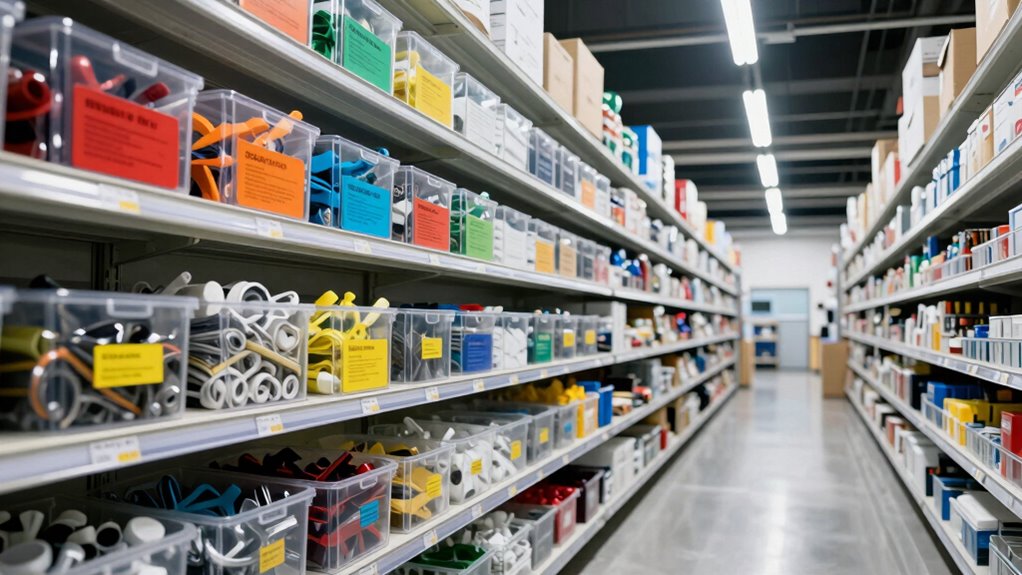
To stop mystery bins forever, you need a clear labeling system that guarantees every item is identified, tracked, and organized consistently. Use durable labels with detailed descriptions, item numbers, or color codes that are easy to read and recognize. Keep labels updated to match inventory changes and implement standardized procedures so everyone follows the same process. Incorporating barcode or QR code technology can further automate and streamline this system—keep exploring to learn how to perfect your labeling approach.
Get ready for Prime Big Deal Days — try Prime free
Exclusive member deals on October 6–7, plus fast free delivery. Cancel anytime.
As an affiliate, we earn on qualifying purchases.
Key Takeaways
- Implement standardized, clear labeling with item numbers, descriptions, and color codes for quick identification.
- Use durable labels with visual cues like color coding to prevent peeling and confusion.
- Regularly update labels to reflect inventory changes, ensuring accuracy and reducing mystery bins.
- Incorporate barcode or QR code labels linked to inventory databases for instant item details.
- Train staff on consistent labeling practices to maintain system reliability and prevent mystery bins.
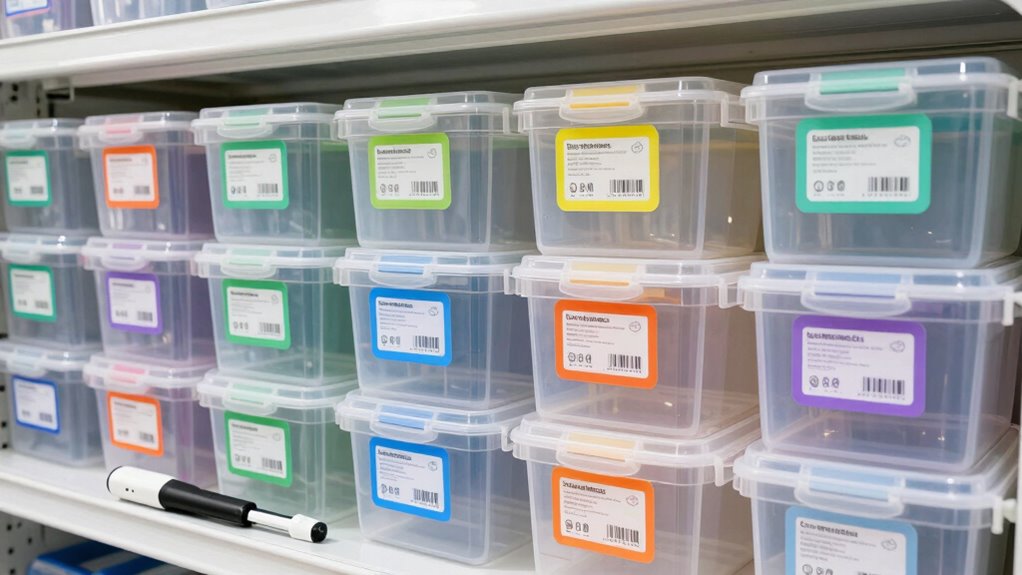
If you want to keep your mystery bins organized and easily manageable, implementing a clear labeling system is essential. Without proper labels, you risk losing track of what’s inside each bin, making inventory management a nightmare. A good labeling system ensures that you know exactly what’s stored where, saving you time and reducing frustrations. It also plays a critical role in quality control, helping you quickly identify items that need inspection or replacement. By maintaining consistent and accurate labels, you prevent mix-ups and ensure that each bin is properly accounted for during audits or restocking.
Start by choosing a labeling method that suits your needs—whether paper labels, plastic tags, or digital labels linked to an inventory management app. Whatever you pick, make sure they’re durable and easy to read. Clear, legible labels prevent confusion, especially when handling multiple bins or when others are involved in the process. You want labels that don’t smudge or peel over time, so invest in quality materials if necessary. When labeling, be specific but concise—use descriptive words, item numbers, or color codes to differentiate categories. For example, a red label could indicate fragile items, while a blue label might denote electronics. This visual cue speeds up item identification and minimizes handling errors.
Choose durable, clear labels with specific details and color codes to quickly identify and prevent errors in your mystery bins.
Incorporate your labeling system into your overall inventory management process. Regularly update labels whenever you add or remove items to keep your system accurate. This practice helps prevent discrepancies and ensures your inventory counts match reality. Accurate labeling also enhances quality control by making it easier to track item condition, expiration dates, or other important details. When each bin is properly labeled, you can quickly identify which items need inspection, maintenance, or disposal, preventing quality issues from slipping through the cracks. Additionally, accurate labeling can help streamline the training process for new team members, ensuring everyone understands the system from the start. Using a consistent labeling approach ensures that your system remains reliable over time. Implementing standardized procedures for labeling can further improve consistency and reduce errors. Consistency in labeling practices creates a reliable framework that minimizes confusion and helps maintain a professional environment.
Automation can further streamline your process. Use barcode labels or QR codes linked to your inventory database, allowing you to scan and access detailed item information instantly. This reduces manual entry errors and speeds up stock checks. Automation not only saves time but also increases the accuracy of your inventory records. Consistency is key—train everyone involved to follow the same labeling standards, so your system remains reliable. Over time, a robust labeling system becomes second nature, making your management tasks smoother and more efficient.
Ultimately, a well-designed labeling system transforms chaotic mystery bins into well-organized storage solutions. It provides clarity, improves inventory management accuracy, and enhances quality control measures. When everyone understands and follows the same labeling standards, you create a more professional and efficient environment where mystery bins no longer cause confusion or delays. This investment in clarity ensures your storage remains transparent, manageable, and, most importantly, free of the hidden surprises that kept your mystery bins a mystery in the first place.
durable label maker for inventory
As an affiliate, we earn on qualifying purchases.
As an affiliate, we earn on qualifying purchases.
Frequently Asked Questions
How Long Does It Take to Implement the Labeling System?
Implementing the labeling system takes about a week, depending on your team’s size and workflow. You’ll see improvements in labeling accuracy quickly, as the system streamlines the process. It usually involves training staff, setting up labels, and integrating the system into your existing operations. Once in place, it boosts process efficiency by reducing errors and mystery bins, making inventory management clearer and faster for you.
Is the System Adaptable for Different Warehouse Sizes?
Yes, the system is highly adaptable for different warehouse sizes. As you expand, its scalability guarantees seamless integration, preventing chaos. Its flexible labeling options allow you to customize layouts, making it perfect for small setups or massive operations. You might wonder how it manages to stay efficient across scales. The answer lies in its design, which prioritizes warehouse scalability and labeling flexibility, ensuring you stay organized no matter how much your warehouse grows.
What Training Is Required for Staff?
You’ll need to provide staff with thorough training focused on inventory accuracy and proper labeling procedures. Training should cover how to use the labeling system effectively, identify mislabeled items, and update records promptly. This guarantees everyone understands the system’s benefits and maintains consistency. With proper staff training, your team can reduce errors, improve inventory accuracy, and keep the warehouse running smoothly and efficiently.
Can the System Be Integrated With Existing Inventory Software?
Yes, the system can be integrated with your existing inventory software through barcode integration. This allows seamless data exchange, improving inventory accuracy. You’ll need to make sure your software supports barcode scanning and integration features. Once set up, you’ll see real-time updates, reducing errors and mystery bins. This integration streamlines operations, enhances tracking, and guarantees your inventory remains precise, saving you time and preventing costly mistakes.
What Is the Cost of Setting up the Labeling System?
Think of setting up this labeling system as planting a sturdy seed for your inventory accuracy to grow. The initial costs vary based on scale, but expect to invest in quality labels, printers, and training. While it’s a smart investment, keep in mind that adhering to consistent labeling standards minimizes errors and boosts efficiency, turning chaotic bins into a well-organized garden of inventory you can easily manage and trust.
Conclusion
Now that you understand how this labeling system works, imagine the possibilities. No more hidden mysteries, no more surprises that turn into frustrations. But what if this new system isn’t enough? What if some secrets still slip through? The future of mystery bins hangs in the balance, and only time will tell if this simple change can truly end the enigma forever. Are you ready to see what’s next?
Fall Picks
fall essentials
As an affiliate, we earn on qualifying purchases.