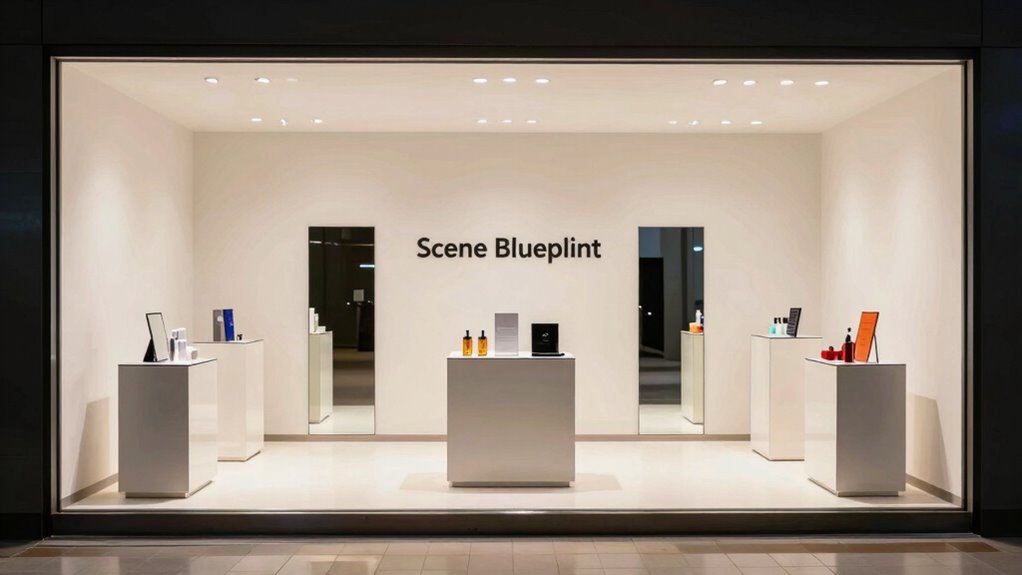

The ‘Scene Blueprint’ method helps you make displays feel bigger by strategically using lighting and color. You’ll highlight specific areas, create shadows, and layer ambient, task, and accent lights to add depth. Light, neutral tones reflect more light, while cool colors evoke openness. Darker hues shrink spaces, so choosing lighter shades enhances the feeling of expansiveness. Combining these techniques makes environments appear larger and more inviting. To discover how this approach transforms spaces, keep exploring the concept further.

Get decor and gifts delivered free with Prime
- Fast, free delivery on millions of items
- Prime Video, Amazon Music and more included
- Member-only deals all year
Key Takeaways
- Strategically combine soft, diffuse lighting with light, neutral color schemes to enhance perceived space and openness.
- Use layering of ambient, task, and accent lights to add depth and prevent flatness in display environments.
- Incorporate backlighting and uplighting to draw attention upward and increase the perception of height.
- Choose light, pale colors that reflect more light, making walls recede and creating a sense of larger space.
- Apply the ‘Scene Blueprint’ by manipulating visual cues through lighting and color to craft expansive, inviting displays.
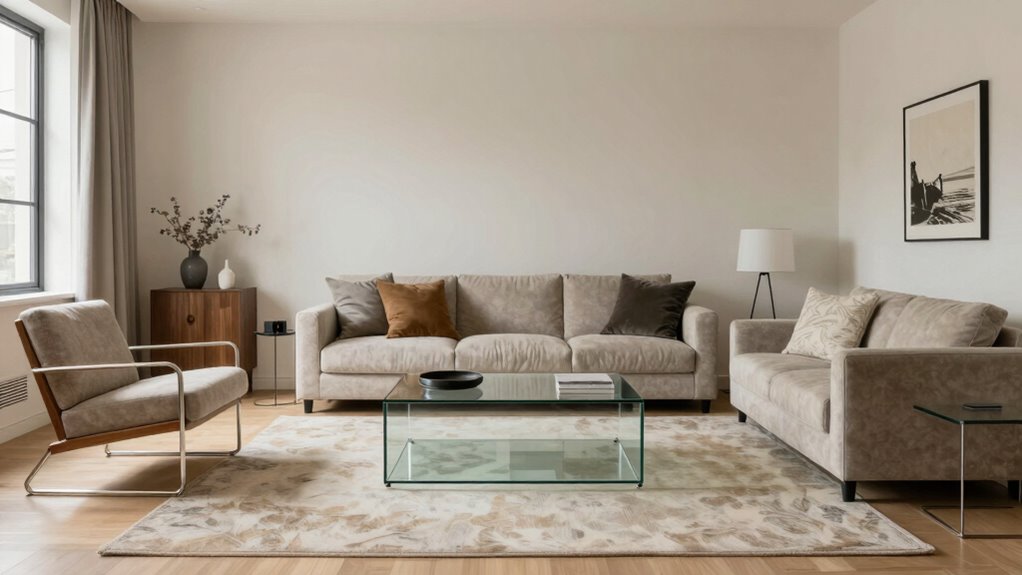
Have you ever wondered how filmmakers and storytellers craft compelling scenes that flow seamlessly? The secret often lies in the way they manipulate visual elements to create a specific mood or perception. When it comes to designing displays or spaces that feel larger than they are, the ‘Scene Blueprint’ method offers powerful tools, especially through lighting effects and color schemes. These elements work together to trick the eye and expand a space’s perceived size, making it feel more open and inviting.
Lighting effects are essential in this process. By strategically placing lights and using different intensities, you can highlight certain areas while casting shadows in others. This contrast guides the viewer’s eye, creating a sense of depth and dimension. For instance, soft, diffuse lighting can eliminate harsh shadows, giving a space a more expansive feel. Alternatively, layering lighting — combining ambient, task, and accent lights — adds complexity and depth, preventing the space from feeling flat or cramped. You might also use backlighting or uplighting to draw attention upward, which tricks the mind into perceiving height and spaciousness. In effect, well-planned lighting doesn’t just illuminate; it shapes perception. Additionally, understanding how visual perception works allows you to optimize your lighting choices for maximum impact. When combined with a strategic color palette, lighting can greatly enhance the illusion of space. Incorporating knowledge of perception psychology can help you craft environments that truly feel larger than their physical dimensions. Recognizing how visual cues influence perception is key to designing effective spatial illusions. Using the right lighting techniques can make all the difference in transforming a small area into a seemingly boundless environment.
Strategic lighting highlights and shadows create depth, making spaces feel larger and more inviting.
Color schemes are just as integral in the ‘Scene Blueprint’ approach. Light, neutral tones tend to open up a space, reflecting more light and making walls recede visually. Bright or cool colors, like whites, pale blues, or soft grays, evoke a sense of airiness and vastness. Conversely, darker or saturated hues tend to shrink a space, making it feel more enclosed. By carefully selecting a color palette that emphasizes lightness and simplicity, you create an environment that feels bigger and less claustrophobic. It’s also effective to use contrasting colors strategically, which helps define boundaries and adds visual interest without making the space feel crowded. Understanding how color schemes influence perception enables you to craft environments that appear larger and more inviting.
Combining lighting effects with thoughtful color schemes amplifies the illusion of space. For example, a room painted in light, monochromatic tones paired with layered, diffuse lighting can make even a modest area seem expansive. When you master these visual cues, you’re fundamentally designing a scene that guides the viewer’s perception, much like a filmmaker directing their audience’s attention and feelings. The ‘Scene Blueprint’ method is all about understanding and manipulating these elements intentionally, so your display or space doesn’t just look good—it feels larger, more open, and more inviting. With a strategic approach to lighting effects and color schemes, you can transform any environment into an immersive experience that feels surprisingly spacious.
diffuse LED ambient lighting for living room
As an affiliate, we earn on qualifying purchases.
As an affiliate, we earn on qualifying purchases.
Frequently Asked Questions
Can the Scene Blueprint Method Be Used for Small Display Spaces?
Yes, you can use the scene blueprint method for small display spaces. It helps with space optimization by creating a strategic layout that maximizes every inch. This technique uses visual illusion tricks, like layering and depth, to make the display appear larger than it really is. By carefully planning your elements, you’ll achieve a more expansive feel, even within tight spaces, making your display more engaging and visually appealing.
How Long Does It Take to Implement the Scene Blueprint Technique?
Implementing the Scene Blueprint technique typically takes a few hours to a day, depending on your display’s complexity. You’ll focus on adjusting lighting effects and color schemes to create depth and visual interest. Start by planning your layout, then experiment with different lighting angles and colors to see what makes the space feel larger. With patience, you’ll see a significant transformation that enhances the display’s perceived size and impact.
Is Special Equipment Required to Create a Scene Blueprint?
No, you don’t need special equipment to create a scene blueprint. The process relies more on your understanding of scene complexity and effective planning. You can use basic tools like sketches, digital software, or even simple paper and pen to map out your display. The key is focusing on how elements interact and ensuring the scene feels bigger without expensive or complex gear.
Can This Method Be Customized for Different Themes or Styles?
Yes, this method can be customized for different themes or styles. You have significant thematic flexibility and can easily adapt it to various stylistic preferences. By adjusting the layout, color schemes, and visual elements, you can tailor the scene blueprint to match any theme or style you desire. This flexibility makes it a versatile tool, allowing you to create immersive displays that effectively communicate your intended message or aesthetic.
Does the Scene Blueprint Approach Work for Digital or Virtual Displays?
Yes, the scene blueprint approach works well for digital and virtual displays. For example, a virtual art gallery can use this method to create immersive environments, enhancing digital integration and virtual enhancement. By carefully designing scenes with depth and perspective, you make virtual spaces feel larger and more engaging. This technique helps captivate audiences, making digital displays more dynamic and memorable.
Conclusion
By applying the scene blueprint method, you’ll see your displays instantly feel larger and more immersive. Some might think it’s just a trick, but it’s really about strategic layout and intentional design. Don’t worry—this approach doesn’t require a complete overhaul or expensive upgrades. Instead, with a few simple adjustments, you’ll create a space that feels expansive and engaging, inviting viewers in and making every display a mesmerizing experience.
Fall Picks
fall essentials
As an affiliate, we earn on qualifying purchases.