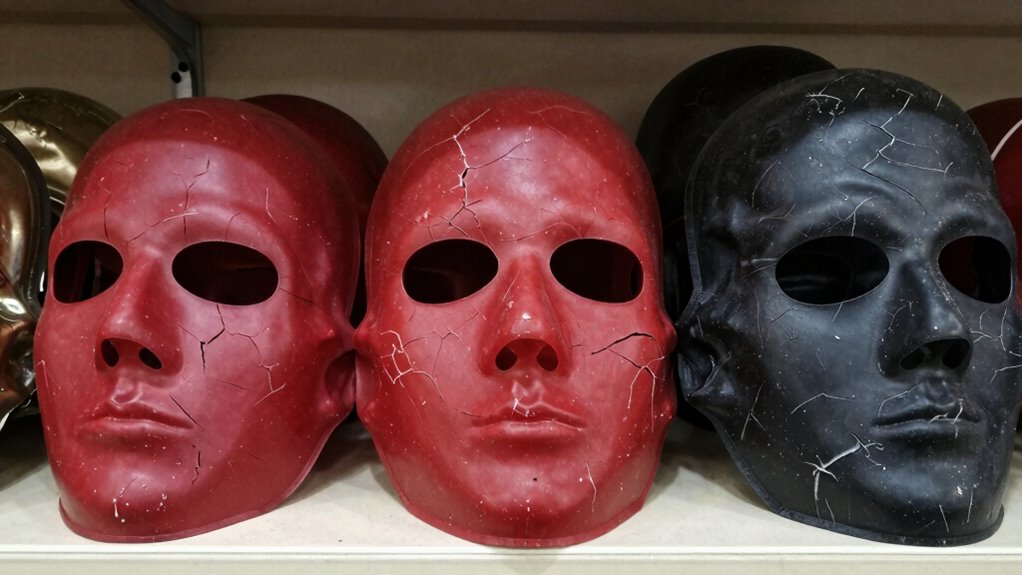
The main mistake that causes cracking in latex masks is neglecting proper storage. If you fold, crease, or store masks in humid or direct sunlight environments, the latex can dry out, warp, or crack over time. Also, avoiding gentle cleaning and using harsh chemicals can weaken the material. To keep your masks in top condition, you need to store them correctly, away from damage. If you want to learn how to do it right, keep going.

Get decor and gifts delivered free with Prime
- Fast, free delivery on millions of items
- Prime Video, Amazon Music and more included
- Member-only deals all year
Key Takeaways
- Storing masks in direct sunlight accelerates UV damage, causing latex to become brittle and crack.
- Folding or creasing masks applies stress, leading to deformation and eventual cracking over time.
- Using harsh chemicals or alcohol-based cleaners weakens latex, increasing the risk of cracking during storage.
- Humid environments like bathrooms promote moisture buildup, which can cause latex to degrade and crack.
- Ignoring proper drying after cleaning leaves residual moisture that weakens latex and promotes cracking.

Proper storage is essential to keep your latex masks in top condition and guarantee they last. If you neglect this, you risk exposing your masks to damage that can lead to cracking and deterioration over time. One common mistake many make is not paying attention to latex mask storage, which can result in irreversible harm. Instead of simply tossing your masks into a box or stacking them haphazardly, you need to be deliberate about how you store them to prevent stretching, warping, or, worse, cracking.
Proper storage preserves your latex masks and prevents damage like cracking and warping over time.
When it comes to latex mask storage, the key is to keep your masks in a cool, dry place away from direct sunlight. Ultraviolet rays can cause latex to degrade prematurely, making it brittle and prone to cracking. Make sure your storage area has consistent temperature and low humidity levels. Moisture can promote mold growth and weaken the latex, so avoid places like bathrooms or basements. Instead, opt for a designated storage cabinet or a dedicated shelf where your masks can stay safe from environmental stressors. Additionally, understanding material properties of latex helps you choose the best cleaning and storage methods to extend its durability. Being aware of latex’s susceptibility to environmental damage is crucial for preserving its flexibility and appearance over time.
Cleaning techniques are equally important in maintaining your masks. Before storing, always clean your masks thoroughly using gentle cleaning techniques. Use mild soap and warm water to remove dirt, oils, and any residues that could break down the latex over time. Avoid harsh chemicals or alcohol-based cleaners, as these can dry out the latex and increase the risk of cracking. After cleaning, gently pat the masks dry with a soft cloth and allow them to air dry completely before storing. This step is vital because residual moisture can cause the latex to degrade or develop mold. Incorporating proper handling techniques can further prevent accidental damage and deformation of your masks during storage. Additionally, storing masks away from extreme temperatures helps preserve their flexibility and appearance.
Once your masks are clean and dry, store them properly to avoid unnecessary stress on the material. Instead of folding or creasing, hang your masks or lay them flat in a way that prevents deformation. If hanging, use padded hangers or hooks that won’t leave marks or cause indentations. Wrapping masks in tissue paper or soft cloth can also help prevent dust buildup and accidental scratches. Regularly inspecting your stored masks for signs of wear or damage can help catch issues early and prolong their lifespan. Taking the time to carefully assess your masks can also reveal small issues before they become major problems.
Neglecting proper latex mask storage and ignoring suitable cleaning techniques are the main reasons masks crack prematurely. By being attentive to how you care for and store your masks, you extend their lifespan dramatically. Regular cleaning, careful handling, and choosing the right storage environment all contribute to keeping your masks flexible, vibrant, and crack-free for years to come. Remember, your effort in maintaining them now pays off with a collection that remains in excellent condition long into the future.
As an affiliate, we earn on qualifying purchases.
Frequently Asked Questions
How Often Should I Replace My Latex Mask?
You should replace your latex mask every one to two years to maintain latex flexibility and prevent cracking caused by mask aging. Over time, exposure to air, sunlight, and improper storage can weaken the material. Regularly inspect your mask for signs of deterioration, such as stiffness or cracks. If you notice significant wear, it’s best to replace it promptly to guarantee safety and peak performance.
Can I Store Latex Masks Outdoors?
Storing latex masks outdoors is like leaving a delicate flower in the rain—you risk damage. Outdoor exposure can cause latex to crack and degrade quickly, as it’s not weather resistant. While it might seem convenient, it’s best to keep your mask indoors in a cool, dark place. Guarding it from sunlight, moisture, and temperature swings ensures your mask stays flexible and in good condition longer.
What Cleaning Products Are Safe for Latex Masks?
You should use gentle cleaning products like mild soap or specialized latex cleaners, avoiding harsh chemicals or alcohol-based solutions, which can damage the latex. Don’t believe cleaning myths that say you need strong disinfectants; they can cause cracking. Instead, follow proper storage techniques—keep the mask in a cool, dry place away from sunlight. Proper cleaning and storage help maintain your latex mask’s flexibility and prevent cracking over time.
How Does Temperature Affect Latex Mask Longevity?
It’s no coincidence that temperature plays a vital role in latex mask longevity. When you expose your mask to extreme heat or cold, it accelerates latex degradation, causing cracks and brittleness. Proper temperature regulation helps preserve your mask’s flexibility and integrity. Keep it in a cool, dry place away from direct sunlight, and you’ll extend its lifespan, avoiding premature cracking and ensuring your mask stays in great shape for longer.
Are There Specific Storage Containers Recommended for Latex Masks?
You should store latex masks in airtight, non-reactive containers like plastic or glass to prevent material degradation. Avoid cardboard or paper-based boxes, as they can absorb moisture and cause damage. Keep the storage environment cool, dry, and away from sunlight to prevent cracking. Proper containers and a stable environment help preserve elasticity and prevent cracking, ensuring your latex masks stay in good shape for longer.
Conclusion
To keep your latex mask in top shape, think of proper storage like tucking a delicate flower into a cozy, protective garden. Avoid hanging or folding it tightly, and always store it away from direct sunlight and heat. By giving your mask the care it needs, you’ll prevent cracking and keep it looking fresh longer. Remember, a little attention now prevents costly repairs later—just like nurturing a fragile bloom to bloom beautifully.
Fall Picks
fall essentials
As an affiliate, we earn on qualifying purchases.