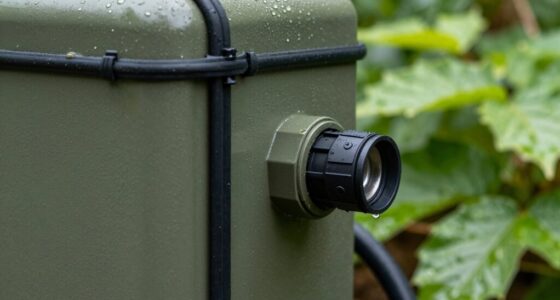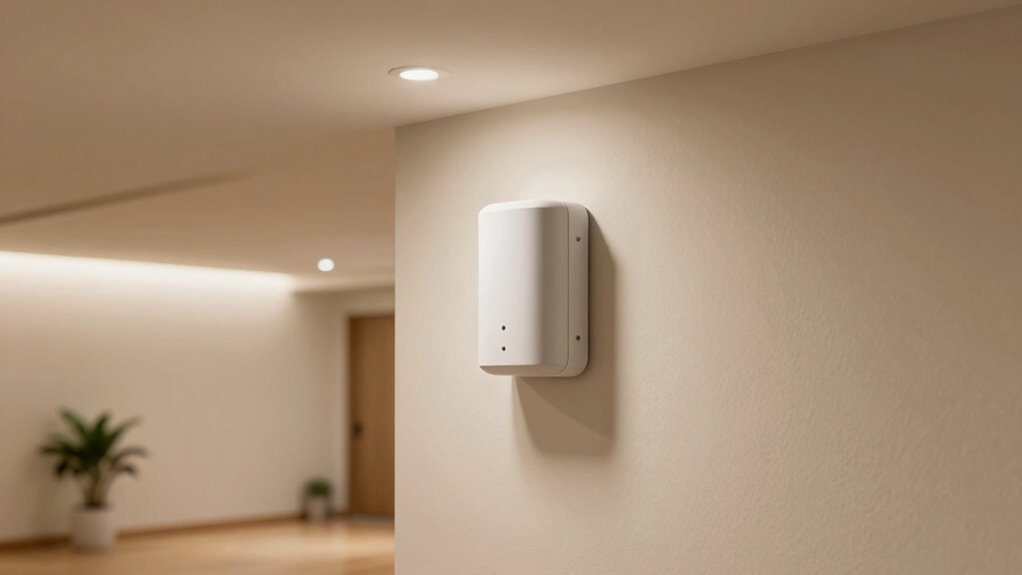
To get the most out of your motion sensors, place them near entry points, corners, and high-traffic areas like hallways or stairwells. Mount sensors at 6 to 8 feet to balance coverage and avoid false alarms from reflective surfaces or drafts. Prioritize outdoor entrances and guarantee coverage overlaps to prevent blind spots. Keep sensors away from windows and vents. For more tips on ideal placement, explore further to maximize your security and automation.

Get decor and gifts delivered free — and shop member deals
- Fast, free delivery on millions of items
- Access to Prime Big Deal Days deals on October 6–7
- Prime Video, Amazon Music and more included
Key Takeaways
- Mount sensors at 6 to 8 feet height for optimal coverage and to reduce false triggers.
- Place sensors near entry points, corners, and hallways for early detection and maximum coverage.
- Avoid reflective surfaces, drafts, and obstructions like bushes to prevent false alarms.
- Overlap sensor coverage areas to eliminate blind spots and ensure seamless monitoring.
- Test sensor triggers after placement, adjusting angles and positions for reliable detection.
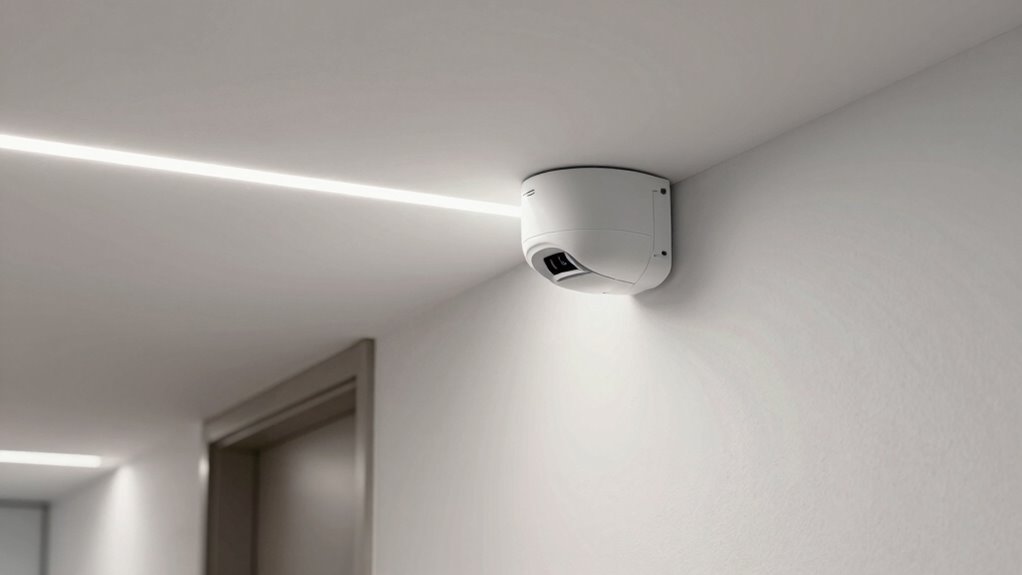
Have you ever wondered why your motion sensor fails to detect activity consistently? It can be frustrating when your lighting automation doesn’t turn on as expected or when your security system doesn’t alert you to movement. Proper placement is crucial to making sure your sensors work effectively, and understanding where to put them can make a huge difference in their performance. First, consider common trouble spots—corners, doorways, and hallways—since these areas are natural pathways for movement. Mount your sensors at a height of about 6 to 8 feet; this range provides a good balance between coverage and avoiding false triggers from pets or passing cars. If you’re integrating sensors with your security system, placement becomes even more critical. You want sensors positioned to cover all entry points without gaps, ensuring the entire perimeter is monitored without blind spots.
When you’re setting up sensors for lighting automation, think about areas where you want convenience and energy savings. Place sensors near stairwells, bathrooms, or outdoor walkways to automatically illuminate these spaces when someone approaches. Avoid pointing sensors directly at windows or reflective surfaces, as these can cause false alarms. It’s also smart to position sensors away from heating vents or air conditioners, which can create drafts and cause false triggers. For fully effective security system integration, make sure sensors are installed where they can detect motion early—entryways and side entrances are ideal—so you can respond swiftly to any activity. Keep in mind that placement should also account for your specific property layout; a sensor overlooking a driveway might catch movement from a passing vehicle, which could lead to unnecessary alerts.
Lighting automation benefits from sensors placed where they can detect natural movement patterns, such as near the front porch or backyard paths. Proper positioning ensures your lights turn on only when needed, saving energy and increasing safety. For security purposes, avoid placing sensors behind obstructions like thick bushes or fences that can block signals or reduce detection range. Test your sensors after installation by walking through the monitored area to see if they trigger correctly. Adjustments might be necessary to refine coverage, especially in areas with unusual layouts. Remember, the goal is to create a seamless system where lighting automation responds intuitively and your security setup provides reliable alerts. Thoughtful placement maximizes the effectiveness of your sensors, making your home safer and more efficient without constant tinkering or false alarms. Additionally, understanding sensor detection ranges can help optimize placement for the best coverage.
As an affiliate, we earn on qualifying purchases.
Frequently Asked Questions
Can Motion Sensors Be Affected by Pets?
Yes, pets can trigger motion sensors due to pet interference. To minimize false alarms, you should adjust sensor calibration to account for your pets’ size and movement patterns. Position the sensor higher on the wall, away from pet pathways, and consider using pet-friendly motion detectors. Proper placement and calibration help guarantee your security system detects intruders without false alerts caused by your pets.
How High Should a Motion Sensor Be Installed?
You should install your sensor at an ideal height of about 6 to 8 feet. Imagine it’s a secret agent on a mission—too low, and pets or passing shadows could blow its cover; too high, and it misses the action. Proper sensor mounting guarantees it detects movement efficiently, covering the desired area without false alarms. So, aim for that sweet spot for maximum security and minimal nuisance triggers.
Do Weather Conditions Impact Sensor Effectiveness?
Weather conditions do influence sensor effectiveness, as extreme cold, heat, rain, or snow can interfere with sensor calibration and cause false triggers or missed detections. You might face installation challenges in harsh weather, making it harder to keep the sensor functioning at its best. To guarantee reliable performance, regularly check and adjust your sensor, especially after severe weather, and consider models designed to withstand outdoor conditions.
What Types of Surfaces Can Block Motion Detection?
Surfaces like thick walls or dense foliage can block motion detection, creating obstruction risks that are as effective as a fortress wall. Materials such as glass, metal, or heavy wood often interfere with sensor signals, preventing proper detection. To maximize effectiveness, avoid placing sensors near these surfaces, and verify there’s a clear line of sight. Recognizing which surface materials cause blockages helps you position sensors where they work best.
How Often Should Motion Sensors Be Tested?
You should test your motion sensors monthly to guarantee peak performance. Regular testing helps identify issues with sensor calibration or installation tips, such as obstructions or incorrect placement. During testing, walk through the detection area to confirm the sensor triggers properly. Adjust the sensor’s angle or sensitivity if needed. Consistent testing maintains security and reduces false alarms, ensuring your sensor stays effective and reliable over time.
Conclusion
To get the most out of your motion sensors, place them strategically, considering entry points and blind spots. Think like a modern-day sentinel, always alert and ready. Don’t forget, even the best sensor is useless if it’s not positioned correctly—like a knight without armor. So take your time, plan wisely, and remember: a well-placed sensor is your first line of defense, turning your home into an impregnable fortress, no matter what the future holds.
Halloween Picks
halloween
As an affiliate, we earn on qualifying purchases.