
To fix foam cracks on your propellers without starting over, start by cleaning the damaged area with a soft brush and lightly sanding the edges for better adhesion. Use a foam-specific primer, then carefully fill the cracks with lightweight epoxy or foam filler, layering if needed. Smooth out the surface, sand it flush, and finish with a primer or paint to blend it seamlessly. Keep in mind proper techniques to make sure your repair maintains balance and flight performance; further tips are just ahead.
Key Takeaways
- Assess crack size and damage to decide if repair is sufficient or replacement is needed.
- Clean and lightly sand the cracked area, then apply a foam-compatible primer for strong adhesion.
- Fill cracks with lightweight epoxy or foam filler in layers, allowing curing between applications.
- Smooth and sand the repaired surface to restore the original shape and ensure balance.
- Finish with primer or paint for visual blending and added protection against future damage.

A damaged propeller can quickly turn a smooth flight into a stressful ordeal, but with the right knowledge, you can handle most repairs yourself. When it comes to fixing foam cracks on your propeller, understanding the importance of material selection and effective repair techniques is key. Foam cracks are common, especially after impacts or prolonged use, but they don’t always mean you need to replace the entire propeller. Instead, you can often restore it using the right approach.
First, assess the extent of the damage. Small cracks or chips can often be repaired with simple techniques, saving you time and money. To do this effectively, you need to select the appropriate repair materials. Opt for lightweight, durable compounds like epoxy or specialized foam fillers designed for propeller repairs. These materials adhere well to foam and provide the necessary strength to withstand operational stresses. When choosing your repair materials, always consider their compatibility with the foam material of your propeller to ensure a seamless fix and prevent further damage.
Assess damage and choose lightweight, durable foam-filling materials like epoxy for effective propeller repairs.
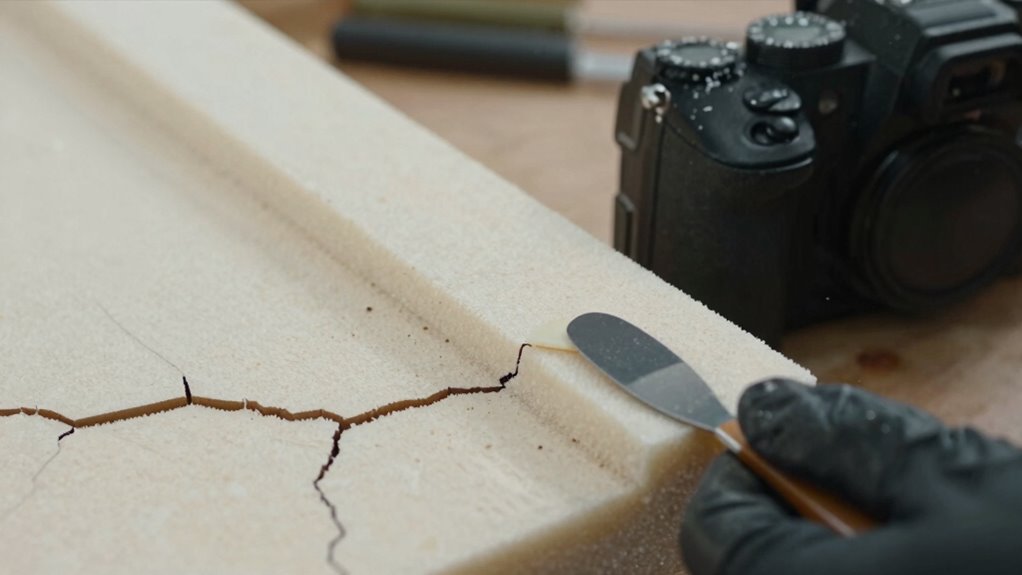
Once you’ve selected your materials, prepare the damaged area thoroughly. Clean the crack with a soft brush or compressed air to remove dirt and debris, then lightly sand the edges of the crack to improve adhesion. Applying a primer specific to foam can also help create a better bond. When it’s time to apply your repair material, follow the manufacturer’s instructions carefully. Use a small spatula or applicator to fill the crack completely, making sure to smooth it out to match the surrounding surface. For deeper cracks, apply the filler in layers, allowing each to cure before adding the next. This layered approach ensures a strong, durable repair without sacrificing the propeller’s balance.
The key to successful foam crack repairs lies in mastering the right repair techniques. Precision and patience matter. Avoid overfilling the crack, as excess filler can cause imbalance and affect flight performance. Once the filler has cured, sand the area smoothly to restore the original shape. Finishing with a light coat of primer or paint can help blend the repair visually and protect it from further damage. Additionally, understanding the properties of foam materials and how they respond to various repair compounds can significantly improve your repair outcomes.
Frequently Asked Questions
Can Foam Cracks Be Repaired Underwater?
Yes, foam cracks can be repaired underwater. You should use an adhesive specifically designed for underwater adhesion, which guarantees the repair bonds well despite the moisture. Make sure to choose a flexible foam repair product, as it maintains foam flexibility and prevents future cracking. Clean the crack thoroughly beforehand, then apply the adhesive carefully, allowing it to cure completely before exposing it to water again.
How Long Does a Foam Prop Repair Last?
Think of your foam prop like a sturdy bridge—you want it to last. Your repair can last several seasons if you use quality materials and proper technique. The repair’s durability depends on how well you prep, apply, and protect it. With good care, you can expect your prop’s longevity to match its original strength, giving you peace of mind that your fix will stand up to the demands of your adventures.
Is Special Equipment Needed for Foam Crack Repairs?
You don’t need special equipment for foam crack repairs, just the right materials and repair techniques. Typically, you’ll need foam filler or epoxy, sandpaper, and a putty knife. To fix cracks, clean the area, apply the foam filler or epoxy with the putty knife, and then sand it smooth once dry. These simple materials and techniques make fixing foam cracks straightforward, ensuring your prop stays in top shape without extra tools.
Can I Prevent Foam Cracks From Forming Initially?
You can totally prevent foam cracks from forming! It’s all about consistent preventative maintenance and crack prevention techniques. Regularly inspect your prop, keep it clean, and avoid exposing it to extreme temperature changes. Applying a protective sealant and storing your prop properly also helps. By staying proactive, you markedly reduce the risk of cracks, saving you time and money on repairs in the long run. Prevention truly is the best cure!
Are There Eco-Friendly Repair Options Available?
Yes, eco-friendly options do exist for repairing foam cracks. You can choose biodegradable repair materials made from natural or recycled components, which are safe for the environment. These options allow you to fix cracks without harmful chemicals, reducing your ecological footprint. Look for products labeled as biodegradable and eco-friendly, ensuring your repair is both effective and sustainable. This way, you protect your prop and the planet at the same time.
Conclusion
Don’t let foam cracks ruin your prop’s look or performance. With a simple repair kit and a little patience, you can fix it yourself without starting from scratch. Some might worry it won’t last, but proper prep and finishing make a durable repair. So next time you spot a crack, remember you’ve got the tools and skills to restore your prop quickly and confidently—saving you time and money in the long run.