
Improper stake installation can lead to serious safety risks like collapses or accidents. To guarantee safety, clear debris from your work area and properly prepare the soil by compacting it around the stake. Use the right tools, wear protective gear, and follow manufacturer instructions. Understand your soil type to choose the best technique and prevent stakes from shifting over time. Keep your equipment in good shape. Stick with safe methods, and you’ll build a more stable, secure project—more important tips follow.
Listen free for 30 days with Audible
Thousands of audiobooks and originals — cancel anytime.
As an affiliate, we earn on qualifying purchases.
Key Takeaways
- Properly stabilize soil before driving stakes to prevent wobbling or sinking.
- Use appropriate tools and wear protective gear for safe stake installation.
- Clear the work area of debris and loose material to ensure stability.
- Understand soil types through testing to select suitable installation methods.
- Regularly inspect equipment and maintain proper techniques to reduce safety hazards.

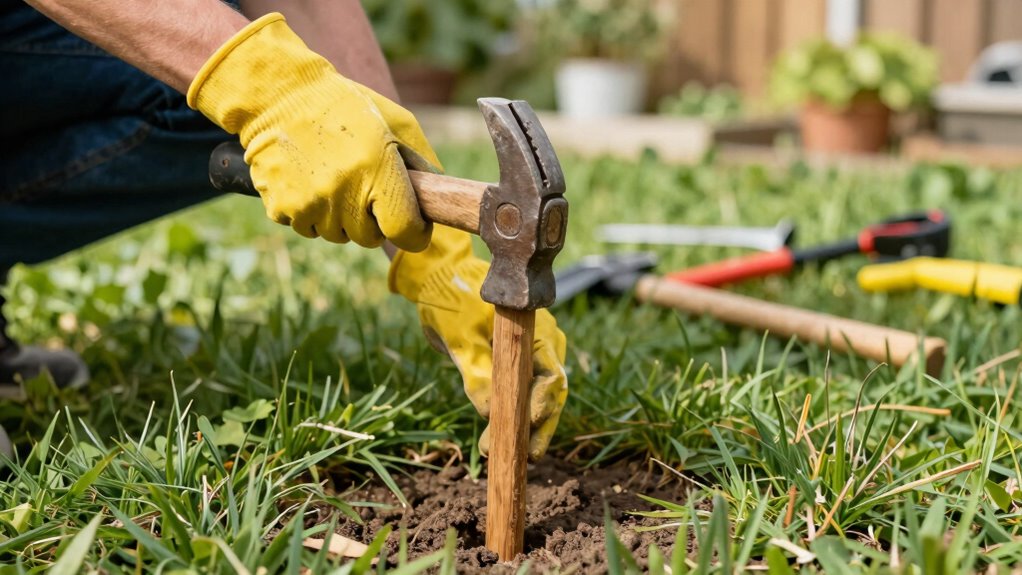
When stakes are not installed properly, they can pose serious safety hazards, whether you’re gardening, setting up a fence, or working on a construction project. Improperly placed or unstable stakes can cause accidents, especially if they fall or shift unexpectedly. To avoid these risks, you need to focus on correct installation techniques that prioritize soil stabilization and equipment safety. Properly stabilized soil provides a firm foundation, preventing stakes from wobbling or sinking over time. You should guarantee the ground is clear of debris and loose material before driving stakes in. Compact the soil around the stake with a tamper or your foot to create a solid base. This step is vital because loose soil can lead to instability, which might cause the stake to loosen or fall, risking injury or project failure. Additionally, selecting the appropriate cleaning tools and techniques can help ensure the work area remains safe and free of hazards during installation. Equipment safety is another critical aspect to contemplate. When hammering or driving stakes, use the right tools and wear protective gear such as gloves, safety glasses, and sturdy footwear. Avoid using makeshift or damaged tools, which can slip or break, leading to injuries. Keep your work area clear of bystanders or pets to prevent accidental hits or trips. If you’re working with power tools like pneumatic or electric post drivers, follow the manufacturer’s instructions carefully, and guarantee your equipment is in good condition. Regular maintenance and inspections help prevent malfunctions that could result in dangerous accidents. Recognizing different soil types and understanding their unique characteristics can significantly improve the safety and effectiveness of your stakes installation process. Additionally, understanding soil testing methods can help you determine the best approach for your specific ground conditions. Being mindful of soil composition can also influence the choice of stakes and installation techniques, further enhancing safety and stability. Knowing how to assess and adapt to soil conditions ensures safer and more durable installations, minimizing the risk of unexpected shifts or collapses. Proper soil stabilization not only keeps your stakes secure but also guarantees the safety of everyone around you by reducing the chance of unexpected shifts or collapses.
As an affiliate, we earn on qualifying purchases.
Frequently Asked Questions
What Tools Are Safest for Staking Plants?
You should choose flexible, smooth stake materials like bamboo or plastic to guarantee plant stability and avoid damage. Wooden stakes with sharp edges can harm plants, so opt for rounded or tapered options. Use soft ties like garden twine or velcro strips to secure plants gently to stakes, preventing injury. Always insert stakes carefully at the right depth, and regularly check to maintain plant support safely and effectively.
How Often Should Stakes Be Checked or Replaced?
Like a vigilant guardian, you should check your stakes every few weeks to guarantee they remain secure and effective. Regular inspections help you spot wear from weather or soil movement. Replace stakes when they show signs of cracking or bending, especially if their durability is compromised. Using proper staking techniques ensures stability, so your plants stay upright. Frequent checks keep your garden safe and thriving, preventing potential damage from weak or broken stakes.
Are There Age Restrictions for Staking or Handling Stakes?
There aren’t specific age restrictions for handling stakes or using staking techniques, but you should always prioritize safety. When working with stake material, make sure you’re old enough to understand proper procedures and potential hazards. Supervision is recommended for younger individuals to ensure safe handling. Focus on learning the correct staking techniques to avoid accidents, and always wear protective gear when necessary to keep yourself safe during the process.
Can Improper Staking Damage the Plant’s Roots?
If you stake improperly, you risk damaging your plant’s roots and causing root stress, which can weaken the entire plant. Poor staking can also compromise stem stability, making it more susceptible to breakage or disease. Imagine the damage hidden underground—roots can be pinched or torn if stakes are too tight or placed poorly. Always secure your stakes gently and correctly to protect both root health and stem integrity.
What Signs Indicate Staking Is Done Incorrectly?
If your staking is done incorrectly, you might notice the plant leaning or wobbling despite the stake. Signs include the stake material chafing the plant, or the staking technique being too tight, which can restrict growth or damage stems. You may also see the plant bending at the stake point, indicating improper support. Regularly check your staking to make certain the material isn’t causing harm and that the technique provides gentle, effective support.
Conclusion
Now that you know how to stake safely, you’re steering clear of disaster’s shadow. When done right, stakes become sturdy guardians, not reckless threats. Think of each correctly driven stake as a trusted partner, standing tall against the storm. Remember, safety isn’t just a choice—it’s your shield. With careful technique, you’ll nurture your garden or project, letting it flourish without fear. Keep these tips close, and let your efforts grow strong and safe, like a mighty oak in a peaceful forest.
NFL season / tailgating Picks
team gear
As an affiliate, we earn on qualifying purchases.