In movies, candles often symbolize romance or mystery, but they carry much deeper mythological and spiritual meanings that are easily overlooked. For centuries, candles have been seen as guiding spirits, portals to divine worlds, and symbols of hope, renewal, and enlightenment. They connect us to ancient rituals and stories about life, death, and divine presence. If you keep exploring, you’ll discover how much more these flickering flames reveal about human history and spiritual beliefs.

Get decor and gifts delivered free with Prime
- Fast, free delivery on millions of items
- Prime Video, Amazon Music and more included
- Member-only deals all year
Key Takeaways
- Films often overlook the deep mythological symbolism of candles as portals between worlds or spiritual guides.
- The historical significance of candles in rituals and ceremonies is rarely acknowledged in movie narratives.
- Movies typically ignore the cultural meaning of candles as symbols of hope, renewal, and divine connection.
- The transformative power of fire and flames, central to many myths, is seldom explored beyond visual effects.
- The spiritual and emotional resonance of lighting or extinguishing candles is frequently omitted from cinematic storytelling.
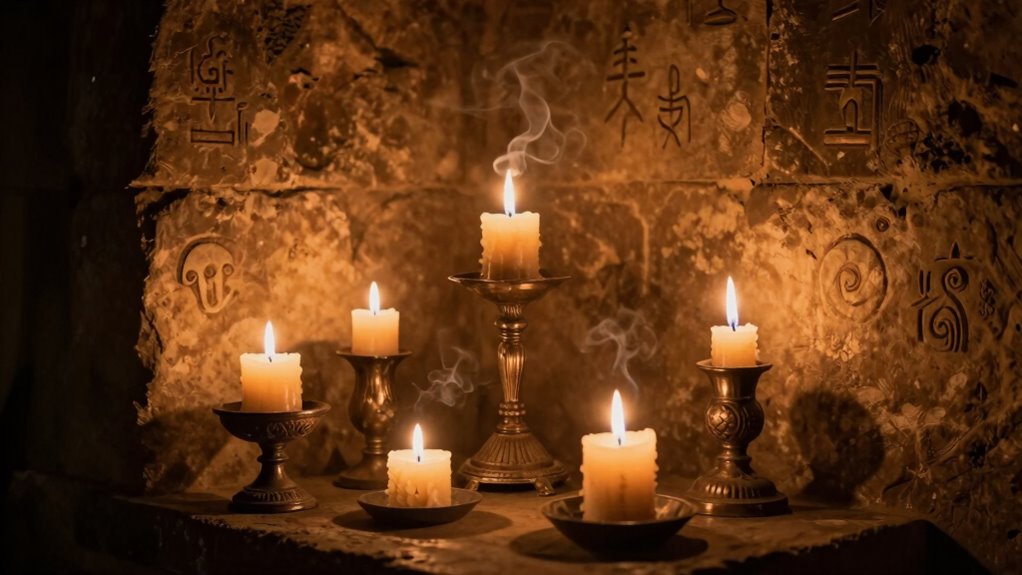
Candles have long held a special place in human history, inspiring countless legends and stories across cultures. When you see a flickering flame, it’s easy to overlook the rich tapestry of symbolism and myth woven into its presence. Ancient myths often depict candles as bridges between worlds, serving as guides for spirits or portals to the divine. In many traditions, their light represents more than illumination; it embodies hope, enlightenment, and the human soul’s eternal quest for understanding. These stories aren’t just poetic embellishments—they reflect deep-rooted cultural symbolism that has persisted for centuries. You might be surprised how much meaning is packed into something as simple as a candle’s flame.
Candles symbolize hope, guidance, and the human soul’s eternal quest for understanding across cultures and centuries.
In countless ancient societies, candles and their predecessors, oil lamps, were central to spiritual and ceremonial practices. The Greeks, Romans, Egyptians, and other civilizations saw fire as sacred—symbolic of life, purity, and divine presence. When you light a candle today, you’re participating in a ritual that echoes these ancient beliefs. It’s more than just creating a cozy ambiance; it’s an act steeped in history, connecting you to traditions that revered the flame as a conduit to the divine or the afterlife. These myths often tell of gods or spirits dwelling within the flame or of candles guiding lost souls through darkness, underscoring their cultural symbolism as beacons of guidance and protection. The act of lighting a candle also resonates with the universal human desire to seek spiritual connection and comfort in times of need. Moreover, the symbolism of fire in various mythologies highlights its role as a transformative force that bridges the material and spiritual worlds. Understanding the cultural history of fire can deepen our appreciation for these enduring symbols. Additionally, the fire’s transformative power in myth and tradition emphasizes its importance as a symbol of renewal and rebirth, reinforcing the idea that candles are more than mere objects.
Additionally, the mythological significance of flames emphasizes their role as symbols of transformation and renewal in many cultural narratives, reinforcing the idea that candles are more than mere objects. Movies tend to focus on the visual appeal of candles—romantic flickers or ominous glows—while leaving out the layers of stories behind them. They rarely explore the mythological significance that historically gave candles their mystical aura. When a character lights a candle in a film, it’s often just a visual cue, but in reality, it can signal a spiritual act, a remembrance, or a call for enlightenment. The legends associated with candles remind us that their symbolism goes beyond mere decoration. They serve as symbols of hope in darkness, of inner light amid chaos, and of the enduring human desire to connect with something greater than ourselves.
You might not realize it, but every time you blow out a candle or watch its flame dance, you’re participating in a tradition rooted in ancient myths and cultural symbolism. This small act carries echoes of stories that have shaped civilizations and spiritual practices through the ages. The flicker of a candle isn’t just light; it’s a reminder of stories told long before movies, stories that continue to illuminate our understanding of life, death, and the divine.
spiritual candles for meditation
As an affiliate, we earn on qualifying purchases.
As an affiliate, we earn on qualifying purchases.
Frequently Asked Questions
What Are the Origins of Candle Legends?
You’re curious about the origins of candle legends, right? These stories often stem from ancient times when candle making techniques were primitive, and myths grew around their use. In the modern candle industry, these legends persist, blending history with tradition. You’ll find that many tales highlight the mystical qualities of candles, passed down through generations, shaping how we view candles today, even as techniques evolve.
Are There Historical Figures Associated With Candle Myths?
Yes, some historical figures are linked to candle myths. Ancient rituals often involved figures like Saint Lucian, whose story contributed to the symbolism of candles representing light and hope. These legends, passed down through generations, blend historical figures with modern symbolism, emphasizing illumination, guidance, and spiritual awakening. You can see how these stories shape our understanding of candles, connecting past traditions with contemporary meanings and rituals.
How Do Different Cultures Interpret Candle Symbolism?
Imagine candle symbolism in rituals as a universal language, glowing softly across cultures. In some traditions, candlelight symbolizes hope and spiritual guidance, while in others, it marks remembrance or celebration. Cultural interpretations of candlelight vary widely, reflecting beliefs about life, death, and renewal. You see it in religious ceremonies, festivals, and daily practices worldwide, each culture illuminating its unique story through this simple yet profound symbol of light.
Do Candle Legends Vary Across Regions?
Yes, candle legends do vary across regions. You’ll find different stories rooted in local culture, often linked to candle craftsmanship and their significance. In some areas, candles symbolize spiritual guidance, while others see them as protective charms. Modern candle trends reflect these traditions, blending old legends with new designs. As a result, regional variations enrich the symbolism, making candles more meaningful depending on where you are and the stories you embrace.
What Are Common Misconceptions About Candle Legends?
You might think candle legends are just romantic stories, but many misconceptions exist. For example, some believe mythical creatures or spirits dwell in candles, fueling folklore stories that romanticize their power. Others assume these legends are universal, ignoring regional variations. In reality, these stories often get exaggerated or simplified over time, making it easy to overlook the cultural significance behind candles and their mysterious, often misunderstood, legends.
Conclusion
So, next time you watch those part movies, remember the candles’ true legends often stay hidden, like secrets kept in a shadowy room. These flickering flames aren’t just background; they’re silent storytellers, whispering tales left out of the script. Just as a candle’s glow reveals more than the eye can see, these legends add depth to your understanding, illuminating the unseen layers. Like a lighthouse guiding ships, they steer your imagination into new depths.
Halloween Picks
halloween
As an affiliate, we earn on qualifying purchases.