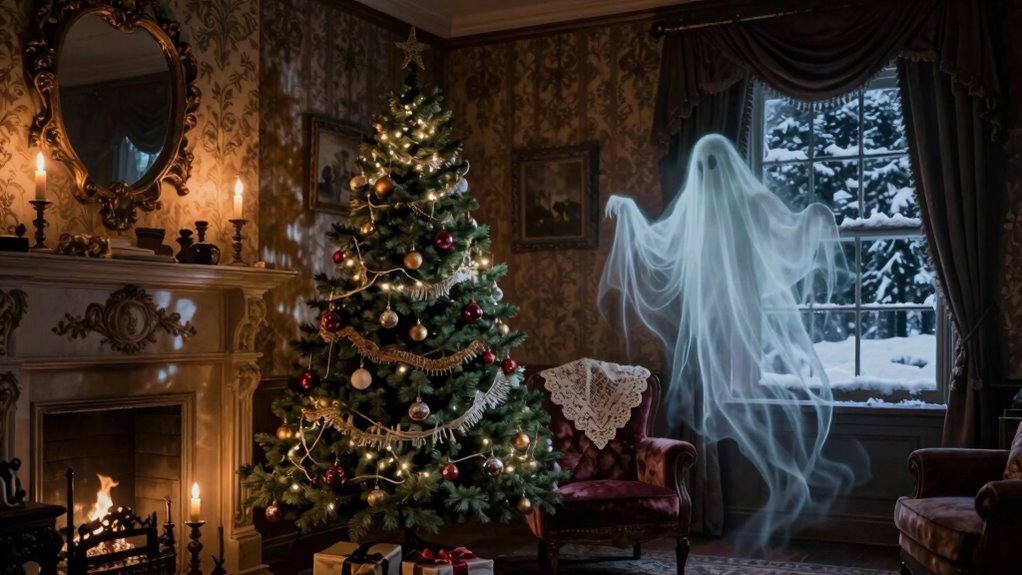

During Victorian times, ghost stories became a Christmas tradition because they blended supernatural tales with moral lessons that highlighted virtues like kindness, charity, and humility. Families would gather to share these festive yet spooky stories, using them to reflect on morals in a safe, communal setting. This tradition helped reinforce holiday values while adding mystery and excitement to celebrations. If you’re curious about how these stories shaped holiday customs, you’ll find more interesting details as you explore further.
Key Takeaways
- Victorian literature popularized blending supernatural tales with moral lessons during Christmas gatherings.
- Ghost stories served as moral guides, emphasizing virtues like kindness and humility in a festive context.
- They provided a safe space to explore fears and moral dilemmas, reinforcing holiday values of reflection and charity.
- Sharing ghost stories strengthened family bonds and created a tradition of moral and supernatural storytelling during Christmas.
- The practice persists today, maintaining its roots in Victorian moral storytelling and festive mystery.
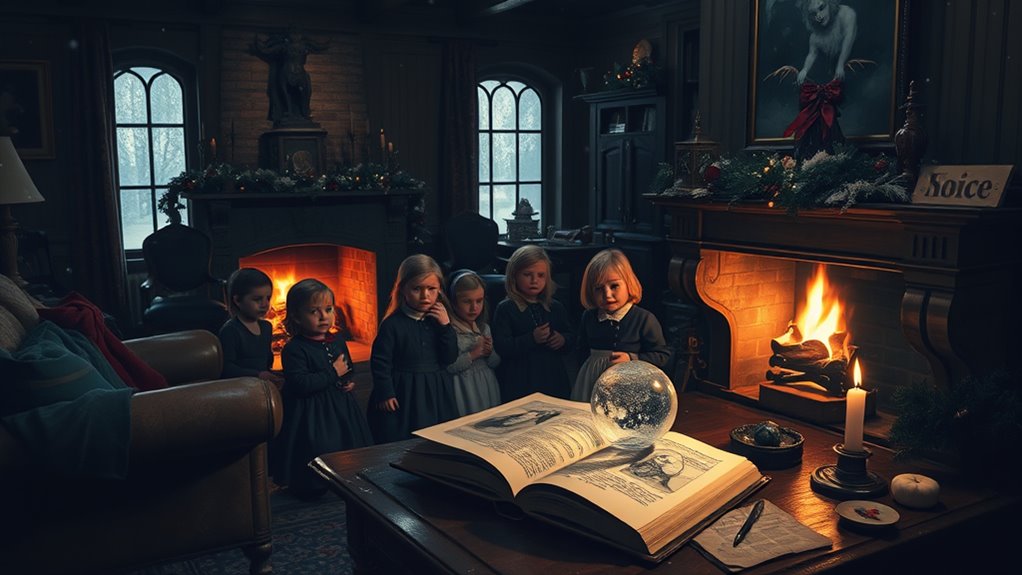
Many families have embraced the tradition of sharing ghost stories during Christmas, turning what might seem like an eerie practice into a cherished holiday ritual. This custom has deep roots in history, especially in Victorian literature, which played a significant role in shaping the festive ghost story tradition. During the Victorian era, writers like Charles Dickens popularized stories that combined supernatural elements with moral lessons, reinforcing values such as compassion, humility, and redemption. These tales weren’t just meant to entertain; they served as moral guides, illustrating how kindness and integrity could lead to personal salvation or societal improvement. As a result, ghost stories became a way to reflect on human virtues while adding an element of thrill and mystery to the holiday season.
Sharing ghost stories at Christmas links tradition, morality, and mystery rooted in Victorian literature and festive storytelling.
You might wonder why Christmas, a time associated with joy and generosity, would also be linked to ghost stories. The answer lies in the Victorian view of storytelling as a means to explore human nature and morality. Ghost stories provided a safe space to confront fears and moral dilemmas through allegory and symbolism. They often depicted spirits or supernatural encounters as lessons from beyond the grave, urging listeners to consider their actions and their impact on others. This blend of the supernatural with moral instructiveness made these stories particularly suited for holiday gatherings, where the emphasis was on community, reflection, and moral growth.
During Victorian times, Christmas became a period when families gathered to read aloud stories that combined festive warmth with a touch of the uncanny. These stories often carried moral lessons embedded within their supernatural plots, making them both entertaining and instructive. For example, a ghost story might highlight the importance of charity or the consequences of greed, reinforcing the holiday’s core messages of kindness and renewal. By engaging with these tales, families could explore their fears and virtues in a safe environment, strengthening bonds and encouraging moral introspection.
Today, the tradition persists in many forms, but its origins in Victorian literature and moral lessons remain clear. Ghost stories during Christmas served as more than entertainment; they were a means to teach, inspire, and remind us of the values we hold dear. They transformed the holiday into a time not only for celebration but also for moral reflection, making the supernatural stories a meaningful part of the season’s fabric. When you share these stories, you’re continuing a legacy that combines mystery, morality, and holiday cheer in a uniquely festive way.
Frequently Asked Questions
When Did Ghost Stories Become Associated With Christmas?
You’ll find that ghost stories became associated with Christmas during the Victorian era, around the 19th century. This tradition grew from folklore origins, where storytelling was a way to entertain and connect families during the holiday season. Victorian traditions embraced the supernatural, and authors like Dickens popularized ghost tales as part of Christmas celebrations. So, it’s your rich folklore heritage that helped make ghost stories a festive favorite.
Are Ghost Stories Still Popular During Modern Christmas Celebrations?
You might think ghost stories are a thing of the past during Christmas, but they still spark holiday fears and spooky traditions for many. While not as widespread, some families and communities keep the tradition alive with storytelling nights, especially around Halloween or winter gatherings. These ghost stories tap into the thrill of holiday fears, making the season both spooky and memorable, proving that spooky traditions still hold a place in modern celebrations.
Which Cultures Have Historically Shared Ghost Stories at Christmas?
You’ll find that cultures like the British, Americans, and Germans have historically shared ghost stories during Christmas, rooted in folk traditions and supernatural beliefs. These tales often aimed to teach moral lessons or ward off evil spirits. By telling ghost stories, people embraced the supernatural aspect of Christmas, blending fun and fear, which helped reinforce cultural values and connect communities through shared folklore during the holiday season.
How Did Ghost Stories Influence Christmas Literature and Media?
You see, Victorian storytelling and supernatural folklore deeply influenced Christmas literature and media by blending eerie tales with holiday themes. Ghost stories, like Dickens’ “A Christmas Carol,” reflect this shift, emphasizing redemption and the supernatural. This tradition shaped films, plays, and books, creating a festive atmosphere that combines warmth with mystery. Your favorite holiday stories often draw on this rich history of Victorian supernatural folklore, making Christmas both enchanting and slightly spooky.
Were Ghost Stories Used to Teach Moral Lessons During Christmas?
Yes, ghost stories were used to teach moral lessons during Christmas. You see, these tales often highlighted themes like kindness, generosity, and the consequences of greed, reinforcing the cultural significance of moral values. By sharing spooky stories with a moral core, people engaged in meaningful reflection, making ghost stories a powerful tool for moral education and strengthening community bonds during the holiday season.
Conclusion
So, as you see, ghost stories grew great during Christmas, creating a curious cultural connection. They brought bravery, banished boredom, and built bonds by blending fright with festivity. If you’re tempted to try this timeless tradition, take a tale, turn on the twilight, and let the chilling charm of Christmas chimes charm your crowd. Remember, ghost stories aren’t just ghouls and gloom—they’re gateways to gathering, growth, and a grand, ghostly glow.